




403
Sorry!!
Error! We're sorry, but the page you were looking for doesn't exist.
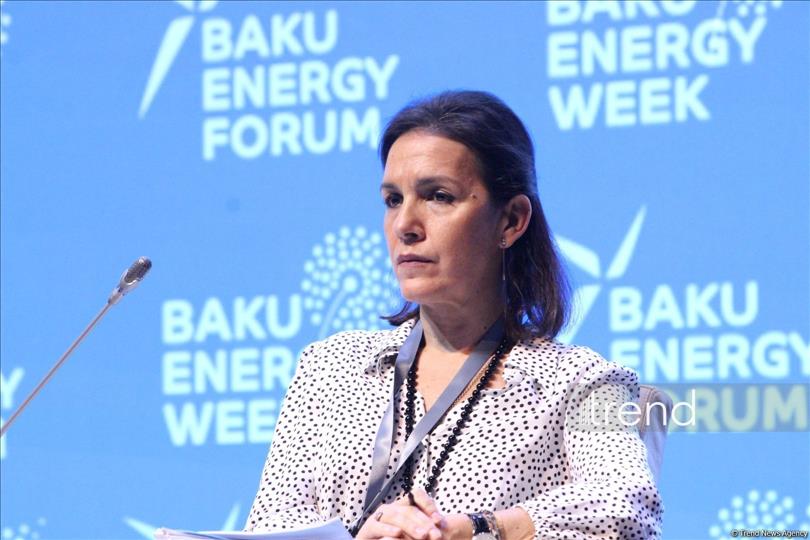
European Commission Names Priorities Of Next Phase In Energy Cooperation With Azerbaijan (Exclusive Interview)
(MENAFN- Trend News Agency)
BAKU, Azerbaijan, June 1. EU–Azerbaijan energy
cooperation is anchored in a shared interest in energy security,
diversification and reliable connectivity between Europe, the South
Caucasus and the wider Caspian region, Director of the Energy
Platform Task Force, Directorate-General for Energy at the European
Commission, Cristina Lobillo Borrero said in an exclusive interview
with Trend
ahead of the Baku Energy Week.
She pointed out that Azerbaijan has made an important contribution to the EU's diversification efforts, in particular through the Southern Gas Corridor. In 2025, Azerbaijan supplied 11.3 bcm of natural gas via the Southern Gas Corridor to EU Member States, added Borrero.
"At the same time, our partnership is no longer only about gas. The EU-Azerbaijan strategic energy partnership also covers renewable energy, energy efficiency, hydrogen, and methane-emissions reduction. These areas are becoming more important as Europe accelerates its energy transition and as Azerbaijan develops its own clean-energy potential. For the next phase, I see three priorities. First, maintaining reliable and competitive energy supplies in line with market demand. Second, ensuring that any new infrastructure is commercially sound, future-oriented and compatible with Europe's long-term energy trajectory. Third, deepening cooperation on clean energy, methane mitigation, electrification, grids and investment frameworks. This is how we can combine security today with readiness for tomorrow," she said.
Borrero went on to add that the current situation in the Middle East is a clear reminder that energy security remains exposed to geopolitical shocks.
"Even where there is no immediate shortage, disruptions or risks around critical routes can have a direct impact on prices, supply chains and confidence in the market. The EU response has two main dimensions. The first is immediate preparedness, on which we, the Commission, is working closely with Member States, the International Energy Agency (IEA) and energy companies. This allows us to monitor developments, assess stocks and storage levels, and prepare co-ordinated responses where needed. Recent discussions have focused in particular on oil market developments and possible regional constraints, including jet fuel, linked to the conflict in the Middle East," she said.
Borrero pointed out that the second dimension is structural. "In our AccelerateEU Communication, we set out measures to address rising energy costs and volatile fossil-fuel markets, particularly in light of the escalating Middle East conflict. The aim is to protect consumers and businesses, strengthen coordination, accelerate home-grown clean energy, upgrade grids and mobilise investment. This also means working with reliable partners, diversifying suppliers and routes, supporting more resilient infrastructure, and accelerating the clean-energy transition. The objective is not simply to replace one dependency with another. It is to build a more diversified, flexible and resilient energy system."
She noted that the Southern Gas Corridor remains an important part of Europe's diversification architecture.
"It has provided reliable gas supplies to the EU and has contributed to reducing the EU's dependence on Russian gas. Looking ahead, gas imports from Azerbaijan through the Southern Gas Corridor (SGC) will continue to play an important role, especially in the context of geopolitical volatility and the EU's objective to fully phase out Russian energy imports. The EU remains a reliable trade partner for Azerbaijani gas, and Azerbaijani supplies contribute to strengthening security of supply during the current Middle East crisis. On expansion, the key principle is that further capacity increases should be market-based. The first level of TAP expansion, adding 1.2 bcm per year, has already taken place. Further expansions need to be justified by market prices, demand and regular market tests. This is important both for commercial credibility and for consistency with Europe's evolving gas-demand outlook.
There is political recognition of the SGC's role in diversification, but the EU can no longer fund fossil fuels infrastructure from its budget. Therefore, any further expansion should be underpinned by commercial investment and, where appropriate, potential financing from international financial institutions. The focus should be on infrastructure that strengthens security of supply without creating new long-term dependencies," Borrero explained.
--
Legal Disclaimer:
MENAFN provides the
information “as is” without warranty of any kind. We do not accept
any responsibility or liability for the accuracy, content, images,
videos, licenses, completeness, legality, or reliability of the information
contained in this article. If you have any complaints or copyright
issues related to this article, kindly contact the provider above.
Most popular stories
Market Research

More Story


Comments
No comment