




403
Sorry!!
Error! We're sorry, but the page you were looking for doesn't exist.
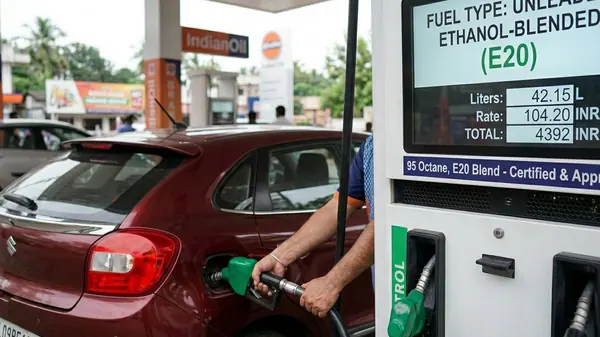
Half Of Petrol Vehicle Owners Experienced Lower Mileage After Ethanol Blending, Finds Survey
(MENAFN- Live Mint) A little over a year after India formally completed its nationwide rollout of E20 petrol in April 2025, a new survey has found that the performance of vehicles has seen a notable drop. While the government celebrates achieving its 20% ethanol-blending target six years ahead of schedule, consumers, particularly those driving older vehicles are reporting severe drops in mileage and accelerated engine damage.Vehicles experienced mileage dip
According to a survey by LocalCircles, out of 24,710 surveyed, half of them reported that fuel efficiency has dipped in the last 9 months, with some saying that the mileage has reduced up to 20 per cent.
Vehicles face more engine issuesIt also found that among those owning vehicles purchased before 2022, around 29 per cent of owners have experienced unusual levels of wear and tear or need for repair in the last 9 months. Most vehicle owners experienced issues with their engine, fuel line, tank, carburettor, etc.
Also Read | Petrol rules set to change! E85, E100 ethanol blends may soon power your car No looking back on ethanol blending policyDespite mounting public concern, the government remains steadfast in its transition toward even higher ethanol blends. Policymakers view the blending program as a cornerstone strategy to reduce India's reliance on imported crude oil, lower vehicular emissions, and support agricultural sectors producing sugarcane and grain-based ethanol.
The study noted that whether the new E20 standard will fully address the issues facing owners of older petrol vehicles remains to be seen. In the interim, there is a need for policy planners to re-examine the ethanol policy, as fuel efficiency must be a priority along with environmental concerns, as they are interlinked.
Also Read | Fuel blends up to E30 notified, car owners ask if it will be cheaper than petrolAlso, the fact that more than one-fourth of those surveyed have experienced more than usual wear and tear of their vehicle or need for repair shows that many vehicles will become un-road worthy sooner than the 15-year life fixed by the government for petrol vehicles.
If the higher-octane ethanol blended fuel does not address the issues being faced by owners of older petrol vehicles, the government needs to relook at its fuel policy to allow sale of lower ethanol mix fuel for older petrol vehicles so that it does not tax owners of such vehicles. Not all are able to switch vehicles at will as funds remain a big concern in most households in India.
Experts note that ethanol behaves differently than traditional petrol. It has a lower energy density and readily absorbs moisture. In vehicles not designed for high-ethanol blends, this results in faster engine heating, rough idling, corrosion, and the steady degradation of rubber seals and plastic components. For middle-class households already battling rising living costs, these mechanical issues translate into noticeably higher monthly fuel expenses and looming repair bills.
Standards for 30 per cent ethanol blending notifiedEven as the government accelerates the move to higher ethanol blends, with the Bureau of Indian Standards in May 2026 notifying IS 19850:2026 covering E22 to E30 blends, and the Ministry of Petroleum and Natural Gas mandating that all E20 petrol sold from April 1, 2026 must meet a minimum Research Octane Number (RON) of 95, lakhs of consumers, particularly those whose vehicles were originally engineered for E5 or E10 fuel, say their on-road experience does not match the official Automotive Research Association of India (ARAI) estimate of a 1–6% dip in fuel efficiency.
Also Read | Carmakers seek cheaper E85 fuel to drive flex-fuel adoptionThe Government has firmly defended the programme, with Union Petroleum Minister Hardeep Singh Puri publicly maintaining that ethanol-blended fuel has minimal impact on vehicles, and in September 2025 the Supreme Court too dismissed a PIL seeking continued availability of ethanol-free petrol at fuel stations, holding that consumer preference cannot dictate national energy policy.
Key Takeaways- Half of surveyed petrol vehicle owners report decreased mileage after E20 rollout. Older vehicles are more susceptible to damage from ethanol blends, prompting calls for policy reassessment. Ethanol's lower energy density can lead to increased mechanical issues and costs for vehicle owners.

Legal Disclaimer:
MENAFN provides the
information “as is” without warranty of any kind. We do not accept
any responsibility or liability for the accuracy, content, images,
videos, licenses, completeness, legality, or reliability of the information
contained in this article. If you have any complaints or copyright
issues related to this article, kindly contact the provider above.
Most popular stories
Market Research

More Story







Comments
No comment