




403
Sorry!!
Error! We're sorry, but the page you were looking for doesn't exist.
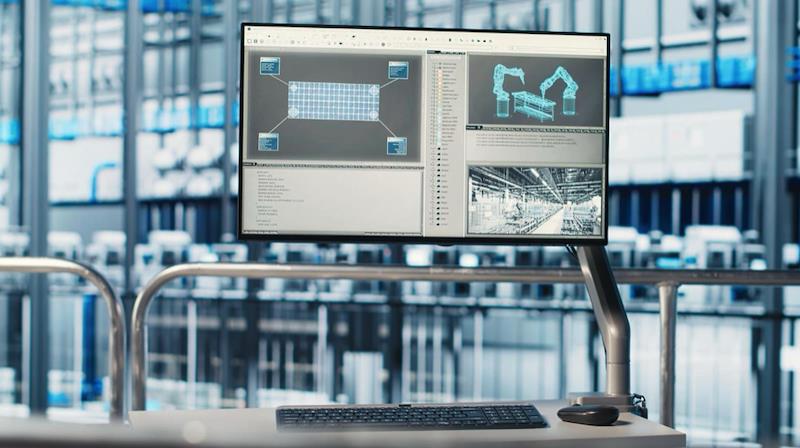
Machine Vision Systems Are Driving Demand For Scalable Media Infrastructure
(MENAFN- Robotics & Automation News) Machine vision systems are becoming increasingly important across modern industrial environments. Factories, warehouses, logistics centers, robotics platforms, and automated production facilities now rely heavily on cameras, sensors, and AI-assisted visual analysis to improve operational efficiency and decision-making.
These systems help monitor production lines, inspect product quality, track inventory movement, support predictive maintenance, and improve workplace safety. As industrial automation continues expanding, organizations are generating far larger volumes of visual information than they did only a few years ago.
This rapid growth in visual data is creating new infrastructure challenges surrounding storage, organization, accessibility, and long-term media management. For many companies, scalable media infrastructure is becoming just as important as the automation systems generating the data itself.
Industrial Automation Depends Increasingly on Visual DataMachine vision technologies allow automated systems to interpret visual information in ways that were previously possible only through manual human inspection. Cameras connected to AI-driven software can now identify defects, monitor equipment conditions, verify product assembly, and analyze operational processes in real time.
These systems are widely used across manufacturing, logistics, automotive production, electronics, food processing, and warehouse automation environments. Robotics platforms increasingly depend on visual recognition systems to navigate spaces, identify objects, and respond dynamically to changing conditions.
As these technologies become more advanced, the amount of video and image data generated by industrial systems continues increasing rapidly. High-resolution cameras, continuous monitoring systems, and multi-camera production environments create enormous volumes of visual information that organizations must store and manage efficiently.
What was once considered secondary operational data is now becoming central to automated decision-making and process optimization.
Managing Visual Information Has Become More ComplexThe growth of industrial visual data creates operational challenges that many organizations initially underestimate. Video libraries generated by automated systems often contain thousands of hours of footage, inspection recordings, monitoring clips, and training materials spread across multiple departments and facilities.
Without organized infrastructure, locating and analyzing relevant information can become inefficient and time-consuming. This has increased demand for systems capable of organizing video assets through searchable metadata, automated tagging, cloud-based storage, workflow integration, and AI-assisted indexing.
Scalable media infrastructure is particularly important for businesses operating across multiple locations where teams need consistent access to visual records, inspection footage, maintenance documentation, and operational analysis.
In many industries, visual information is no longer treated simply as archived media. It increasingly functions as operational intelligence supporting quality control, automation performance, and long-term process improvement.
AI is Expanding the Role of Media InfrastructureArtificial intelligence is also changing how organizations interact with industrial video systems. AI-powered tools can now analyze footage automatically, identify anomalies, monitor equipment behavior, and categorize visual data without requiring extensive manual review.
Some systems use computer vision to detect defects on production lines within milliseconds, while others help track worker safety compliance or identify operational bottlenecks inside warehouses and manufacturing facilities.
These technologies become significantly more effective when supported by infrastructure capable of handling large-scale visual data management efficiently. Automated tagging, searchable archives, real-time retrieval systems, and cloud-based collaboration tools increasingly help organizations manage growing visual workloads more effectively.
As industrial AI systems become more sophisticated, media infrastructure itself is evolving into a more active operational component rather than simply serving as passive storage.
Scalability and Accessibility Are Becoming CriticalOne major challenge facing organizations involves ensuring that visual information remains accessible across different departments, facilities, and operational systems. Engineers, quality assurance teams, maintenance staff, and management personnel often require access to the same data for different purposes.
Cloud-based infrastructure has therefore become increasingly valuable because it supports centralized access, remote collaboration, scalable storage, and faster retrieval across distributed operations.
This is especially important as automation systems continue expanding globally. Businesses operating multiple production facilities or logistics centers need infrastructure capable of supporting consistent media workflows across large operational networks.
Research and analysis from IEEE continue highlighting the growing role of machine vision, industrial AI, and intelligent automation systems within modern manufacturing and robotics environments.
As these technologies evolve, the supporting infrastructure behind visual data management is becoming increasingly important to long-term operational performance.
Machine Vision Will Continue Driving Infrastructure GrowthMachine vision systems will likely continue expanding as industries pursue greater automation, efficiency, and operational visibility. Advances in AI, robotics, edge computing, and sensor technology are making automated visual analysis more accurate and more widely adopted across industrial sectors.
At the same time, organizations will continue facing increasing pressure to manage larger volumes of visual information efficiently. Storage systems, searchable archives, cloud infrastructure, and AI-assisted media management tools are therefore becoming essential parts of industrial automation strategy.
For many businesses, scalable media infrastructure is no longer simply a support function operating behind the scenes. It is becoming part of the operational foundation that allows modern machine vision systems and automated environments to function effectively at scale.
Main image credit: DC Studio on Magnific

Legal Disclaimer:
MENAFN provides the
information “as is” without warranty of any kind. We do not accept
any responsibility or liability for the accuracy, content, images,
videos, licenses, completeness, legality, or reliability of the information
contained in this article. If you have any complaints or copyright
issues related to this article, kindly contact the provider above.
Most popular stories
Market Research

More Story








Comments
No comment