




403
Sorry!!
Error! We're sorry, but the page you were looking for doesn't exist.
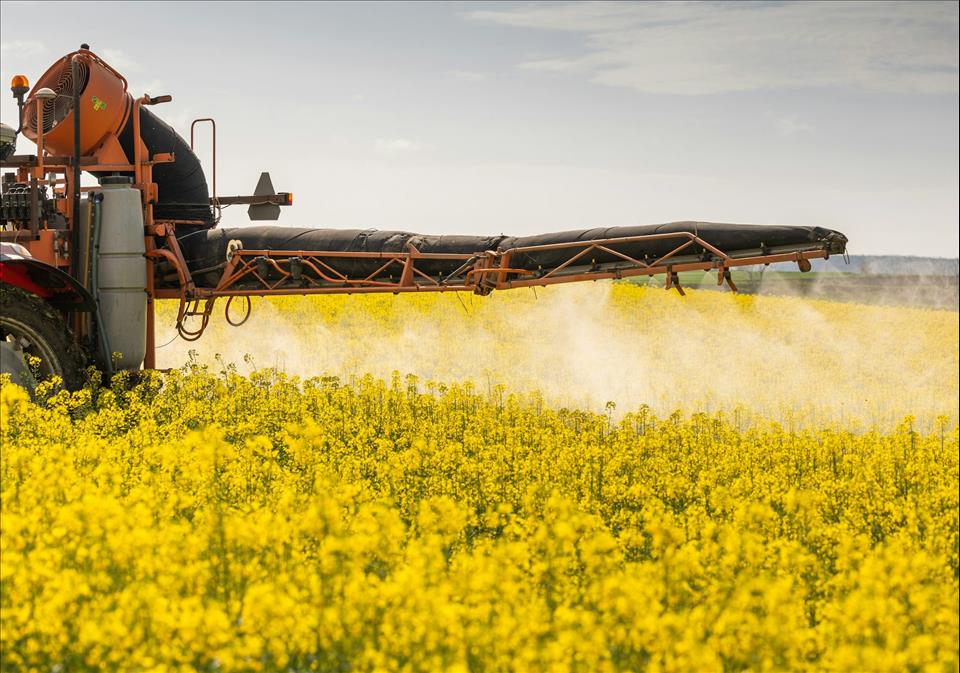
Fertiliser: The Forgotten History Linking The Agricultural Commodity And Empire In Wartime
Author: Lorenzo Feltrin
(MENAFN- The Conversation) Fertilisers are not just an agricultural input: they are a strategic resource hidden at the centre of geopolitical conflict. The US and Israel's war on Iran and the related disruption of shipping through the Strait of Hormuz are sending shockwaves through the global farming system. A large share of the world's traded chemical fertilisers normally passed through this strategic chokepoint, alongside key feedstocks needed to produce fertilisers elsewhere, such as gas, ammonia and sulphur.

The rise in fertiliser prices will push up food costs across the globe. This may seem like a recent vulnerability.
In reality, fertilisers have been entangled with war and imperialism for more than a century. As shown by my recent research, fertilisers were one of the factors contributing to shape colonial expansion, economic policy and even military strategy in the first half of the 20th Century.
How fertilisers became strategicModern conventional agriculture depends heavily on external inputs of three key nutrients:
- Nitrogen
Phosphorus
Potassium.
Already in the 19th century, the industrial revolution spreading across the Global North was pushing an increasing part of the workforce off the fields and into mines, factories, building sites and services. How to feed growing masses of people that were not producing their own food became a matter of great urgency. This created a race to secure fertiliser resources.
Since the 1840s, phosphorus and nitrogen-rich guano have been extracted from Peruvian islands for export to the Global North.
In the 1860s, Spain's attempt to wrest such a treasure away from British hegemony resulted in the Chincha Islands War, a clear instance of intra-imperialist clash over natural resources. However, after half a century of relentless extraction, guano reserves were mostly depleted.
Nitrogen supplies were thus ensured by Chile's nitrate mines, over which British interests encouraged the War of the Pacific (1879-1884) between Chile, Bolivia and Peru.
Yet, in the early 20th century, German chemist Fritz Haber – also remembered as the father of modern chemical warfare – demonstrated how to industrially fix nitrogen from thin air. Phosphorus, instead, had to be sourced through phosphate rock extraction.
The scramble for phosphateBetween the 19th century and the early 20th century, France gained control over major phosphate reserves through its colonial domination of Tunisia, Algeria and Morocco.
Italy, a latecomer to empire-building, feared being left behind. The Italian nationalist press promoted the idea that Libya contained enormous phosphate wealth. Politicians, industrialists and banks became enticed with the prospect of a“phosphate El Dorado”. This became part of the political campaign for the Italian invasion of Libya in 1911.
For decades, Italian governments and companies funded costly geological expeditions across the Libyan desert, pursuing Italy's“phosphate mirage”. This is the context in which fascist general Rodolfo Graziani committed genocide in Cyrenaica to isolate the rebels led by Omar al-Mukhtar. Yet, again and again, the much sought-after phosphate discoveries proved disappointing.
In parallel, Italian companies gained direct access to phosphate extraction in Tunisia and Egypt, which were however under French and British control, respectively.
Phosphate provision also depended on highly exploitative colonial labour regimes. In the North African mines, European managers supervised indigenous workers employed in harsh conditions.
Archival records show explicitly racialised wage schemes in which Arab workers received significantly lower pay than Europeans.
Cheap phosphate helped lower food costs in Europe, but this system rested upon the super-exploitation of colonial labour and resources.
Fascism, agriculture and empireChemical fertilisers became even more important under Benito Mussolini, who had paved his way to power by doing the dirty job of repressing the peasant movement for agrarian reform that had followed WWI.
In 1925, the fascist regime launched the “Battle for Grain”, an ambitious campaign to increase Italian wheat production and reduce reliance on imports.
Italy's chemical giant Montecatini massively expanded fertiliser production, while propaganda encouraged farmers to adopt high-input agriculture. Posters depicted heroic peasants producing gigantic wheat harvests in service of the nation.
This “fascist Green Revolution” succeeded in increasing wheat output, but it also deepened Italy's need for imported phosphate. This created a contradiction at the heart of fascist“autarky”, or economic self-sufficiency.
Italy claimed to be freeing itself from foreign dependence while remaining structurally reliant on colonial mineral supply chains. This became increasingly dangerous as Europe again was pushed toward war.
As soon as Italy entered WWII, the British requisitioned its phosphate mines in Egypt. As the conflict disrupted Mediterranean trade routes, Italy remained cut off from Tunisian phosphate imports too. The fascist dream of economic autarky thus proved to also be a mirage. Fertiliser production collapsed, agricultural output fell sharply and food shortages worsened.
Economic hardship played no small role in the loss of fascist control on Italian peasants and workers, many of whom joined the Resistance against Nazi fascism.
Back to the futureFertilisers may seem mundane compared with oil or weapons. Yet modern societies depend on them just as profoundly.
Behind modern agriculture lies a vast and hierarchically organised infrastructure of critical minerals, energy sources, extractive sites, shipping routes, and chemical industries.
The imperialist logic underlying the international division of labour that structures these global productive networks maintains striking similarities with the realities of a century ago, in the form of steep international inequalities. The inclination of far-right governments to throw the world into wars they are unable to master is just as familiar, with momentous consequences.
A weekly e-mail in English featuring expertise from scholars and researchers. It provides an introduction to the diversity of research coming out of the continent and considers some of the key issues facing European countries. Get the newsletter!
Institution:Ca' Foscari University of Venice

Legal Disclaimer:
MENAFN provides the
information “as is” without warranty of any kind. We do not accept
any responsibility or liability for the accuracy, content, images,
videos, licenses, completeness, legality, or reliability of the information
contained in this article. If you have any complaints or copyright
issues related to this article, kindly contact the provider above.
Most popular stories
Market Research

More Story






Comments
No comment