





403
Sorry!!
Error! We're sorry, but the page you were looking for doesn't exist.
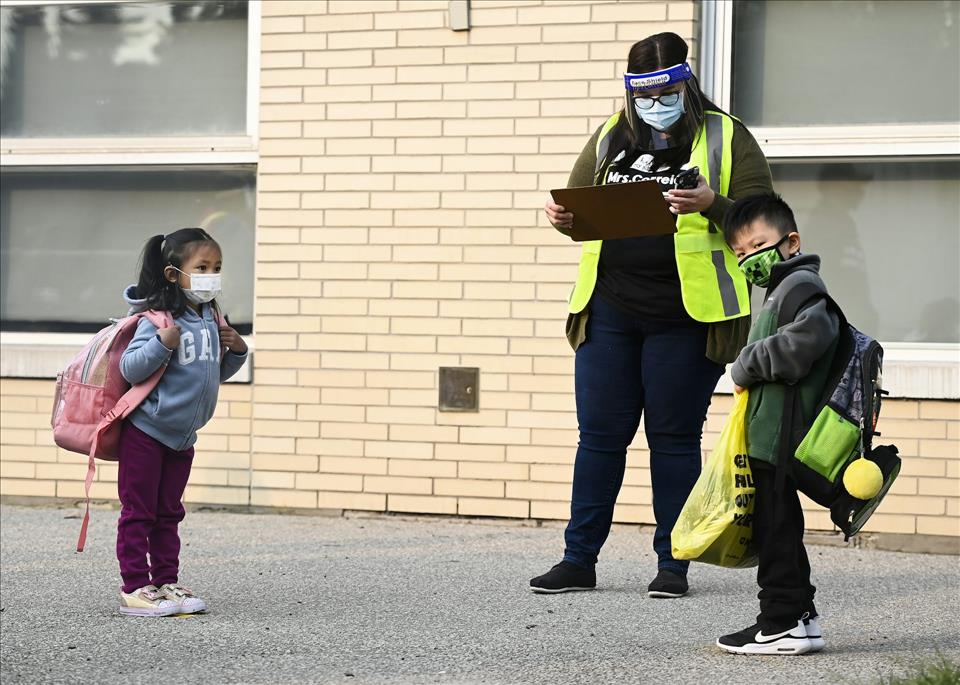
After The COVID-19 Pandemic, Thousands More Kindergarteners Faced Developmental Challenges
Author: Magdalena Janus
(MENAFN- The Conversation) Children with special needs often experience a range of early developmental challenges that can affect their readiness for learning and their participation in school.

This population includes children with a wide range of neurodevelopmental conditions (like autism and ADHD) as well as physical or sensory conditions and impairments.
Overall, children with special needs are more likely to experience challenges in one or more areas of their development compared to other children their age. For example, about 80 per cent of kindergarten children with identified special needs do not yet have the skills needed to fully benefit from classroom learning, compared to 27 per cent of children without special needs.
In Canada, children with special health needs are more likely to live in lower-income neighbourhoods and to experience poorer developmental outcomes.
The COVID-19 pandemic, declared in March 2020, changed many aspects of everyday life for young children across Canada. Although all children were affected, those with special needs were often impacted more deeply.
Public health measures disrupted many of the resources and supports they and their families relied on, such as health-care visits, child care and early education programs. In some cases, these supports stopped altogether.
Many pandemic policies did not fully consider the needs of vulnerable groups, including children with special needs. As a result, these children and their families were more likely to experience negative impacts during this pandemic, highlighting gaps in support and services that may have affected their development.
Status of inequitiesOur team at the Offord Centre for Child Studies at McMaster University produced a report that provided a comprehensive description of the status of inequities in early childhood development in Canada for children with special needs, both before and after the onset of the pandemic. The Public Health Agency of Canada commissioned the report.
We used population-level data and five different neighbourhood-level socioeconomic measures of inequities, including neighbourhood income after tax. The child development data came from the Early Development Instrument (EDI), a 103-item, teacher-completed questionnaire that assesses kindergarten children's ability to meet age-appropriate developmental expectations across five developmental domains.
We examined EDI data collected before and after the onset of the pandemic to see whether there were differences in teachers' reports of children's development in kindergarten.
The EDI database consisted of data from both a pre- and post-pandemiccohort of children (2017-20; 2020-23). This cohort comprises a total of 540,005 children with special needs from seven provinces and one territory: Prince Edward Island, Newfoundland and Labrador, Nova Scotia, Québec, Ontario, Manitoba, British Columbia and Northwest Territories.
We only selected provinces and territories with EDI data collection in both pre- and post-pandemic onset periods.
Defining special needs“Special needs” encompasses a broad range of conditions affecting behaviour, communication and physical and intellectual development. A child was identified on the EDI as having special needs if they received a medical, physical or mental-health diagnosis by either a medical or a health practitioner or if they received special education support or services at school.
After the COVID-19 pandemic, a higher percentage of children with special needs didn't meet age-appropriate developmental expectations in one or more developmental domains: physical health and well-being, social competence, emotional maturity, language and cognitive development, communication skills and general knowledge. These children are considered developmentally vulnerable.
While the overall rates of developmental vulnerability increased, the general pattern remained the same: children in lower-income neighbourhoods or areas with greater social and material disadvantage were more likely to face developmental difficulties.
Neighbourhood incomeThis pattern was especially strong when looking at neighbourhood income. As income decreased, the percentage of children experiencing developmental challenges increased. For other neighbourhood characteristics, such as how remote or rural an area was, the patterns were less clear.
For example, while children in very remote areas sometimes had higher rates of vulnerability, this was not consistent across all levels of remoteness, and in some cases, children in the most remote areas had lower vulnerability rates than those in more accessible regions.
Importantly, even though these patterns were similar before and after the pandemic, the overall number of children with special needs who were developmentally vulnerable increased after COVID-19.
Read more: Children with special health needs are more likely to come from poorer neighbourhoods
On average, there was a 2.5 percentage-point increase in developmental vulnerability. While this may seem small, it represents thousands more children facing developmental challenges than just a few years earlier.
This increase is important because early developmental challenges in kindergarten are linked to greater risks for difficulties later in life, including academic struggles and social or emotional challenges.
These risks are especially pronounced for children with special needs, even though some difficulties may improve over time. Even modest increases in developmental vulnerability can have meaningful impacts - not only for children and families, but also for education and health-care systems that support them.
Girls with special needs: possibly more affectedIn both the pre- and post-COVID-19 groups of children with special needs, there was a higher percentage of boys who were developmentally vulnerable compared to girls, with only a few exceptions.
For example, 83 per cent of boys with special health needs were considered developmentally vulnerable before the pandemic, rising to nearly 85 per cent after, compared to about 73 per cent and 77 per cent of girls, respectively.
Boys showed higher rates of vulnerability in most areas of development, except for language and cognitive skills. This pattern is consistent with previous research showing that boys often face more developmental and academic challenges in the early school years.
Read more: New research shows quality early childhood education reduces need for later special ed
However, while boys had higher overall rates, the increase in developmental vulnerability after the pandemic was larger among girls. Rates rose by just over one percentage point for boys, but by more than four percentage points for girls. This suggests that girls with special needs may have been more affected by pandemic-related disruptions than boys.
Implications for essential servicesOur findings have important implications for policy and practice. Understanding how developmental vulnerability is associated with neighbourhoods can help identify where support is most needed. There is a need to ensure children in more disadvantaged areas have access to health care, early intervention and specialized supports.
Schools play a key role by identifying special needs early, ideally starting in kindergarten, so that appropriate supports, such as individualized education plans, can be put in place as soon as possible.
Read more: Many autistic students are denied a full education - here's what we need for inclusive schools
The increase in both the number of kindergarten children with special needs and the proportion experiencing developmental challenges since the pandemic means that there will be more children requiring specialized assistance and accommodation in later grades.
Our findings highlight the growing pressures on children, families and health and education systems, and underscore the importance of responding with timely and targeted support.
Institution:McMaster University

Legal Disclaimer:
MENAFN provides the
information “as is” without warranty of any kind. We do not accept
any responsibility or liability for the accuracy, content, images,
videos, licenses, completeness, legality, or reliability of the information
contained in this article. If you have any complaints or copyright
issues related to this article, kindly contact the provider above.
Most popular stories
Market Research

More Story







Comments
No comment