




403
Sorry!!
Error! We're sorry, but the page you were looking for doesn't exist.
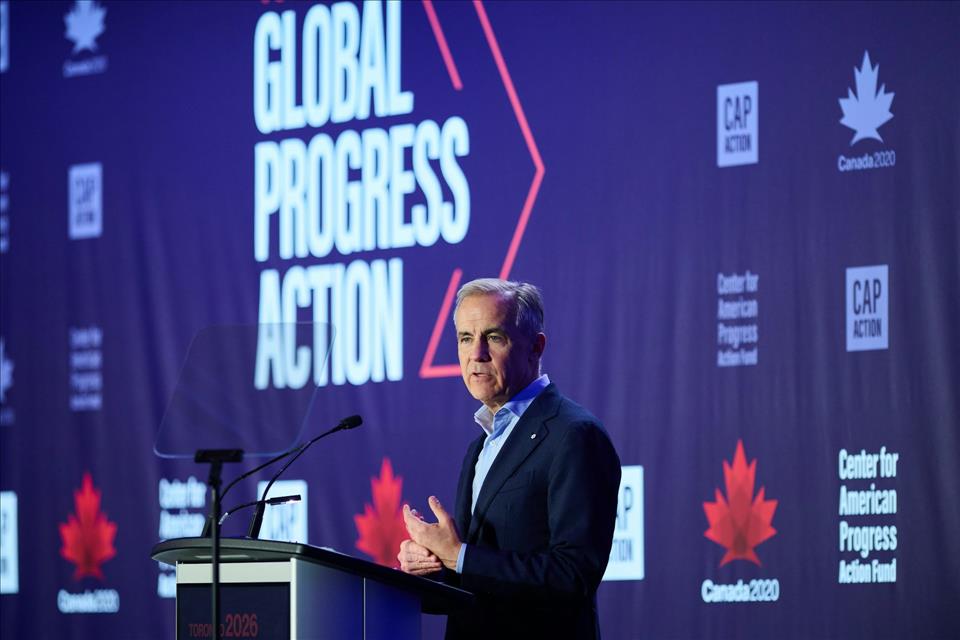
Canada To Host New NATO-Linked Defence Bank As Mark Carney Pushes Security Overhaul
Author: Srdjan Vucetic
(MENAFN- The Conversation) Canada has been chosen to house the Defence, Security and Resilience Bank (DSRB). Originally dubbed “the NATO bank,” the new institution will help NATO and non-NATO countries more easily direct funding toward defence and security needs.

This translates to hundreds of new jobs in finance, research and analysis in Montréal, Ottawa, Toronto or Vancouver - all potential host cities.
This comes as a boost for Prime Minister Mark Carney, a former banker who has sought to craft a bold new foreign policy for Canada.
As Carney argued in his acclaimed Davos speech, the ongoing geopolitical“rupture” requires countries to “hedge against uncertainty.”
Read more: Mark Carney's Davos speech marks a major departure from Canada's usual approach to the U.S.
Rethinking global co-operationIn Canada's case, the primary concern is the aggressive behaviour of the Donald Trump administration south of the border.
To unwind longstanding dependence on the now-unpredictable superpower neighbour, the federal government has set out on an ambitious nation-building plan that includes both retaliatory tariffs on American goods and a rapid expansion and diversification of trade and investment.
Read more: Coronavirus shows why Canada must reduce its dependence on the U.S.
Carney's emerging foreign policy doctrine extols the influence of middle powers alongside a commitment to “variable geometry” multilateralism - his term for the once controversial idea that institutions and coalitions should be shaped by the issue or mission at hand, rather than the other way around.
Could this approach also work in defence and security? Geography and history have bound Canada and the United States through countless formal and informal agreements, including a mutual commitment to come to each other's defence in the event of an attack.
However strained relations between Canada and the U.S. have become, the partnership is not simply an either/or choice. Canada must instead carefully balance its relationships and interests.
The Carney government's opening moves have included a sweeping expansion of military spending and security-related infrastructure, pushing investment toward levels not seen since the Cold War, alongside a landmark strategic defence and security partnership with the European Union and Canada's first-ever Defence Industrial Strategy.
Combined, these initiatives reveal the core logic of the approach: to bolster Canada's capacity for strategic autonomy over the long term.
In theory, changing where defence supplies come from is less complicated than helping Canadian companies find new markets.
Yet the hardest challenges still lie ahead.
Biggest obstaclesFirst, boosting current spending to meet NATO's new spending target of five per cent of GDP will be impossible without a combination of cutting back non-defence expenditures, increasing taxes and borrowing more. No democracy can achieve this quickly without a declaration of a war economy.
Second, as a three-ocean country - nearly 40 per cent of Canadian territory is in the Arctic - Canada faces competing defence priorities.
The challenge for the government, therefore, is not just to spend more on defence, but to ensure new investments are aligned with the objectives set out in its policy and strategy documents.
Yet the Carney government is still working on these initiatives. The delay once again has to do with Trump.
From the new defence policy (last updated in April 2024) to the new intelligence priorities (first issued in September 2024) and - most significantly - a long-overdue national security strategy (last released in April 2004), these initiatives must set clear goals for the relevant government ministries and agencies while piloting the political interplay between the Trump White House and largely anti-Trump Canadian public opinion.
The Trump influenceThis is a delicate dance in which every word matters. Before Trump, every new Canadian defence policy statement was predictable, emphasizing the same three roles - domestic; NORAD and other North American operations; and NATO and other multilateral operations.
Now the government often struggles to communicate even the prime minister's own basic talking point - that intensifying rivalries among major powers makes Canada more vulnerable because of its deep dependency on its unreliable, unpredictable but powerful neighbour to the south.
The same goes for the new intelligence priorities statement. The 2024 version outlined 14 areas of focus, spanning Arctic security and cyber- threats to technological change and violent extremism.
With the risk of another global economic crisis rising, the updated statement should rethink this list.
The Carney government won't entertain the idea of a“royal commission for securing Canada's future” - which could be a comprehensive, non-partisan review of the nation's long-term stability and adaptability in the new geopolitical context
Read more: The prospects for Chinese leadership in an age of upheaval
.
What comes nextThis makes the long-awaited national security strategy even more important. Meant to guide resource allocation and capability development throughout at least Carney's tenure as prime minister, this policy should not only fully acknowledge the scale of the security challenges confronting Canada but also assess the country's comparative advantages and structural vulnerabilities as a middle power.
This, in turn, would require incorporating key dimensions of climate and economic security, as well as science and technology policy, into the strategic framework.
With some luck, this would mark a step forward in answering some of the most pressing questions about Canada's future, including:
- What security issues should Ottawa prioritize in its“variable-geometry” multilateralism? How should the government approach the creation of a new agency to collect foreign intelligence - if it chooses to pursue one at all? What about a national industrial strategy to better catalyze all investments in defence and security?
If the Carney government is serious about both preparing for different scenarios and following through on its plans, clear communication will be essential.
Politicians and the public alike recognize the need to rethink the assumptions and decisions that have shaped Canadian life over the past 50 years, if not longer. The more Canadians understand why some risks are being prioritized over others, and why resources are being directed accordingly, the better equipped the country will be to handle what comes next.
Institution:L’Université d’Ottawa/University of Ottawa

Legal Disclaimer:
MENAFN provides the
information “as is” without warranty of any kind. We do not accept
any responsibility or liability for the accuracy, content, images,
videos, licenses, completeness, legality, or reliability of the information
contained in this article. If you have any complaints or copyright
issues related to this article, kindly contact the provider above.
Most popular stories
Market Research

More Story





Comments
No comment