




403
Sorry!!
Error! We're sorry, but the page you were looking for doesn't exist.
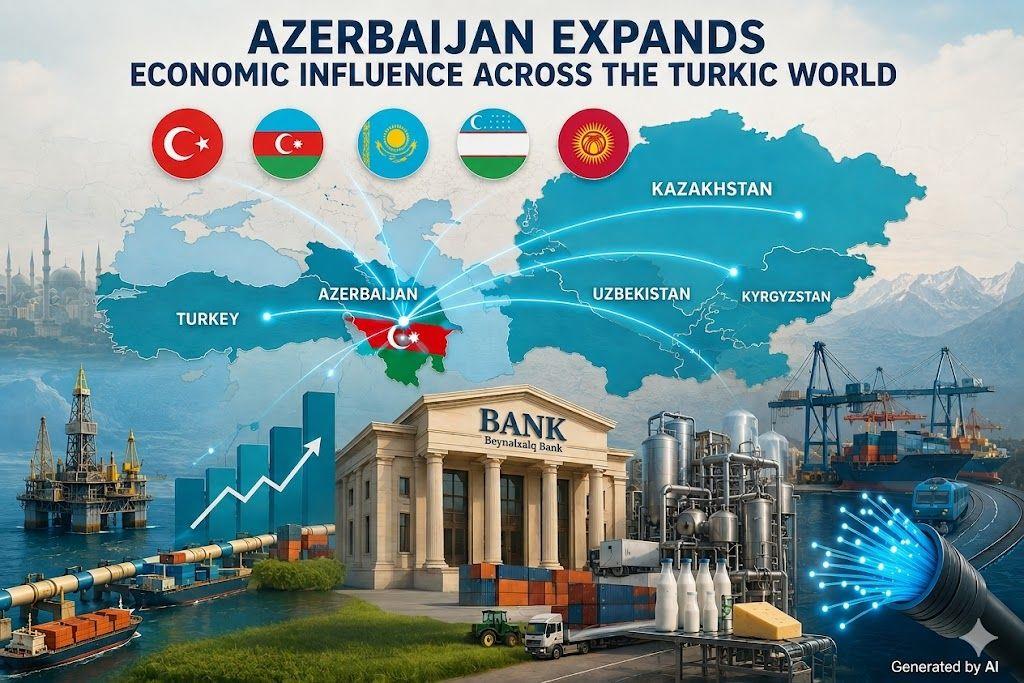
Azerbaijan Turns Capital Into Influence Across Turkic States
(MENAFN- AzerNews)
Qabil Ashirov
Read more
The transformation of Azerbaijan's economic identity from a traditional energy exporter to a dynamic regional investor is no longer a theoretical ambition; it is a visible reality unfolding across the Turkic world. At the heart of this shift is a strategic "West-to-East" capital flow, where Baku is increasingly positioning itself as a financial and industrial anchor for its ethnic and linguistic kin. This deepening footprint is most evident in Uzbekistan, a nation of thirty-five million people that has become the primary theater for Azerbaijan's new era of economic diplomacy.
The vanguard of this expansion is led by the financial sector. The recent move by the International Bank of Azerbaijan (ABB) to acquire a controlling stake in Uzbekistan's Davr Bank marks a watershed moment. For the first time, a major Azerbaijani financial institution is not just opening a representative office, but fully embedding itself into the domestic banking infrastructure of a Central Asian neighbor. This is a move of profound tactical importance. By establishing "ABB Davr Bank," Azerbaijan is creating a secure financial corridor that allows its domestic businesses to operate in Uzbekistan with the familiarity of home-grown credit, clearing, and investment services. It signals that Azerbaijan is ready to provide the "financial oxygen" necessary for long-term regional integration.
Following this financial bridgehead, Azerbaijan's real sector-specifically its sophisticated agricultural and food production conglomerates-has begun to execute massive investment plans. Rather than simply exporting finished products, these companies are building integrated industrial ecosystems on Uzbek soil. These projects, often exceeding fifty million dollars in a single venture, involve the creation of modern livestock complexes, high-yield fodder production, and state-of-the-art dairy and food processing plants. By exporting its domestic "know-how" in food security and industrial management, Azerbaijan is helping Uzbekistan modernize its own agricultural landscape while securing a dominant share of a rapidly growing consumer market. This synergy between ABB's capital and industrial expertise creates a self-sustaining cycle of influence that is difficult for traditional trade competitors to match.
However, the vision of a "Greater Turkic Economy" extends far beyond the borders of Uzbekistan. Azerbaijan's investment portfolio is becoming a sophisticated tapestry that covers the entire geography of the Organization of Turkic States. In Turkey, Azerbaijan remains a titan of investment, where multibillion-dollar stakes in the petrochemical giant Petkim and the critical TANAP pipeline have already made Baku one of the largest foreign investors in the country. This relationship has set the template for how Azerbaijan uses its energy wealth to acquire strategic industrial assets abroad.
In Kazakhstan, the focus has pivoted toward the digital and logistical future. Azerbaijani firms are currently leading the charge in laying fiber-optic cables across the Caspian seabed, a project that will link Europe and Asia through a digital "Silk Road." Simultaneously, investments in the Port of Aktau and logistics centers along the Middle Corridor are ensuring that Azerbaijan sits at the literal and figurative crossroads of global trade. Even in Kyrgyzstan, the establishment of joint investment funds demonstrates a commitment to lifting the smaller economies of the Turkic world, fostering a sense of shared prosperity that goes beyond mere rhetoric.
This economic "Turkic Turn" provides the necessary muscle for the political goals of the Organization of Turkic States. While shared history and cultural affinity provide the emotional bond, it is the flow of capital, the construction of factories, and the synchronization of banking systems that provide the structural permanence of this union. Azerbaijan is effectively becoming the central nervous system of this vast geography-a transit hub for energy, a financier for emerging markets, and a primary supplier of industrial standards.
For Azerbaijan itself, the long-term implications are transformative. These investments represent a "sovereign wealth" strategy that moves beyond the volatility of the crude oil market. As these factories in Uzbekistan and digital lines in Kazakhstan begin to yield dividends, they will provide a steady, non-oil stream of revenue that will support the Azerbaijani national budget for decades. This is the essence of a post-oil economy: using today's resource wealth to buy a seat at the table of tomorrow's industrial leaders.
Ultimately, Azerbaijan's activities in Uzbekistan and beyond signify the rise of a "Middle Power" that understands the language of modern geopolitics is written in the ledgers of banks and the blueprints of factories. By weaving its economy into the fabric of Central Asia and Anatolia, Baku is ensuring that the future of the Turkic world is not just a collection of independent states, but a unified and formidable economic reality. Through the expansion of institutions like ABB and the quiet, steady growth of its industrial giants, Azerbaijan is proving that its most valuable export is no longer just what lies beneath its soil, but its capacity to build, lead, and prosper across borders.

Legal Disclaimer:
MENAFN provides the
information “as is” without warranty of any kind. We do not accept
any responsibility or liability for the accuracy, content, images,
videos, licenses, completeness, legality, or reliability of the information
contained in this article. If you have any complaints or copyright
issues related to this article, kindly contact the provider above.
Most popular stories
Market Research

More Story





Comments
No comment