




403
Sorry!!
Error! We're sorry, but the page you were looking for doesn't exist.
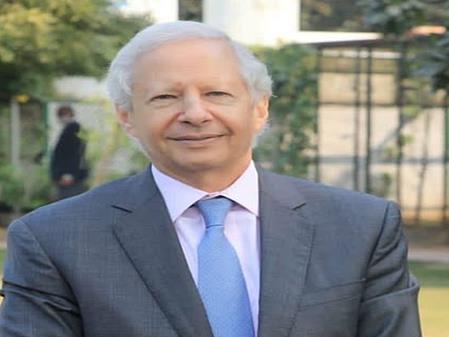
Ex-Envoy Juster Points To Resilience In India-US Partnership Amid Tensions
(MENAFN- IANS) Washington, April 23 (IANS) The India–US relationship is undergoing strain but remains fundamentally strong, shaped by shared strategic interests and long-term convergence, former US Ambassador to India Kenneth Juster told the think tank community here.
Speaking at the Hudson Institute's“New India Conference”, Juster traced the evolution of India's foreign policy and its growing alignment with Washington, particularly in response to China's rise.
“India remains committed to the principle of strategic autonomy, or working with others without surrendering its independence of judgment and action, as well as committed to a multipolar world,” Juster said. He served as the US Ambassador to India during the first term of President Donald Trump.
He noted that while India has moved closer to the United States over the past two decades, it has deliberately avoided formal alliances.“This prevents it from aligning too closely with the United States,” he added.
Juster identified China's assertiveness, especially along the disputed border, as a key driver of India's strategic shift. He said India's ties with the US have strengthened“as its problems with China have worsened”.
At the same time, he acknowledged tensions in the current phase of the relationship.“The strain in the US–India relationship that has arisen during the second Trump administration... has still raised some concerns in India,” Juster said.
Despite these challenges, the former diplomat stressed that cooperation continues across multiple sectors.“I see strong US–India ties enduring, whether it's in areas such as defence, overall trade and investment, secure supply chains, technology cooperation, and energy security,” he said.
Juster also highlighted India's expanding global footprint, pointing to its participation in groupings such as the Quad and its engagement with Europe, the Middle East, and the Indo-Pacific.
He said India's economic rise is a central pillar of its foreign policy.“Today, India's GDP is approximately $4.15 trillion. It ranks fourth in the world and will soon become the third-largest economy,” he noted.
However, he cautioned that India faces a“growth paradox”, balancing global ambitions with domestic needs due to its large population and relatively low per capita income.
On trade, Juster acknowledged friction between the two sides, particularly over market access and tariffs. While he did not speak for the administration, he said there has been a long-standing view in Washington that India's market“was a little more closed than it should be”.
He added that efforts to address these issues have sometimes been counterproductive.“I don't think it's helpful to use derogatory language or to appear as though you're trying to pressure countries,” Juster said, stressing that negotiations are best handled quietly.
Juster also flagged concerns over India's energy ties with Russia, noting that imports had risen sharply in recent years. However, he suggested that New Delhi may gradually reduce its dependence as market conditions evolve.
Reflecting on his tenure as ambassador, Juster pointed to close coordination during crises as a key strength in bilateral ties. He said the US and India“worked closely” during events such as the 2019 Pulwama attack and the 2020 border crisis with China.
“I think we were there for India... and consulted closely with them,” he said, adding that such cooperation demonstrated US reliability during moments of crisis.
Looking ahead, Juster underscored the broader significance of India's rise.“Its rise will be one of the most significant geopolitical stories of this century,” he said, adding that it is in the interest of both countries“for America to be a positive part of that story”.
The India–US relationship has deepened significantly over the past two decades, driven by shared concerns over China, expanding defence cooperation, and growing economic ties. While differences persist on trade, Russia, and strategic priorities, both sides continue to view the partnership as critical to stability in the Indo-Pacific and beyond.

Legal Disclaimer:
MENAFN provides the
information “as is” without warranty of any kind. We do not accept
any responsibility or liability for the accuracy, content, images,
videos, licenses, completeness, legality, or reliability of the information
contained in this article. If you have any complaints or copyright
issues related to this article, kindly contact the provider above.
Most popular stories
Market Research

More Story





Comments
No comment