




403
Sorry!!
Error! We're sorry, but the page you were looking for doesn't exist.
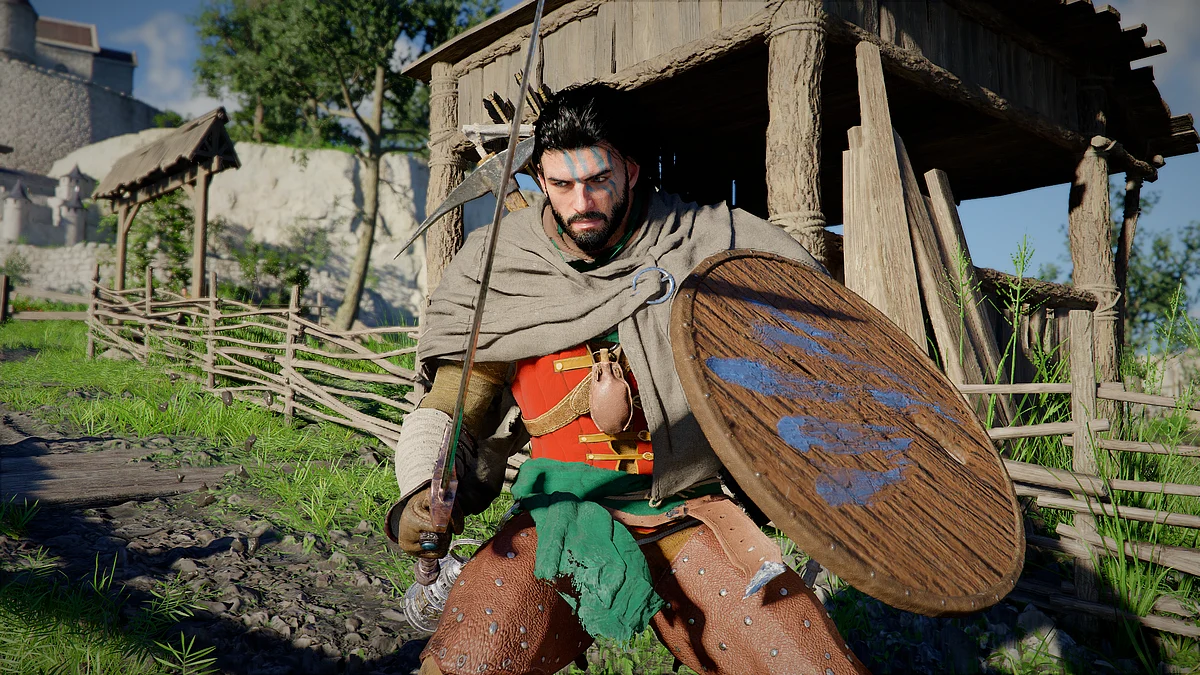
'Crimson Desert' Review: This Game Turned Me Into A Medieval Investment Banker, And I Love It
(MENAFN- Khaleej Times) The last time I was this obsessed with a video game was when Star Wars Jedi Survivor hit PS Plus last year. Before that, it was The Witcher 3, specifically Gwent, the card game within the game that had me hunting down every last card like my life depended on it.
Now, it's Crimson Desert. And I'm not obsessed with slaying legendary enemies or avenging my fallen comrades. I'm obsessed with checking my bank account every three in-game days.
Stay up to date with the latest news. Follow KT on WhatsApp Channels.
Recommended For YouPearl Abyss's first single-player game launched just over a month ago, and I've already sunk over 100 hours into it. I'm about halfway through the main story, a fairly standard revenge tale about Kliff and his scattered Greymane mercenaries, but honestly, I don't think I'm going to finish it anytime soon. Not because the story is particularly long, but because I keep getting sidetracked by everything else this game throws at you.
And when I say everything, I mean it. Crimson Desert has farming, ranching, bounty hunting, mining, puzzle-solving, and yes, an actual banking system where you can invest gold bars and watch your returns (or losses) roll in every few in-game days.
Here's how deep this goes: I found myself setting alarms. Not real-world alarms, but mental checkpoints, every three in-game days - roughly six hours of real-world gameplay - I'd travel back to bank and check my investments.
The game offers three risk strategies: low, medium, and high. Low risk gets you up to 2 per cent returns with zero chance of loss. Medium swings between -15 per cent and +20 per cent. High risk? You're looking at anywhere from -50 per cent to +55 per cent.
I always chose high risk, and thanks to the manual save tactic, losses didn't really affect me. One session, I hit a 53 per cent return; my gold bars nearly doubled, and that single payout meant I never had to worry about in-game money again.
Watch the launch trailer below:
And that's when Crimson Desert stopped being a revenge tale and started being a game about me in my medieval era.
The camp system is where it all clicked into place. Early in the game, you unlock the Greymane camp that becomes your base of operations. There, you recruit lost bannermen scattered across the continent, each one adding new functionality to your camp. And suddenly, you're not just fighting bandits, you're managing livestock, planting apple trees, making sure your chickens are fed, and helping your fellow Greymanes with the silliest things.
The ranch and farm aren't cosmetic. They generate actual resources that feed into cooking and crafting systems; your cows produce milk and meat, your crops turn into ingredients for stat-boosting meals. And because everything runs on in-game time, you start thinking in cycles. Plant seeds, dispatch your comrades on missions, check the bank, harvest crops, wander off to explore, liberate outposts, repeat.
The Crimson Desert gameplay is oddly meditative; I've spent entire sessions just tending to my camp, watching it grow from a handful of tents into a bustling operation with a smithy, trader, and a fully stocked ranch.
The main story wants you to reunite the Greymanes and take down your enemies. The side content wants you to do literally everything else. There are faction quests tied to your bannermen, bounty boards in every town, puzzles hidden in ancient ruins, and boss fights that guard legendary gear. And not the "slightly better stats" kind of gear - I'm talking artefacts that completely change how you approach combat.
Some of this gear is locked behind genuinely tough challenges. I spent an entire evening navigating the Abyss - the game's ethereal upper world - trying to figure out the correct sequence to make progress. Another night, I was on a mission to apprehend all the outlaws and collect their bounties.
The Witcher 3 had this too, but Crimson Desert takes it further with its mechanics that could be standalone games on their own.
But it's not all sunshine and rainbows; Crimson Desert is rough around the edges. The controls can feel awkward at first, the inventory system is a mess, and the story, as I mentioned, isn't going to win any awards. Some of the side quests, too, are tedious and annoying to say the least.
But Pearl Abyss is updating the game constantly, sometimes twice a week. They're listening to feedback and actually implementing changes.
I've played and adored the likes of Red Dead Redemption 2 and Assassin's Creed (although I am not a fan of recent titles), and I've put hundreds of hours into open-world RPGs. So I can say that Crimson Desert doesn't do anything revolutionary, but it makes all of its systems feel worthwhile, just like all the games I mentioned did in their time.
Everything inside the game is part of a larger loop that keeps pulling you back in. I'm 100 hours deep, and I don't see myself stopping anytime soon. Not because the story is long, but because I still have half a map to explore, a camp to expand, and a whole lot of things to figure out and understand.
If you're short on time, Crimson Desert probably isn't for you. But if you've got the hours to sink into a world that rewards exploration and experimentation, this is the game to play right now.
ALSO READ- 'Resident Evil Requiem' PS5 review: Three playthroughs later, it's still hard to put down 'Restored Land' in 'Dying Light': Game director shares key survival tips for its hardest mode

Legal Disclaimer:
MENAFN provides the
information “as is” without warranty of any kind. We do not accept
any responsibility or liability for the accuracy, content, images,
videos, licenses, completeness, legality, or reliability of the information
contained in this article. If you have any complaints or copyright
issues related to this article, kindly contact the provider above.
Most popular stories
Market Research

More Story







Comments
No comment