


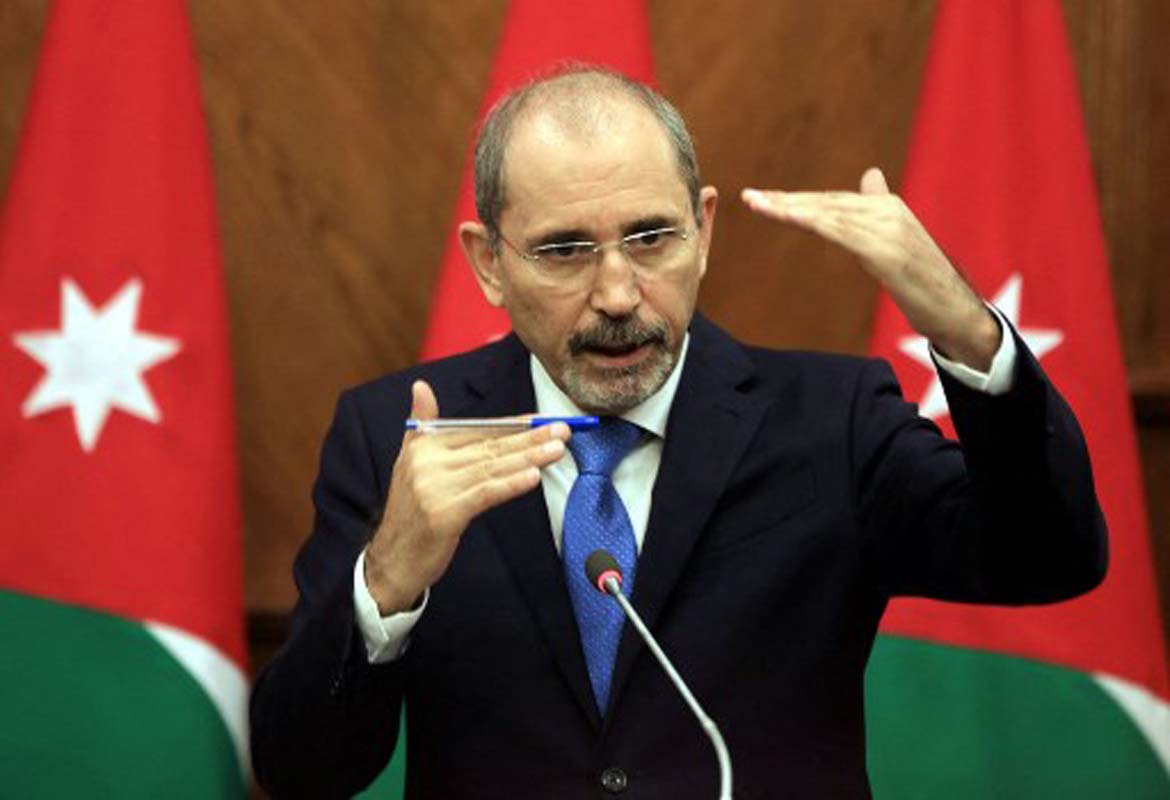
Jordan Calls for Tackling Root Causes of Conflict for Regional Stability


(MENAFN) Jordan’s Foreign Minister Ayman Safadi has said that long-term stability in the Middle East can only be achieved by tackling the underlying causes of conflict, warning that the region cannot afford continued uncertainty.
Speaking at a panel titled A Middle East Beyond Zero-Sum Politics during the Antalya Diplomacy Forum, Safadi emphasized the need for a coordinated regional approach to peace.
“I think basically key to whatever we do going forward is ensuring that we address the root causes of conflict in a collective manner that will ensure the better future that we all want,” he said.
Safadi said regional states are not seeking confrontation with Iran, but stressed that reducing tensions requires resolving key issues. He referred to concerns such as “interventionism,” “meddling in internal affairs,” and “violation of sovereignty.”
He added that future relations should be built on mutual respect and adherence to international law.
“We and the Gulf and the rest of the Arab world and Egypt, of course, and even with the larger region, with Türkiye, we all have been working towards ensuring peace and stability,” he said.
Safadi also noted that Jordan and several Gulf states have been “at the receiving end of attacks,” underscoring ongoing security concerns in the region.
He further warned that instability continues to have serious economic consequences, saying that “one month of instability can undo years of work,” particularly in major regional projects involving energy, water, and infrastructure development.
Speaking at a panel titled A Middle East Beyond Zero-Sum Politics during the Antalya Diplomacy Forum, Safadi emphasized the need for a coordinated regional approach to peace.
“I think basically key to whatever we do going forward is ensuring that we address the root causes of conflict in a collective manner that will ensure the better future that we all want,” he said.
Safadi said regional states are not seeking confrontation with Iran, but stressed that reducing tensions requires resolving key issues. He referred to concerns such as “interventionism,” “meddling in internal affairs,” and “violation of sovereignty.”
He added that future relations should be built on mutual respect and adherence to international law.
“We and the Gulf and the rest of the Arab world and Egypt, of course, and even with the larger region, with Türkiye, we all have been working towards ensuring peace and stability,” he said.
Safadi also noted that Jordan and several Gulf states have been “at the receiving end of attacks,” underscoring ongoing security concerns in the region.
He further warned that instability continues to have serious economic consequences, saying that “one month of instability can undo years of work,” particularly in major regional projects involving energy, water, and infrastructure development.

Legal Disclaimer:
MENAFN provides the
information “as is” without warranty of any kind. We do not accept
any responsibility or liability for the accuracy, content, images,
videos, licenses, completeness, legality, or reliability of the information
contained in this article. If you have any complaints or copyright
issues related to this article, kindly contact the provider above.


Comments
No comment