




403
Sorry!!
Error! We're sorry, but the page you were looking for doesn't exist.
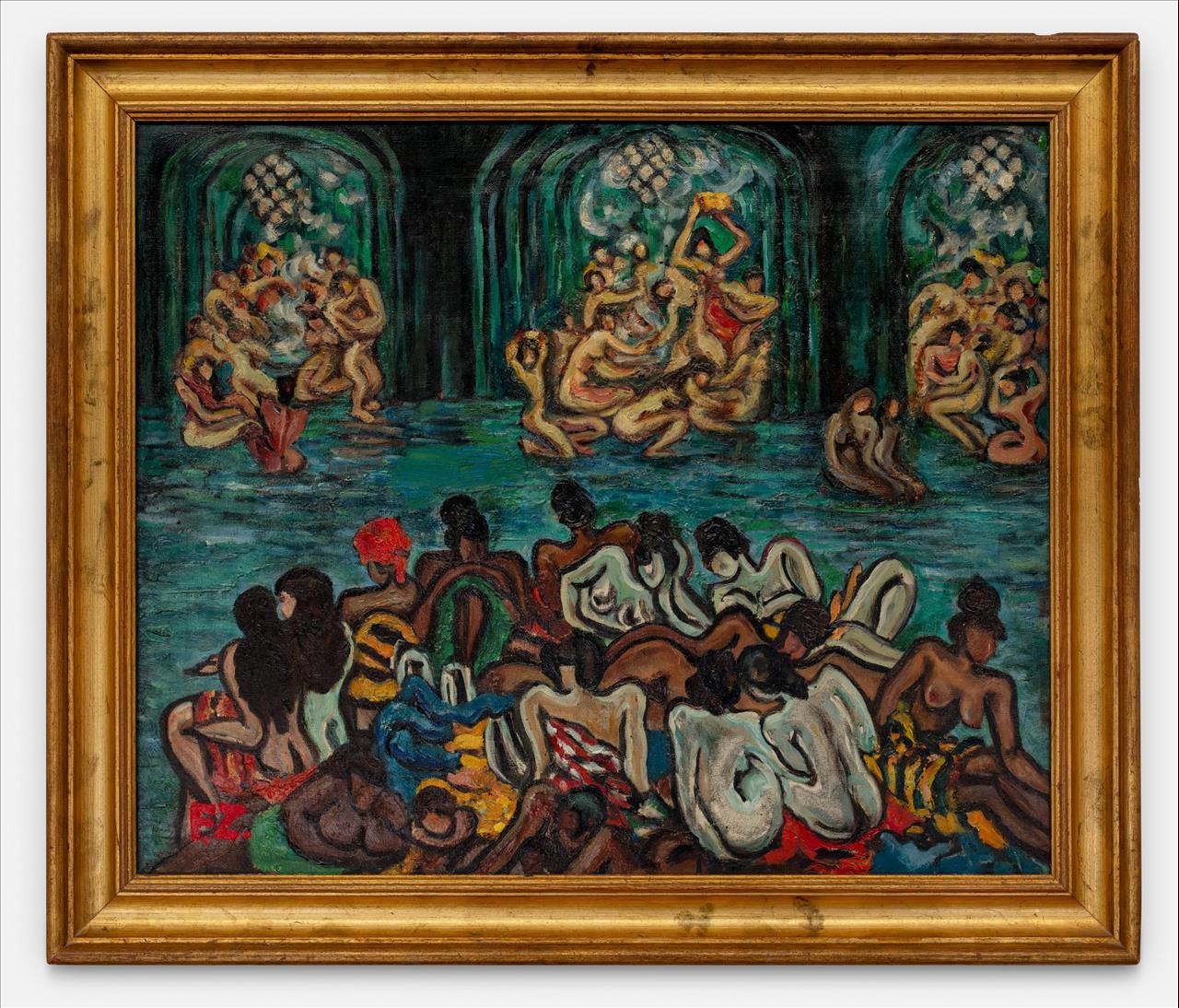
Pioneering Modernist Fahrelnissa Zeid Returns To The Spotlight In London
(MENAFN- USA Art News)
Fahrelnissa Zeid's London Return Reveals the Depth of Her Modernist Legacy
A new exhibition at Dirimart is bringing Fahrelnissa Zeid back into focus through works that have rarely, if ever, been seen in public.“Immersion,” curated by art historian Adila Laïdi-Hanieh, is Zeid's first solo gallery show in London this century and arrives nearly a decade after Tate Modern's 2017 retrospective renewed attention on the Turkish Jordanian artist.
Zeid, trained in Istanbul and Paris, was a pivotal figure in the Turkish avant-garde and in mid-20th-century Modernism. Her first solo exhibition was held in Istanbul in 1945, and in 1954 she became the first woman to have a solo show at the Institute of Contemporary Art (ICA), London. Those milestones helped define her place in art history, but Laïdi-Hanieh's exhibition aims to widen the frame.
The curator said the project began with the artist's estate, where she looked for works that had been rarely exhibited or photographed. From there, she built a selection spanning different styles and periods, with the goal of showing both diversity and coherence. The exhibition's title points to what she described as Zeid's immersive universes - a body of work that moves across registers and media while retaining a distinct visual intensity.
Laïdi-Hanieh's connection to Zeid is also personal. She studied painting with the artist in Jordan as a teenager, then later returned to her work while completing her PhD. That scholarly reassessment led to a biography published in 2017, the same year as the Tate retrospective. In her view, the gap between the critical language once used to describe Zeid and the evidence of the work itself made a fresh reconsideration necessary.
That reconsideration is especially timely now. Since 2017, more of Zeid's work has been rediscovered, restored, and circulated through private collections, the market, and digital platforms.“Immersion” responds to that expanded visibility by looking deeper into the less familiar corners of her practice, from abstraction to later portraits.
For a 2026 audience, the exhibition offers something more valuable than a simple revival. It places Zeid not only among the major women of modern art, but also at the center of a broader story about how modernism is still being rewritten through recovery, scholarship, and access to works long kept out of view.

Legal Disclaimer:
MENAFN provides the
information “as is” without warranty of any kind. We do not accept
any responsibility or liability for the accuracy, content, images,
videos, licenses, completeness, legality, or reliability of the information
contained in this article. If you have any complaints or copyright
issues related to this article, kindly contact the provider above.
Most popular stories
Market Research

More Story







Comments
No comment