




403
Sorry!!
Error! We're sorry, but the page you were looking for doesn't exist.
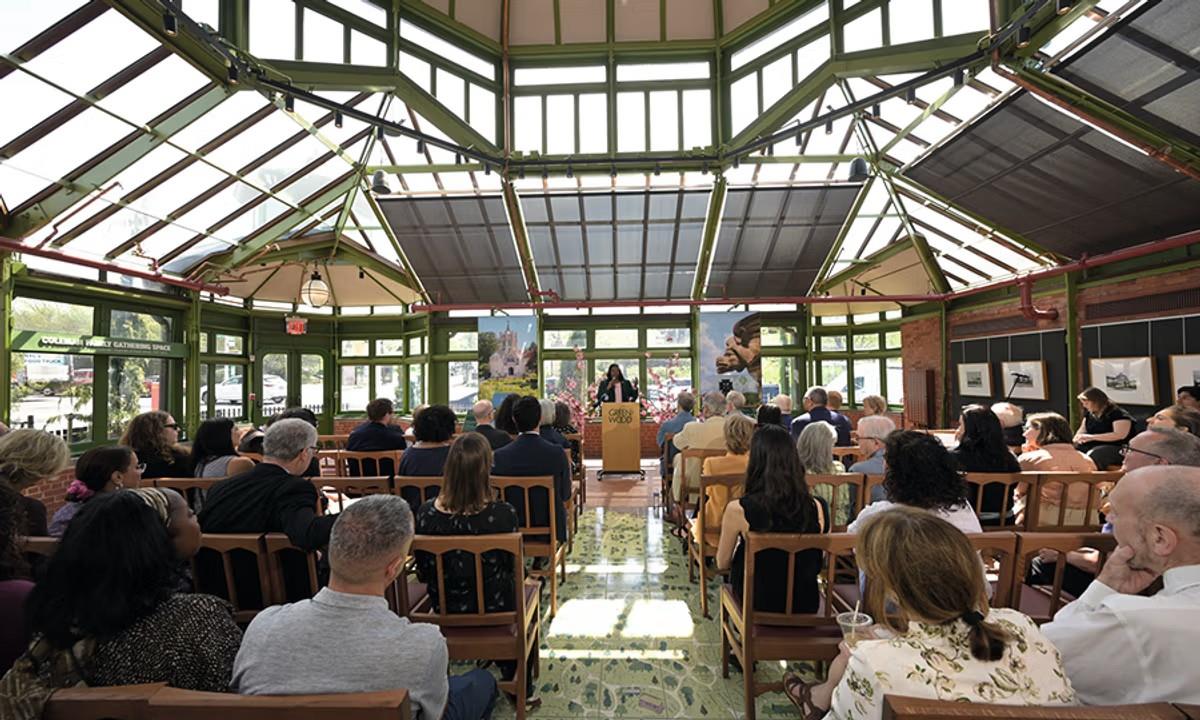
Restored Victorian Greenhouse Links Green-Wood Cemetery To Its Living Neighbours The Art Newspaper International Art News And Events
(MENAFN- USA Art News)
Green-Wood Cemetery Opens a New Welcome Center in Brooklyn's Historic Landscape
Brooklyn's Green-Wood Cemetery has added a new threshold to its 478-acre grounds: the Green-House, a welcome and education center opening to the public this weekend, April 18 and 19. Located across the street from the cemetery's main entrance, the project is built around a restored 1895 greenhouse that once served as the Weir Greenhouse and is now described as the city's only surviving Victorian commercial greenhouse.
The center is meant to make one of New York's most storied landscapes feel less forbidding and more legible. Green-Wood, founded in 1838 as part of the American rural cemetery movement, was designed as a place where the living could move through nature, sculpture, and memory at a remove from the crowded city. Nearly two centuries later, the neighborhood has closed in around it, with apartment buildings and businesses on every side. The new building is intended to meet that reality directly.
Green-Wood acquired the greenhouse from McGovern Florists in 2012 for $1.6 million, when the structure was in poor condition and in need of extensive repair. Restoration took years, and construction on the larger project did not begin until 2023. The total cost came to $34 million. Both the greenhouse and the cemetery are listed on the National Register of Historic Places, with the greenhouse added in 1984 and Green-Wood in 1997.
Designed by the Brooklyn-based Architecture Research Office (ARO), the terracotta-clad addition includes classrooms for school programs, offices, a reading room for researchers, storage for archives, and two galleries for rotating exhibitions. The Green-Wood Historic Fund holds a collection of art and objects connected to the cemetery's“eternal residents,” including George Bellows, George Catlin, William Merritt Chase, Leon Golub, Nancy Spero, and Louis Comfort Tiffany, though much of it has rarely been shown publicly.
The project also responds to a practical shift in how Americans approach death and burial. As cremation becomes more common and burial rates decline, cemeteries are being asked to justify themselves not only as places of interment, but as civic and cultural spaces. Green-Wood's new center suggests one answer: by creating a more welcoming front door, it can invite the surrounding community in without losing the quiet gravity that has defined it since the 19th century.

Legal Disclaimer:
MENAFN provides the
information “as is” without warranty of any kind. We do not accept
any responsibility or liability for the accuracy, content, images,
videos, licenses, completeness, legality, or reliability of the information
contained in this article. If you have any complaints or copyright
issues related to this article, kindly contact the provider above.
Most popular stories
Market Research

More Story






Comments
No comment