




403
Sorry!!
Error! We're sorry, but the page you were looking for doesn't exist.
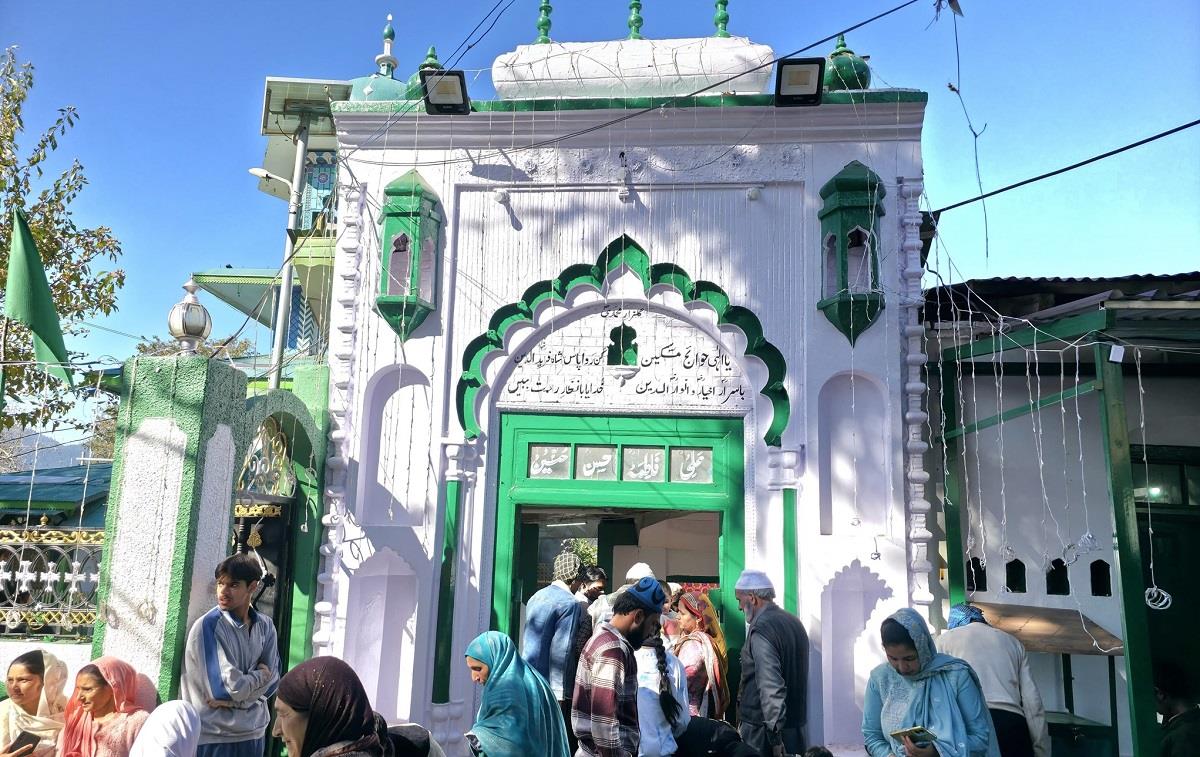
J & K HC Upholds 'Waqf By User', Declares Kishtwar Shrines Waqf Properties
(MENAFN- Kashmir Observer) Srinagar- The Jammu and Kashmir and Ladakh High Court has held that properties attached to two revered shrines in Kishtwar district are waqf properties, ruling that long-standing religious use is sufficient to confer waqf status even in the absence of formal dedication.
ADVERTISEMENT
A bench of Justice Sanjay Dhar delivered the 36-page judgment while dismissing two writ petitions - OWP No. 97/1979 and OWP No. 441/2013 - filed by Syed Lutfullah Shah and another, bringing to a close a dispute spanning nearly five decades.
ADVERTISEMENT
The case centred on the shrines of Ziarat Farid-ud-Din Sahib and Ziarat Assrar-ud-Din Sahib in Kishtwar, which attract thousands of devotees annually and are deeply embedded in the religious life of the Chenab Valley.
The petitioners, claiming to be hereditary custodians (sajjada nasheens), had argued that the shrines and their attached land were private ancestral properties passed down through generations. They contended that no valid waqf had been created as there was no formal dedication by the original owner, Raja Kirat Singh, and further argued that such dedication could not have been made by a non-Muslim.
Rejecting these claims, the court held that the legal character of the property as waqf outweighs hereditary association.
Referring to Section 3(d) of the Jammu and Kashmir Waqf Act, 1978, the bench noted that the definition of waqf explicitly includes“waqf by user,” covering properties such as mosques, dargahs, graveyards and similar institutions.
“The properties like masjid, dargah etc. by virtue of their user as such are also waqfs and no formal declaration to declare such properties as 'waqf' is required,” the court observed.
The judgment emphasised that continuous use of a property for religious or charitable purposes recognised under Muslim law is sufficient to establish its waqf character. It also noted that even documents relied upon by the petitioners described the shrine as a“rauza,” bringing it within the statutory definition of waqf by user.
In another key finding, the court rejected reliance on a 1969 report prepared by a Special Officer under earlier law, observing that it never attained finality as it was neither accepted nor published in the official gazette.
“Therefore, the report dated August 9, 1969 can, by no stretch of reasoning, be stated to have attained the status of finality,” the bench said.
ADVERTISEMENTThe court further found no procedural illegality in the 1979 inquiry that brought the shrines under waqf control, noting that the petitioners had been given an opportunity to be heard and had also availed a statutory appeal before the competent authority.
While dismissing the petitions, the court allowed the petitioners to continue residing in residential structures built on the shrine land, but only as lessees of waqf property, in line with an appellate order dated April 30, 1982, which had already attained finality on this limited issue.
The court also dismissed as infructuous the connected challenge to the now-repealed J&K Waqf laws of 1978 and 2001.
Reacting to the judgment, Darakhshan Andrabi said the ruling reinforces the legal framework governing waqf properties and sets a precedent for similar disputes.
Read Also A Small Room in Kashmir Becomes a First Stop for Justice Forest Worker Injury Case: HC Dismisses AppealShe said the verdict clarifies that continuous religious and charitable use of a property brings it within the ambit of waqf law, adding that revenue records consistently describing such shrines as waqf further strengthen their legal status.
The court also noted that earlier waqf laws have since been replaced by the Waqf Act, 1995, rendering related challenges redundant.

Legal Disclaimer:
MENAFN provides the
information “as is” without warranty of any kind. We do not accept
any responsibility or liability for the accuracy, content, images,
videos, licenses, completeness, legality, or reliability of the information
contained in this article. If you have any complaints or copyright
issues related to this article, kindly contact the provider above.
Most popular stories
Market Research

More Story






Comments
No comment