




403
Sorry!!
Error! We're sorry, but the page you were looking for doesn't exist.
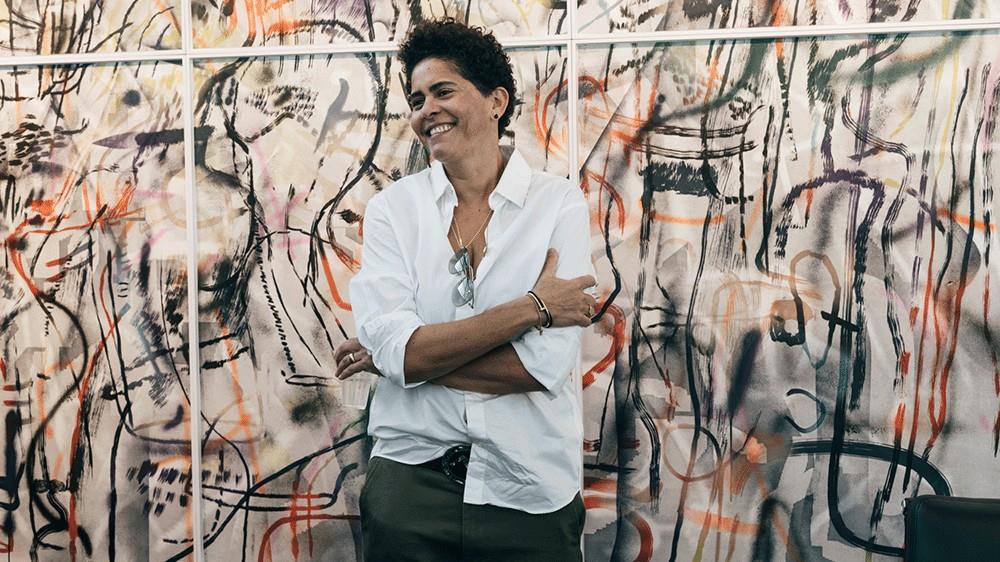
The IFPDA Print Fair Returns To The Park Avenue Armory
(MENAFN- USA Art News)
How Printmaking Turned“Originality” Into a Modern Obsession
A flood of printed images in the 19th century did more than entertain newspaper readers - it rewired the public's expectations of what art should be. As lithography and other reproductive technologies accelerated, pictures circulated with a speed and reach that earlier centuries could not have imagined. Viewers became visually acquainted with artists and their motifs through mass media, even if they never set foot in a salon.
That new familiarity produced an irony that still shapes collecting today: the more images could be copied, the more the singular object began to feel sacred. Works that seemed to preserve the artist's direct touch - a brushstroke, a graphite line, the pressure of a hand - rose in status, while prints were pushed down a newly minted hierarchy. If an image could be repeated indefinitely, what, exactly, made one sheet more“real” than another?
Decades later, German philosopher Walter Benjamin would give this anxiety a name. In“The Work of Art in the Age of Mechanical Reproduction,” he described the“aura” of the artwork: the authority a unique object accrues when it is understood as the site of authenticity. Although Benjamin wrote in the 20th century, the condition he diagnosed had already taken hold in the 19th. Mechanical circulation did not dissolve the cult of originality; it intensified it.
Printmaking complicates that story in ways the market's tidy categories often ignore. Prints can be multiples, but they can also be singular objects - and the boundary between print and drawing is frequently porous. A case in point is“Opera (Red),” a unique lithograph by French painter Françoise Gilot (1921–2023), presented by SOLO Impression. The work sits uneasily inside the assumption that prints are inherently repeatable, and therefore inherently less“authentic.”
The most persuasive rebuttal to that assumption may be the hybrid forms that are, in effect, both drawing and print. Monotypes are foundational here: images drawn on a plate and printed, typically only once - hence“mono.” Edgar Degas (French, 1834–1917) embraced the medium's instability, using ink on metal and the pressure of the press to produce impressions that feel at once graphic and painterly. His monotype“Dancers in Rehearsal” (ca. 1874–76), shown by Galerie Martinez D., captures figures that are unmistakably Degas yet softened by the medium's smoky, unpredictable transfer. The process was so consuming that Degas's friend Marcellin Desboutin described the artist's fascination with monoprints as“swallowing him completely!”
Another kind of hybridity appears in a work on paper that treats reproduction not as a threat, but as material. At the booth of new exhibitor Mireille Mosler, visitors will find“The Gatteaux Family” (1850) by Jean Auguste Dominique Ingres (French, 1780–1867), described as the artist's last and largest work on paper. Ingres built the composition by collaging engravings made after earlier drawings onto a larger sheet, then extensively reworking the whole in graphite. The result is a portrait that behaves like a time machine: Édouard Gatteaux is shown at 62 but rendered as a dapper young man based on a portrait from 1834; his parents appear posthumously, while younger relatives represent the living generation.
The sheet's rarity only heightens its stakes. Ingres made just three other large multi-figure portrait drawings:“The Forestier Family” (1806) and“The Stamaty Family” (1818), both in the Louvre Museum, and“The Family of Lucien Bonaparte” (1815), at the Harvard Art Museums. By that measure,“The Gatteaux Family” reads less like a private drawing than a museum-caliber object - one that also happens to be constructed through acts of reproduction.
Contemporary artists continue to treat printmaking as a laboratory rather than a secondary medium. American artist Julie Mehretu (b. 1970) has put it plainly:“[It's] in the printmaking that new things are invented, which I then bring into the painting and drawing.” The comment points to a technical kinship: the way print processes build images in layers, with forms blurred, transferred, and transformed, mirrors Mehretu's own stratified approach across media.
Mehretu's work will be on view in the booth of Gemini G.E.L at Joni Moisant Weyl, and she is scheduled to speak with curator Susan Dackerman at the Park Avenue Armory on Saturday, April 11. The following day, April 12 - the fair's final day - brings a talk by Edina Adam (J. Paul Getty Museum) and Jamie Gabbarelli (Art Institute of Chicago), authors of“Lines of Connection: Drawing and Printmaking, 1400–1850,” which won the 2026 IFPDA Book Award.
Taken together, these presentations make a quiet argument against the old hierarchy. Prints are not merely images that happen to be reproducible. They are objects with their own forms of touch, risk, and invention - and, in many cases, their own unmistakable aura.

Legal Disclaimer:
MENAFN provides the
information “as is” without warranty of any kind. We do not accept
any responsibility or liability for the accuracy, content, images,
videos, licenses, completeness, legality, or reliability of the information
contained in this article. If you have any complaints or copyright
issues related to this article, kindly contact the provider above.
Most popular stories
Market Research

More Story







Comments
No comment