




403
Sorry!!
Error! We're sorry, but the page you were looking for doesn't exist.
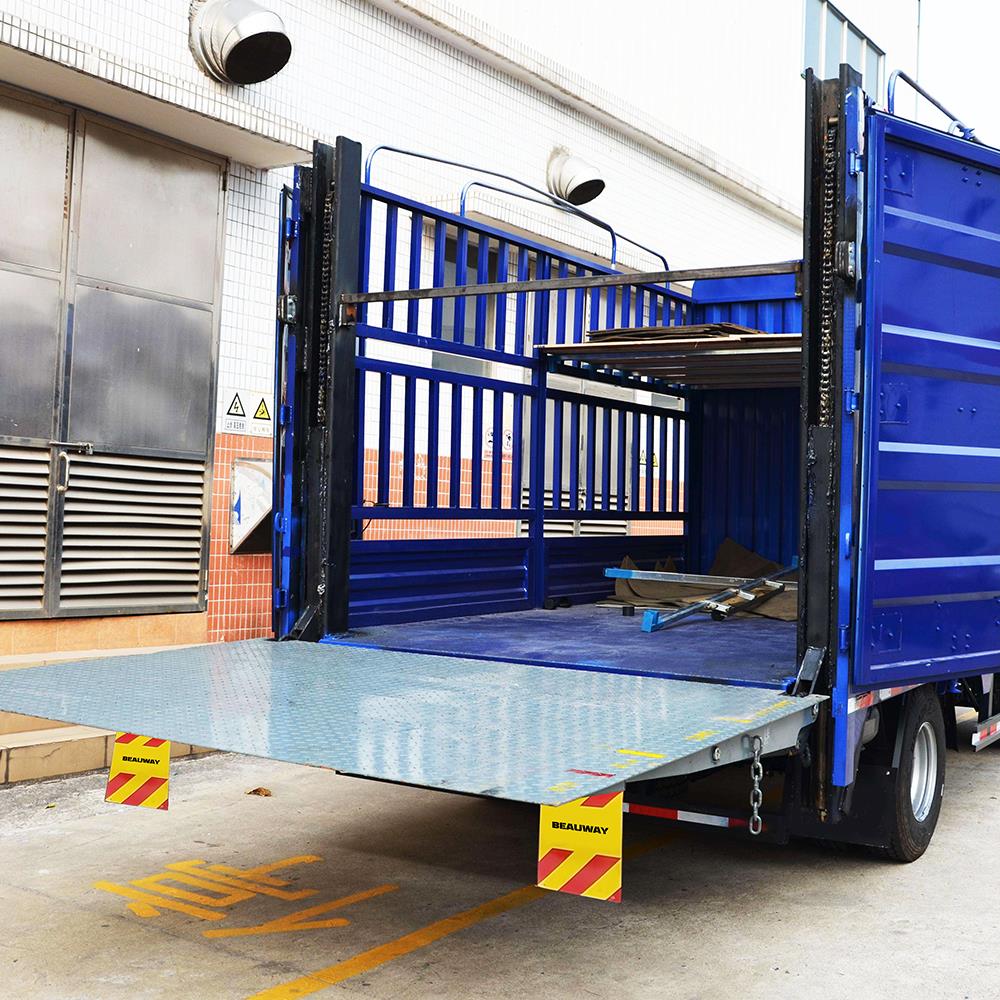
Vertical Tail Lifts Don't Get Enough Credit — Here's What They Actually Do Better
(MENAFNEditorial) Most conversations about tail lift selection start with payload capacity and platform size. Rarely does anyone lead with lift geometry — and that's where a lot of mismatched equipment decisions begin.
After working with fleet operators across warehousing, urban delivery, and heavy freight, one pattern keeps showing up: vehicles that would have been better served by a vertical tail lift for refrigerated trucks ended up with a tuck-away or cantilever unit because that's what the previous fleet ran. Nobody questioned it. The operational compromises that followed got absorbed into daily workflow until they were invisible.
This article is about what a vertical tail lift actually does well, where it earns its place, and what operators should realistically expect from it over the long term.
What Makes a Vertical Tail Lift Different
The defining characteristic of a vertical tail lift is its lift path. Unlike tuck-away designs that swing the platform outward and upward in an arc, a vertical tail lift raises and lowers the platform in a straight vertical line — parallel to the rear of the vehicle at all times.
This geometry has consequences that ripple through every aspect of operation. Because the platform never swings out, the best vertical tail lift for tight urban loading bays becomes immediately obvious — reduced rear clearance requirements mean operators can work in spaces that would be genuinely problematic for swing-arm alternatives. The vertical lift path also means the platform edge maintains a consistent relationship with the vehicle floor throughout the lift cycle, which matters considerably when you're rolling heavy wheeled cargo on and off.
Where It Performs Best
Vertical tail lifts have found their strongest foothold in a few specific operational environments, and the reasons are more practical than theoretical.
Refrigerated and temperature-controlled vehicles represent one of the clearest use cases. The vertical geometry allows the platform to park flush against the rear doors — making it the preferred hydraulic vertical tail lift solution for cold chain logistics. For operations where every second of door-open time affects cargo temperature, this is a meaningful operational advantage, not a marginal one.
Dense urban delivery routes are another natural fit. Drivers working city centers deal with loading zones that were never designed for modern truck dimensions. A low-clearance vertical tail lift for city delivery vehicles reduces the footprint of each stop, which across a high-frequency delivery schedule adds up to measurable time savings over a full shift.
Vehicles that service multiple dock heights also benefit from vertical lift geometry. Because the platform travels straight up and down rather than through an arc, operators have more precise control over final platform height — which is exactly what you need when you're looking for a commercial vehicle tail lift with adjustable dock height compatibility.
What Operators Often Underestimate
There are two things that consistently catch operators off guard with vertical tail lifts — not because the equipment underperforms, but because expectations weren't set correctly from the start.
The first is platform size. Vertical tail lifts generally offer a more compact platform footprint than tuck-away alternatives of equivalent payload rating. For operations handling oversized cargo, this is worth factoring into the selection decision early. Operators searching for a heavy duty vertical tail lift for oversized cargo handling should pay close attention to platform dimensions before committing to a model.
The second is maintenance access. The vertical lift mechanism — particularly the mast structure and hydraulic components — requires a maintenance approach that differs from swing-arm designs. It isn't more complex, but it rewards having a technician familiar with the specific system.
Maintenance Priorities for Vertical Tail Lifts
The mast and guide rail system is the heart of a vertical tail lift, and it deserves consistent attention. Rail alignment should be checked regularly — a mast running even slightly out of true will show up in uneven platform travel before anything else fails visibly. For operators running a vertical mast tail lift with guide rail alignment system, catching this early is straightforward. Ignoring it means accelerated wear on components that are more involved to replace.
Hydraulic maintenance follows the same principles as any lift system: oil quality, line integrity, and seal condition checked on a fixed schedule rather than a reactive one. What differs here is the importance of checking cylinder mounting points specifically — the straight-line load path puts consistent directional stress on those connections over time. Any operator running a hydraulic tail lift with vertical lift cylinder maintenance requirements should have this built into their quarterly service checklist.
Lubrication of the mast rails and platform guide wheels is one of those tasks that gets skipped because it lacks obvious immediate consequences. For a vertical tail lift with mast rail lubrication system, the consequences show up later in the form of jerky platform travel and premature guide wheel replacement. Fifteen minutes of attention on a regular schedule prevents a much larger job down the line.
A Practical Note on Selection
Vertical tail lifts aren't the universal answer — no single tail lift geometry is. But they are frequently the right answer for operations where dock access is constrained, temperature control matters, or consistent dock-height alignment is a daily need.
The mistake we see most often isn't choosing the wrong lift type. It's choosing based on familiarity rather than operational fit. A proper selection conversation should start with the question every fleet manager should be asking: what does a rear-mounted vertical tail lift for multi-stop delivery routes actually need to do, shift after shift, in the specific environments this vehicle operates in?
That answer looks different for every fleet. But asking the question early prevents the kind of equipment mismatch that gets absorbed into workflow and treated as normal long after it should have been addressed.
Final Thought
Vertical tail lifts reward operators who understand their specific strengths and maintain them accordingly. In the right application — cold chain vehicles, constrained urban bays, variable dock environments — they consistently outperform alternatives that look better on a spec sheet.
If you're working through a tail lift selection decision, or reviewing equipment that isn't performing the way you expected, the Beauway team is available to work through the specifics with you. Visit our tail lift solutions page or get in touch directly.
After working with fleet operators across warehousing, urban delivery, and heavy freight, one pattern keeps showing up: vehicles that would have been better served by a vertical tail lift for refrigerated trucks ended up with a tuck-away or cantilever unit because that's what the previous fleet ran. Nobody questioned it. The operational compromises that followed got absorbed into daily workflow until they were invisible.
This article is about what a vertical tail lift actually does well, where it earns its place, and what operators should realistically expect from it over the long term.
What Makes a Vertical Tail Lift Different
The defining characteristic of a vertical tail lift is its lift path. Unlike tuck-away designs that swing the platform outward and upward in an arc, a vertical tail lift raises and lowers the platform in a straight vertical line — parallel to the rear of the vehicle at all times.
This geometry has consequences that ripple through every aspect of operation. Because the platform never swings out, the best vertical tail lift for tight urban loading bays becomes immediately obvious — reduced rear clearance requirements mean operators can work in spaces that would be genuinely problematic for swing-arm alternatives. The vertical lift path also means the platform edge maintains a consistent relationship with the vehicle floor throughout the lift cycle, which matters considerably when you're rolling heavy wheeled cargo on and off.
Where It Performs Best
Vertical tail lifts have found their strongest foothold in a few specific operational environments, and the reasons are more practical than theoretical.
Refrigerated and temperature-controlled vehicles represent one of the clearest use cases. The vertical geometry allows the platform to park flush against the rear doors — making it the preferred hydraulic vertical tail lift solution for cold chain logistics. For operations where every second of door-open time affects cargo temperature, this is a meaningful operational advantage, not a marginal one.
Dense urban delivery routes are another natural fit. Drivers working city centers deal with loading zones that were never designed for modern truck dimensions. A low-clearance vertical tail lift for city delivery vehicles reduces the footprint of each stop, which across a high-frequency delivery schedule adds up to measurable time savings over a full shift.
Vehicles that service multiple dock heights also benefit from vertical lift geometry. Because the platform travels straight up and down rather than through an arc, operators have more precise control over final platform height — which is exactly what you need when you're looking for a commercial vehicle tail lift with adjustable dock height compatibility.
What Operators Often Underestimate
There are two things that consistently catch operators off guard with vertical tail lifts — not because the equipment underperforms, but because expectations weren't set correctly from the start.
The first is platform size. Vertical tail lifts generally offer a more compact platform footprint than tuck-away alternatives of equivalent payload rating. For operations handling oversized cargo, this is worth factoring into the selection decision early. Operators searching for a heavy duty vertical tail lift for oversized cargo handling should pay close attention to platform dimensions before committing to a model.
The second is maintenance access. The vertical lift mechanism — particularly the mast structure and hydraulic components — requires a maintenance approach that differs from swing-arm designs. It isn't more complex, but it rewards having a technician familiar with the specific system.
Maintenance Priorities for Vertical Tail Lifts
The mast and guide rail system is the heart of a vertical tail lift, and it deserves consistent attention. Rail alignment should be checked regularly — a mast running even slightly out of true will show up in uneven platform travel before anything else fails visibly. For operators running a vertical mast tail lift with guide rail alignment system, catching this early is straightforward. Ignoring it means accelerated wear on components that are more involved to replace.
Hydraulic maintenance follows the same principles as any lift system: oil quality, line integrity, and seal condition checked on a fixed schedule rather than a reactive one. What differs here is the importance of checking cylinder mounting points specifically — the straight-line load path puts consistent directional stress on those connections over time. Any operator running a hydraulic tail lift with vertical lift cylinder maintenance requirements should have this built into their quarterly service checklist.
Lubrication of the mast rails and platform guide wheels is one of those tasks that gets skipped because it lacks obvious immediate consequences. For a vertical tail lift with mast rail lubrication system, the consequences show up later in the form of jerky platform travel and premature guide wheel replacement. Fifteen minutes of attention on a regular schedule prevents a much larger job down the line.
A Practical Note on Selection
Vertical tail lifts aren't the universal answer — no single tail lift geometry is. But they are frequently the right answer for operations where dock access is constrained, temperature control matters, or consistent dock-height alignment is a daily need.
The mistake we see most often isn't choosing the wrong lift type. It's choosing based on familiarity rather than operational fit. A proper selection conversation should start with the question every fleet manager should be asking: what does a rear-mounted vertical tail lift for multi-stop delivery routes actually need to do, shift after shift, in the specific environments this vehicle operates in?
That answer looks different for every fleet. But asking the question early prevents the kind of equipment mismatch that gets absorbed into workflow and treated as normal long after it should have been addressed.
Final Thought
Vertical tail lifts reward operators who understand their specific strengths and maintain them accordingly. In the right application — cold chain vehicles, constrained urban bays, variable dock environments — they consistently outperform alternatives that look better on a spec sheet.
If you're working through a tail lift selection decision, or reviewing equipment that isn't performing the way you expected, the Beauway team is available to work through the specifics with you. Visit our tail lift solutions page or get in touch directly.

Legal Disclaimer:
MENAFN provides the
information “as is” without warranty of any kind. We do not accept
any responsibility or liability for the accuracy, content, images,
videos, licenses, completeness, legality, or reliability of the information
contained in this article. If you have any complaints or copyright
issues related to this article, kindly contact the provider above.
Most popular stories
Market Research

More Story








Comments
No comment