




403
Sorry!!
Error! We're sorry, but the page you were looking for doesn't exist.
Oil Shock For Asia: Identifying The Key Pressure Points
(MENAFN- ING)
Where the pressures points are likely to emerge
A key question for policymakers right now is how quickly rising oil prices will begin to strain Asian economies. Under a scenario where supply disruptions last for a month and then gradually ease throughout the year, we expect Brent crude oil to average US$83/bbl, about $15/bbl higher than the 2025 baseline.
Our previous work on import exposures shows that Thailand and Korea carry the largest oil and gas trade deficits in Asia and are therefore most exposed to supply shocks and price spikes. Taiwan, the Philippines, Singapore and India follow closely, facing meaningful but more varied vulnerabilities depending on domestic buffers and pricing policies.
Below, we discuss how the impact might differ across the region, shaped by each country's energy mix, import dependencies, domestic fuel buffers and fiscal capacity to absorb subsidy costs.
Asia's fragile energy buffersAsia's energy resilience is uneven; while Japan and Korea can absorb shocks for longer, thinner LPG buffers and heavy LNG dependence leave several economies exposed. Those with limited reserves, particularly Indonesia, could face the sharpest pressure if supply risks continue to escalate.
Energy reserve adequacy varies sharply across Asia. Japan holds the deepest cushion, with reserves covering 254 days of domestic demand, followed by South Korea at 210 days. India maintains about 74 days, while the Philippines keeps close to two months' worth of supply across refined products.
While oil inventories appear broadly sufficient in the near term, LPG buffers remain notably thin, increasing vulnerability to price spikes and supply disruptions. With LNG prices up nearly 70% since the flare‐up, economies heavily reliant on imported gas – Thailand, Korea, and Japan – face outsized exposure to further volatility.
At the other end of the spectrum, Indonesia's reserves cover only about 25 days, placing it among the most at‐risk economies should disruptions persist into the second quarter.
A substitution cushion: coal dependence helps India and ChinaA key differentiator across the region is the scope of fuel substitution. India and China benefit from a built‐in shock absorber because more than half of their energy supply still comes from coal. Although both remain net coal importers, their ability to substitute oil with coal at the margin provides an important cost advantage. The contrast in recent market moves is stark: coal prices have risen only about 12% since the conflict began, compared with an approximate 70% surge in natural gas. This divergence gives India and China a meaningful substitution buffer that could reduce their exposure to oil and gas price spikes to some extent.
By contrast, Korea has limited room to substitute. Its high dependency on both oil and gas leaves it exposed, even though the government has temporarily capped domestic petroleum prices. A weakening Korean won further amplifies imported inflation, prompting us to raise our 2026 CPI forecast by 0.2ppt to 2.2%, with upside risks if Brent remains above $80/bbl.
If the government continues to cap retail prices without offering subsidies, refiners will have to absorb the widening cost gap, which may not be a feasible solution for the medium term.
More than half of energy for India and China comes from coal Tolerance levels: Singapore and Taiwan have the deepest fiscal cushionAsian governments are responding very differently to higher crude prices, reflecting differences in subsidy systems, fiscal buffers and political willingness to pass costs through. Several economies – including Indonesia, Japan and India – are prioritising price stability and have held retail fuel prices unchanged despite rising global benchmarks, relying on state‐owned oil companies or fiscal support to cushion consumers. By contrast, Singapore and the Philippines have already raised pump prices by 10-13% since 2 March, signalling a deliberate policy choice to allow earlier pass‐through.
If disruptions escalate, Singapore and Taiwan appear best positioned to sustain higher oil prices, supported by relatively strong fiscal positions, healthier current account dynamics and greater capacity for targeted support. India also has meaningful tolerance, with state‐owned oil companies able to absorb losses until crude exceeds $130/bbl. This has kept petrol and diesel prices stable so far, although the government has adjusted LPG prices upwards.
Indonesia, however, faces a far tighter constraint. Officials have indicated a“worst case scenario” of crude averaging $92/bbl, well above the $70/bbl assumption in the 2026 budget – highlighting limited room to manage sustained shocks without broader fiscal strain. The Philippines has even less of a buffer: domestic gasoline prices rose 5% last week with another 12% increase announced, underscoring its rapid pass‐through, narrow subsidy capacity and higher sensitivity to global price swings.
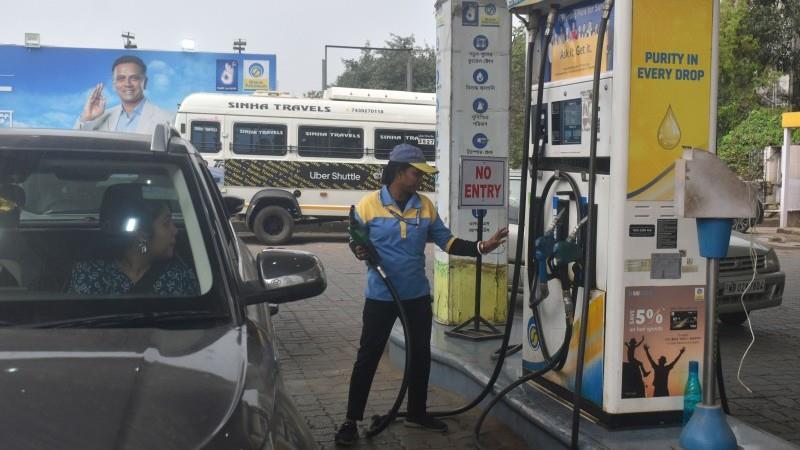
Some countries have already seen steep domestic fuel price hikes Singapore and Taiwan have strong fiscal buffers The Philippines: fastest pass-through, higher near-term riskThe Philippines is likely to feel higher oil prices sooner than most Asian counterparts, such as Thailand or Indonesia, given its modest fuel buffers, rapid domestic price pass‐through and a structurally wider current account deficit. As one of the region's most oil‐dependent economies, alongside Thailand, Korea, Vietnam and Singapore, a sustained rise in crude has meaningful external implications. The strain is already visible, with several local governments shifting to four‐day work weeks in response to the recent surge in fuel costs.
Inflation dynamics will depend on how quickly higher energy costs spill over into transport, electricity and food. The 2022 episode – when inflation jumped from 4% to 8.5% as oil averaged around $100/bbl – showed how sensitive the economy is to simultaneous increases in fuel and food prices, especially when the currency depreciates. Conditions today are somewhat more stable, with rice supply from Vietnam intact and agricultural availability generally adequate. However, forward risks remain. Fertiliser prices could rise if Middle East supply tightens, eventually pressuring yields and food prices later in the year, a meaningful vulnerability given the Philippines' exposure to imported food and fuel.
Overall, we are increasing our current account deficit forecast for the Philippines to 4% of GDP in 2026. A $15/bbl increase in Brent crude could widen the Philippines' current account deficit by around 0.7% of GDP, assuming stable demand. This would increase the risk of renewed peso weakness if elevated oil prices persist. In our scenario of sustained oil disruptions for a month, CPI inflation for the Philippines is expected to inch closer to the upper end of 4% of the BSP's target range.
Market impactWhile Singapore, Korea, and Taiwan benefit from sizeable current account surpluses that help absorb higher import costs, Thailand's surplus is far more modest, leaving it with less of a buffer. Meanwhile, India and the Philippines stand out as the only major economies running structural current account deficits, though India has kept its gap contained at roughly 1% of GDP in recent years.
Foreign exchange reserve adequacy adds another layer to the risk profile. Malaysia, Indonesia, and South Korea hold comparatively lower FX cover relative to their import needs, making them more exposed to a prolonged rise in crude prices. In contrast, the Philippines and India maintain stronger FX buffers, giving their central banks greater capacity to manage currency pressures if oil‐related outflows intensify.
Philippines: Given the upward revision to our CPI forecasts, we no longer expect the BSP to cut rates this year. Persistently higher oil prices also pose a risk of further delaying the recovery in GDP growth, which is already starting from a muted base. We maintain our 2026 GDP forecast at 5.2%, with a meaningful upturn expected only in the second half of the year. We anticipate weak growth pressures to persist in the first half of 2026, at least, as ongoing investigations and unresolved political and oil price uncertainty continue to weigh on both business confidence and broader economic sentiment.
India: Oil price risks remain manageable for now, as oil marketing companies are absorbing the increase in crude costs without passing them through to retail prices. As a result, we are keeping our CPI inflation forecast unchanged and continue to expect inflation to average below the RBI's medium‐term target of 4% in 2026. However, the INR remains vulnerable, as higher crude prices are likely to widen the current account deficit and exert additional pressure on the currency.
Indonesia: As a net exporter of oil and gas, Indonesia typically benefits from higher global oil prices; however, already‐strained fiscal balances risk further deterioration as the government increases subsidies on retail fuel. The widening fiscal deficit has already weighed on the IDR, and further deterioration could amplify this pressure.
At the same time, Indonesia's real rate differential versus the US has narrowed sharply – by more than two percentage points between November 2025 and February 2026 – adding to currency headwinds. Compounding this, sizeable foreign investor outflows from government debt since September 2025 and weakening appetite for Indonesian equities in 2026 have further weighed on the IDR, and with investor caution likely to keep FII inflows subdued, we expect additional depreciation pressure ahead.
With relatively lesser pass-through of higher oil prices to retail prices for petroleum products, we are keeping our CPI inflation forecast unchanged at 2.6%. Given the soft domestic growth outlook, we believe BI's easing cycle is not yet complete. Once the currency stabilises, further rate reduction remains likely to support growth. We currently expect two additional 25bp cuts in the first half of 2026, though the risks are skewed toward a delay.
Singapore: Given the expected pass‐through from higher crude oil prices to domestic pump prices, we are raising our 2026 Singapore headline CPI inflation forecast from 1.8% to 2.0%. Singapore has emerged as a standout performer in Asia, with GDP growth in 2025 significantly surpassing expectations; 4Q25 growth accelerated to 6.9% YoY, driven by a sharp rebound in manufacturing, particularly pharmaceuticals and electronics. The city‐state has been a clear beneficiary of AI‐related demand and has maintained competitiveness through its relatively low tariff exposure, supporting robust export performance, a trend we expect to persist. Against this backdrop of strong growth and firming inflation, we continue to anticipate that the Monetary Authority of Singapore will tighten its FX policy stance in April. Singapore's strong fiscal position and substantial current account surplus should also help limit depreciation pressures on the currency.
Malaysia, Indonesia, and South Korea hold comparatively lower FX cover to smoothen FX vols FX moves this time have been relatively large vs. 2022In conclusion, higher oil prices will strain Asia unevenly, with Thailand, the Philippines and Korea facing the earliest pressure due to weak buffers, fast pass‐through and sizeable import dependence, respectively. India and China are better cushioned by coal substitution, while Singapore and Taiwan benefit from strong fiscal and external positions.
Market risks are most acute where reserves are thin and current account deficits widen – particularly the Philippines and Indonesia.
Asia FX forecasts
Legal Disclaimer:
MENAFN provides the
information “as is” without warranty of any kind. We do not accept
any responsibility or liability for the accuracy, content, images,
videos, licenses, completeness, legality, or reliability of the information
contained in this article. If you have any complaints or copyright
issues related to this article, kindly contact the provider above.
Most popular stories
Market Research

More Story







Comments
No comment