










403
Sorry!!
Error! We're sorry, but the page you were looking for doesn't exist.
Treaty 4 Raises Hard Questions Like How Did 'Crown Land' Come To Be?
Author: Ken Wilson
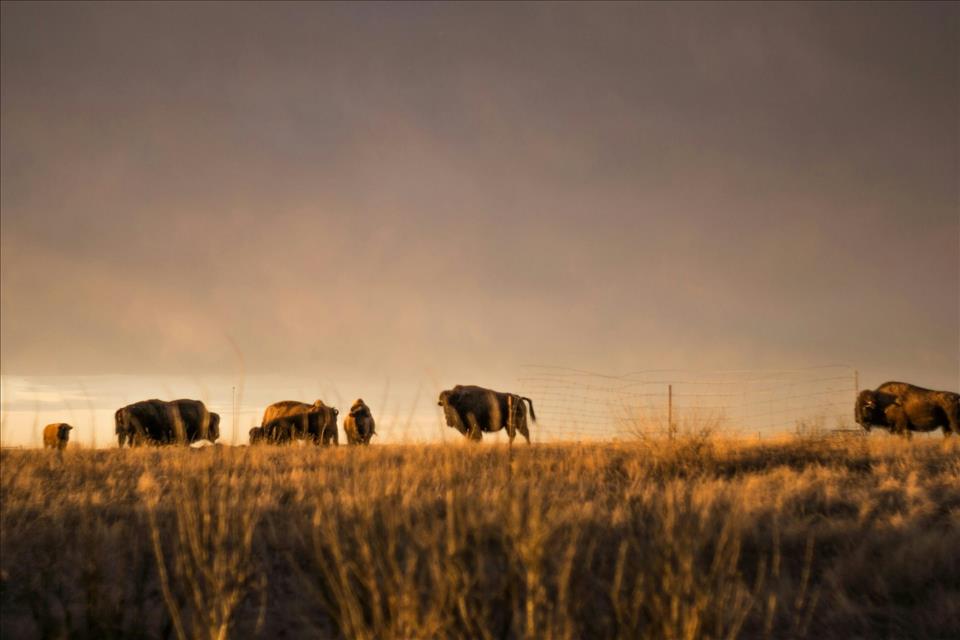
(MENAFN- The Conversation) In my recently published book, Walking the Bypass: Notes on Place from the Side of the Road, I describe standing beside the Regina Bypass, a new (and politically controversial) highway around Saskatchewan's capital, asking myself how settlers came to own the land that stretched to the horizon in all directions.

Canadian courts have generally treated the numbered treaties as land cessions, though they also recognize them as solemn agreements requiring honourable interpretation.
I recalled what the late Stó:lō Elder Lee Maracle wrote in My Conversations With Canadians: settlers like me rarely get curious about“how the shift from Indigenous authority over the land to Canadian authority over the land occurred.”
I decided to get curious, and what I learned surprised me.
The official story: SurrenderRegina is in Treaty 4 territory. In September 1874, treaty commissioners representing the Crown negotiated that treaty with Cree, Saulteaux and Nakoda chiefs at Fort Qu'Appelle, now a town east of Regina, but then a Hudson's Bay Co. trading post.
What Treaty 4 means depends on whose story you believe. The federal government tells one story; First Nations treaty Elders and legal scholars tell another. Those stories offer radically different versions of that treaty.
According to the federal government, First Nations surrendered their title to the land through the historical numbered treaties, including Treaty 4. That interpretation depends on the words of the treaty document: First Nations “do hereby cede, release, surrender and yield up” their land.
There's a problem, however. As historian Sheldon Krasowski points out in No Surrender: The Land Remains Indigenous, there's no evidence those words were mentioned by the treaty commissioners during the negotiations, or that their translator, Charles Pratt, a Cree-Nakoda catechist who often translated for Anglican missionaries, would have been able to convey the treaty's legalese into the chiefs' languages.
When pioneering Cree lawyer Harold Cardinal and historian Walter Hildebrandt explained the meaning of what's come to be known as the“surrender clause” to First Nations Treaty Elders, those Elders were incredulous that anyone would think the chiefs would have agreed to give up their rights to the land. Elder Kay Thompson (Treaty 4) told Cardinal and Hildebrandt:
If that interpretation is wrong, then Canada's legal claim to much of the land west of Ontario rests on uncertain ground.
A different account of Treaty 4If the so-called“surrender clause” wasn't interpreted, and if contemporary Treaty Elders say no surrender of land took place, then the federal government's story about the treaties doesn't make much sense. And, if there was no surrender of land, then what gave the federal government the right to survey, sell or give away to settlers everything outside of reserves?
How did the notion of“Crown land” come about? How did the shift in authority that Edler Maracle describes happen?
First Nations legal scholars and Elders offer a completely different account of Treaty 4 and the other historical treaties: they were about sharing the land and establishing an ongoing relationship with settlers.
The most important speech of the Treaty 4 negotiations, the one that brought the talks to a conclusion, was made by Chief Loud Voice on the last day of the discussions. He said:
Those words suggest a desire to create a relationship with the newcomers to the Plains, not a surrender of land. Contemporary Indigenous legal scholars agree with this interpretation.
In Two Families: Treaties and Government, writer and lawyer Harold Johnson argues that the treaties represent sacred ceremonies in which First Nations adopted settlers as their kin. That's why the Elder he consulted suggested he use the Cree word kiciwâminawak -“our cousins” - to refer to settlers.
For Johnson, the key element of the negotiations was the Sacred Pipe Ceremony, which solemnized that adoption, not the treaty document.“The paper at treaty was ancillary to ceremony,” he explains.“My ancestors recognized your paper as your ceremony and participated so as not to offend.”
Ceremony, not paper, constituted the agreement.
What if the story isn't true?Interpreting Treaty 4, like the other historical treaties, as a sharing agreement rather than a surrender of land raises profound questions. How did so much land in Saskatchewan, as in other parts of Canada, come to belong to settlers?
This disagreement is not simply about history; it is about what counts as law.
In Saskatchewan, as elsewhere, reserves are a tiny part of the total area. The rest belongs to the Crown or has been sold or given to settlers.
How can that situation be considered sharing? How did the Crown come to possess the land? On what basis was the land sold or given away? Is our title to the land the product of a story that simply isn't true? Did that shift from Indigenous to Canadian authority happen through a misunderstanding, at best, or trickery, at worst?
These two interpretations aren't just trivia. The unsettling questions they raise block genuine reconciliation today because the official interpretation relies on a version of the treaty that partners reject. Thinking about those questions, and discussing them with Indigenous Peoples, won't be easy for settlers, but it needs to happen.
As Dallas Hunt and Gina Starblanket, Cree authors and advocates for Indigenous thoughts, point out:
Are we settlers ready for that work? The first step might be reconsidering which story about the treaties we believe.
Institution:University of Regina

Legal Disclaimer:
MENAFN provides the
information “as is” without warranty of any kind. We do not accept
any responsibility or liability for the accuracy, content, images,
videos, licenses, completeness, legality, or reliability of the information
contained in this article. If you have any complaints or copyright
issues related to this article, kindly contact the provider above.
Most popular stories
Market Research

More Story


Comments
No comment