




403
Sorry!!
Error! We're sorry, but the page you were looking for doesn't exist.
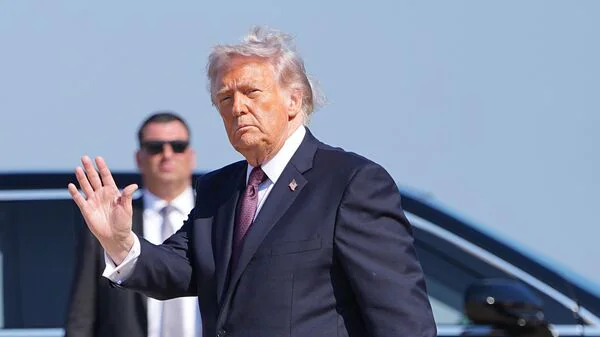
How Trump's Iran Strategy Departs From Iraq And Venezuela Regime-Change Playbooks
(MENAFN- Live Mint) President Donald Trump's decision to launch military strikes on Iran while openly urging its citizens to overthrow their government marks a striking departure from decades of American regime-change strategy, signalling a more unpredictable phase in US foreign policy and raising profound questions about how Washington now seeks to reshape adversarial states.
Historians and policy analysts say the approach - combining targeted military force, rhetorical encouragement of uprising and the absence of a clear post-conflict governance plan - diverges sharply from interventions in Iraq and Venezuela, where the United States pursued more direct control over political transitions.
The big picture: A break from two decades of intervention playbooksTrump's weekend strikes on Iran, carried out alongside Israel, were accompanied by an unusually explicit appeal to Iranian citizens to remove their own leadership.
After announcing the operation, Trump addressed Iranians in a video message:
"When we are finished, take over your government. It will be yours to take. This will be probably your only chance for generations."
The United States and Israel said Ayatollah Ali Khamenei, Iran's supreme leader, was killed in the strikes - a development that has thrown the future of the Islamic Republic into immediate uncertainty, even as conflicting claims continue to circulate.
Unlike previous regime-change campaigns, however, Washington has not proposed occupying territory, installing an interim administration or overseeing political reconstruction.
Trump described alternative paths to Axios, outlining what he called potential“off ramps”:
"I can go long and take over the whole thing, or end it in two or three days and tell the Iranians: 'See you again in a few years if you start rebuilding [your nuclear and missile programs]."
State of play: Diplomacy collapses as military pressure rises
The strikes followed months of deteriorating diplomacy over Iran's nuclear programme during Trump's second term, alongside worsening economic conditions that had fuelled domestic protests inside Iran.
Trump announced the attacks Saturday and suggested that Iranians themselves should assume responsibility for political change once military operations conclude - a framing that places regime transformation primarily in the hands of domestic actors rather than US forces.
How Iran differs from Iraq and VenezuelaMilitary historians argue the Iran strategy represents a fundamentally different model from earlier US interventions.
"Iran is different from both of those conflicts," retired US Army Colonel Peter Mansoor, professor of military history at Ohio State University, said.
Previous regime overthrows, scholars note, were executed with detailed plans for governance after the removal of ruling authorities - something that remains unclear in the Iran crisis.
"As General David Petraeus remarked at the beginning of the Iraq War in 2003, 'Tell me how this ends,'" Mansoor said.
Lessons from Iraq: Full invasion and nation-buildingWhen the United States moved to overthrow Saddam Hussein in 2003, it did so through a large-scale ground invasion involving roughly 200,000 American troops.
Baghdad fell within weeks, Hussein was captured nine months later, and Washington established an interim governing authority before gradually transferring sovereignty back to Iraq - a process that extended for years and concluded only after US forces withdrew in 2011.
The intervention carried defined objectives: removing Hussein and eliminating alleged weapons of mass destruction.
The Iraq War is "an example of some of the faulty assumptions that go into the idea that replacing the political leadership of another country can happen quickly and easily," said military historian David Kieran.
Trump's Iran strategy, by contrast, has not included proposals for occupation or direct political administration.
Venezuela comparison: Targeted removal with US oversightA more recent comparison lies in Washington's actions against Venezuelan leader Nicolás Maduro, where US operations involved limited boots on the ground framed as law-enforcement action tied to criminal indictments.
Privately, officials viewed Maduro's removal as a central objective. According to Kieran, the United States pursued a defined political endgame.
"They removed Maduro through a special forces raid, but largely left the Venezuelan government intact," Kieran said.
Washington also maintained oversight over Venezuela's political transition and elections and secured influence over the country's oil production.
No equivalent framework has been outlined for Iran, highlighting what analysts describe as a strategic departure.
A strategy built on internal collapse?Trump has repeatedly suggested that adversarial governments may fall without extensive American intervention - an approach he has also applied rhetorically to Cuba.
"Cuba looks like it's ready to fall," Trump said, adding: "I don't think we need any action. It looks like it's going down."
In Iran, the administration appears to be testing a similar theory: that sustained military pressure combined with internal dissatisfaction could trigger regime collapse organically.
Uncertain succession and regional falloutIran now faces an uncertain political future following the reported death of its supreme leader. Under the country's constitution, a clerical council must select a successor, yet the chain of command - particularly within the Islamic Revolutionary Guard Corps - has reportedly been disrupted by the strikes.
International reactions have underscored growing geopolitical risks. China expressed being“highly concerned,” while Russia's Foreign Ministry described the attack as“a preplanned and unprovoked act of armed aggression against a sovereign and independent U.N. member state.”
Meanwhile, Iranian Foreign Minister Seyed Abbas Araghchi accused Israel of striking civilian targets, saying an attack on a girls' school killed 53 students and wounded 63 others.
"Iran will punish those who kill our children," Araghchi said, adding: "We do not understand the reasons for the U.S. attack on Iran. Perhaps the U.S. administration was dragged into it."
Iran has already launched retaliatory strikes against US bases in the region.
Will Iran's regime actually fall?Despite Washington's expectations, analysts caution that regime collapse is far from certain.
Protesters inside Iran have shown limited signs of organising a nationwide uprising so far, according to Suzanne Maloney, a senior fellow at the Brookings Institution.
"I'd be surprised if we see significant defections or other conditions that would permit an uprising to succeed today," Maloney said.
The broader uncertainty, scholars argue, lies not only in whether the government falls but what might replace it.
"It's not clear whether this regime will fall, or whether this regime would depart, would step down, because of these bombings," Kieran said. "And the real question also is, what it would replace it?"

Legal Disclaimer:
MENAFN provides the
information “as is” without warranty of any kind. We do not accept
any responsibility or liability for the accuracy, content, images,
videos, licenses, completeness, legality, or reliability of the information
contained in this article. If you have any complaints or copyright
issues related to this article, kindly contact the provider above.
Most popular stories
Market Research

More Story



Comments
No comment