



403
Sorry!!
Error! We're sorry, but the page you were looking for doesn't exist.
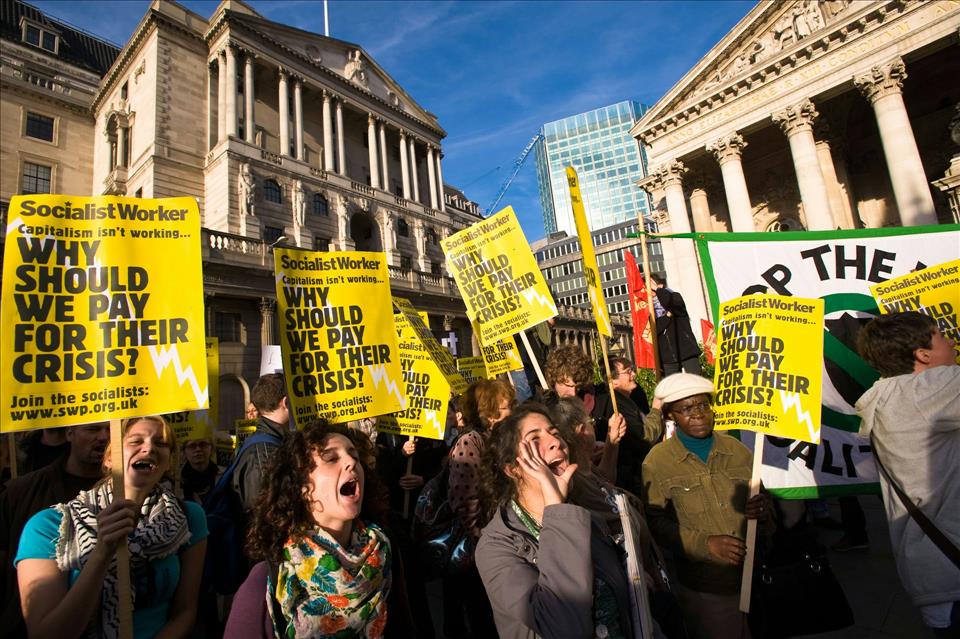
How Post-2008 Financial Reforms Quietly Strengthened Britain's Banking Giants
Author: Donald Amuah
(MENAFN- The Conversation) When the global financial crisis hit in 2008, banks around the world collapsed or came close to it. Governments were forced to step in with billions of pounds of public money to stop the system imploding.

In response, regulators promised change. In the UK, these reforms were reinforced by ring-fencing, which separated everyday retail banking from riskier investment activities. The aim was simple: protect the public.
Our latest research looks at what actually happened next. Using more than 20 years of data, we studied how these post-crisis rules affected the UK's four largest retail banks: HSBC, Barclays, Lloyds Banking Group and NatWest Group. In a system dominated by a handful of large institutions, there is a deeper question. If regulation made banks both safer and richer, who really benefited?
After 2008, regulators cracked down on excessive risk-taking. Capital rules were tightened, forcing banks to rely more on their own funds. Liquidity rules required them to hold enough cash and safe assets to survive sudden shocks.
These changes worked. The system is now far more resilient than it was before the crash. But this came at a cost to competition in the banking market – and so to consumers.
Higher capital levels consistently improved profitability at the largest banks. In plain terms, being forced to hold more of their own money made them look safer to investors and lenders. That reduced their funding costs and boosted returns.
Liquidity rules had a weaker effect on overall profits, but they did increase interest margins, which is the gap between what banks pay savers and what they charge borrowers. In other words, regulation didn't just stabilise the big banks. It strengthened them.
We also found that productivity barely improved over time. When efficiency did fall – during the financial crisis and again during the COVID pandemic – it was mainly due to operational problems, not a lack of technology. Recovery depended on internal management fixes rather than innovation.
Our findings matter because the UK banking market is already highly concentrated. Large institutions can spread the cost of compliance across enormous balance sheets. They have diversified income streams and access to global funding. But smaller banks and building societies don't.
For challengers, the fixed costs of regulation bite much harder. Higher reporting requirements, capital buffers and liquidity rules limit their ability to grow, invest or compete on price. The result is that reforms designed to make the system safer also raised barriers to entry.
So, post-crisis regulation reinforced the dominance of the biggest players. The market power of HSBC, Barclays, Lloyds and NatWest became more entrenched, not weakened. Stability came at the price of competition.
What this means for customersYou can see the effects on the high street. A small number of large banks now dominate everyday banking. Mortgage rates, savings products and current accounts look strikingly similar across providers. Branch closures have accelerated, while access to in-person services has shrunk, especially outside major cities.
Despite rising profits at the biggest banks, service has not noticeably improved for many customers. With less competitive pressure, there is little incentive to cut fees, raise savings rates or innovate. In this sense, consumers may have paid indirectly for stability, through fewer choices and less diversity, particularly in smaller communities.
Post-crisis reforms have delivered a safer banking system, and that does matter. Deposits are better protected. Essential services are more secure. But our research highlights a difficult trade-off.
Capital rules improved resilience without lasting damage to profitability or efficiency. Liquidity rules remain essential, but may need careful calibration to avoid unnecessarily constraining lending.
More broadly, regulation alone cannot deliver a healthy banking sector. Long-term performance depends on better cost control, stronger risk management and improved lending standards.
Read more: Mandelson and the financial crash: why the Epstein allegations are so shocking
These issues sit at the heart of today's policy debate, including the Bank of England's recent decision to cut capital requirements. While intended to boost lending and growth, some critics argue it is more likely to fuel shareholder payouts than increased credit supply. Our findings support those concerns.
The UK appears to have traded diversity for stability. But weakening bank resilience is not the answer. If policymakers want stronger lending and better outcomes for customers, they should focus on encouraging reinvestment, improving efficiency and strengthening competition, not simply making it easier for already dominant banks to return cash to investors.
The lesson of the past 15 years is clear. Regulation can make banks safer. But unless it is designed with market power in mind, it can also make the biggest players even bigger.
Institution:University of South Wales

Legal Disclaimer:
MENAFN provides the
information “as is” without warranty of any kind. We do not accept
any responsibility or liability for the accuracy, content, images,
videos, licenses, completeness, legality, or reliability of the information
contained in this article. If you have any complaints or copyright
issues related to this article, kindly contact the provider above.
Most popular stories
Market Research

More Story







Comments
No comment