




403
Sorry!!
Error! We're sorry, but the page you were looking for doesn't exist.
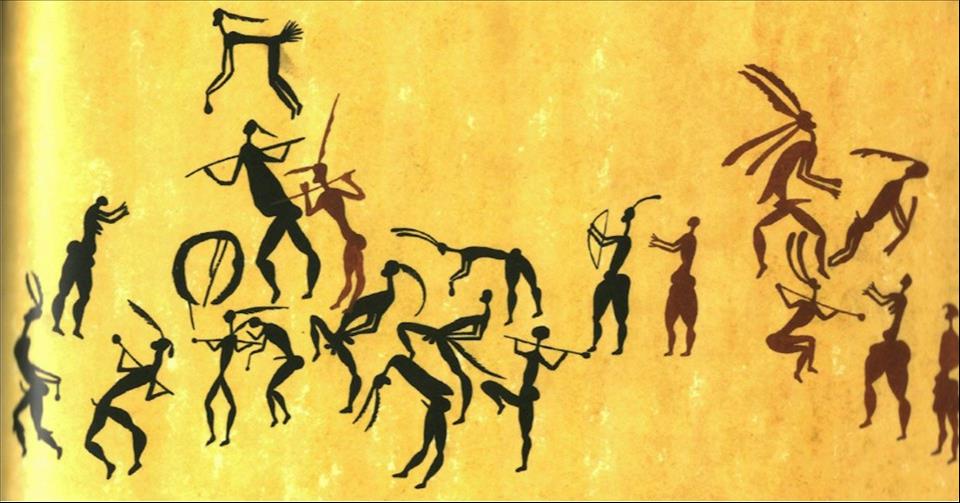
Dance Scenes In South African Rock Art: A Closer Look At Ritual, Music And Movement
Author: Joshua Kumbani
(MENAFN- The Conversation) Rock art is widespread across southern Africa and includes a wide range of depictions such as human figures, animals, dots, handprints, and other painted or engraved imagery on rock surfaces. The rock art tradition of paintings was made by San hunter gatherers over thousands of years.

The first dance scenes in southern African rock art were documented 100 years ago. But there's been some confusion as to whether certain scenes could indeed be interpreted as a dance.
Dance can be simply defined as intentional and organised bodily movement. It also functions as an expression of mood and a form of nonverbal communication. In southern African cultures, dance is also performed during moments of celebration and in ritual contexts. Sometimes dancers go into a trance.
Scholars in the past have interpreted the dances in San rock art as ritual dances, mainly trance dances. But ethnography (the study of living people) points to the fact that San communities also danced for leisure and entertainment. Hence the need to systematically examine and categorise dancing scenes in the rock art.
We are archaeologists with a special interest in sound and music in rock art. In a recent study, we examined selected dancing scenes in rock art from four of South Africa's provinces: the Free State, KwaZulu-Natal, the Eastern Cape and the Western Cape. The aim was to categorise the different types of dances depicted and to explore whether all dancing scenes represent ritual performances or whether some might reflect entertainment or leisure activities.
We concluded that some of the performances depicted were likely undertaken for leisure and enjoyment rather than ritual purposes.
We hope that our study provides a way to categorise dancing scenes in San rock art. This framework can be refined and expanded by future researchers working in music archaeology, the study of sound and its effects, or the iconographic analysis of musical instruments and dance imagery (working out what the images mean). This kind of research also helps people appreciate their music heritage from the past.
Sources and categoriesOur article examined selected dancing scenes through a literature review and by consulting the African Rock Art Digital Archive database curated by the Rock Art Research Institute at the University of the Witwatersrand.
We consulted foundational works on rock art by pioneers George Stow and Dorothea Bleek (1930), and by more recent scholars such as Patricia Vinnicombe and David Lewis-Williams. Ethnographic accounts by Lorna Marshall (1969, 1976 ), Richard Katz (1982 ) and Megan Biesele (1993 ) of dance among San communities in the Kalahari (Botswana) and Nyae Nyae (Namibia) regions further informed our analysis.
Read more: An enigmatic theme in San rock paintings is finally unlocked
We identified three broad categories of dances in the ethnographic records: ritual dances, circumstantial dances, and entertainment dances. Some circumstantial dances were performed to celebrate a successful hunt, while entertainment dances included those celebrating a newlywed couple, as well as dances done simply for fun and games by boys and girls.
We therefore argue that dancing scenes in the archaeological record should be examined critically: not all of them depict rituals.
Read more: What archaeology tells us about the music and sounds made by Africa's ancestors
Six points of identificationTo systematically identify dancing scenes, we applied six analytical attributes:
- body postures, including bent figures, outstretched arms and flexed legs
paraphernalia held by dancers, such as sticks, rattles or headgear interaction between dancers
evidence of synchrony (moving in unison) direction of movement
the gender of the figures represented.
In the following section, we provide examples of different kinds of dances in rock art and suggest how they may be interpreted on the basis of ethnographic information.
Ritual dancesOur study identified several ritual dances depicted in the rock art, including the trance or medicine dance. (An example is the Attakwas Kloof dance image above, from a site in the Klein Karoo in the Western Cape.) This is one of the most widespread dances among San communities. It is a communal healing practice in which medicine men, believed to possess healing powers, treat the sick through touch and dispel harmful spirits or misfortune.
During the trance dance, men dance while women sing and clap in accompaniment. Some of the male dancers serve as healers. The dancers move in a circular pattern, stamping their feet until a shallow furrow forms on the ground. Prolonged dancing induces an altered state of consciousness, during which healers may fall or collapse as they enter trance.
In South Africa, several forms of trance dance are depicted in the rock art. These scenes typically show clapping female figures accompanying male dancers, who are often shown bending forward. In some images, however, the clapping figures are absent, and only the dancers are represented.
Ethnographic accounts (for example, Wilhelm Bleek and Lucy Lloyd, 1911: 190) note that leg rattles are commonly used during trance dances to produce a sharp, rhythmic vibration, yet these rattles are not frequently depicted in the rock art. A notable exception comes from the Halstone site in the Eastern Cape (above), where several dancers are shown wearing leg rattles. Some figures balance on dancing sticks and appear to be in an altered state of consciousness, or in a trance.
Female initiation rituals that are accompanied by eland dances, performed during the first menstruation rite, also appear in the rock art.
The women mimic the moves of the female eland, a spiritually important animal. These dances are performed only by women, usually in a secluded space. The dancers move in a circle while bending forward, and the ceremony celebrates a girl's first menstruation. This interpretation is supported by ethnographic research conducted among San communities in Botswana and Namibia by anthropologists such as Marshall and Biesele.
Other ritual dances depicted in the rock art include boys' initiation ceremonies, commonly known as the Tshoma. This dance marks the transition from boyhood to manhood and is performed exclusively by males. The ethnographic accounts mentioned above indicate that these ceremonies take place in secluded areas away from the main camp.
We identified some other dance scenes at G3 Site II (Vinnicombe 1976 ) (below) as possibly circumstantial or leisure dances and we suggested that this could have well been the case for the performance depicted at Witsieshoek (bottom).
It is likely that, because of their non-ritual nature, circumstantial or leisure dances – which ethnographic literature suggests were very common – were only rarely depicted in paintings.
Institution:Universitat de Barcelona

Legal Disclaimer:
MENAFN provides the
information “as is” without warranty of any kind. We do not accept
any responsibility or liability for the accuracy, content, images,
videos, licenses, completeness, legality, or reliability of the information
contained in this article. If you have any complaints or copyright
issues related to this article, kindly contact the provider above.
Most popular stories
Market Research

More Story





Comments
No comment