





403
Sorry!!
Error! We're sorry, but the page you were looking for doesn't exist.
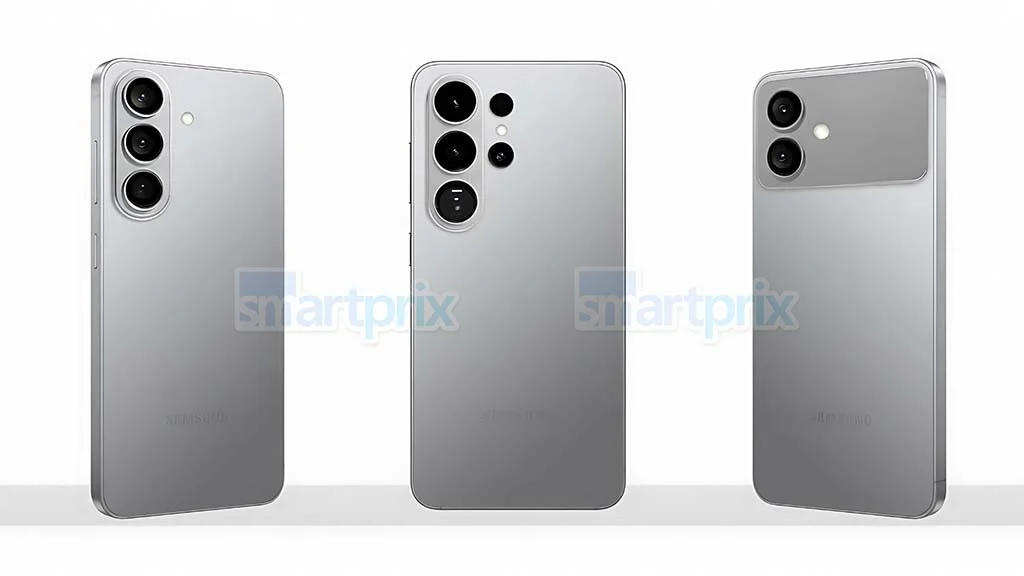
Galaxy S26 Ultra Tipped For Privacy Screen
(MENAFN- The Arabian Post)
Arabian Post Staff -Dubai

Samsung is preparing a significant shift in smartphone display technology, with industry reports suggesting that the forthcoming Galaxy S26 Ultra could feature a built-in privacy display capable of narrowing the screen's viewing angle on demand. If introduced, the hardware-level function would allow users to shield on-screen content from bystanders without relying on detachable filters or software tricks.
Details emerging from supply-chain briefings and patent filings indicate that the feature would be integrated directly into the OLED panel, enabling users to activate a“private mode” that limits visibility to those looking at the device head-on. When switched off, the display would function like a standard high-resolution screen, preserving brightness and colour fidelity. Such dual-mode operation has been explored in the broader display industry for several years, but embedding it seamlessly into a flagship handset would mark a notable step.
Samsung has not confirmed specifications for the S26 Ultra, and the device itself is not expected before early 2026, in line with the company's annual release cycle for its Galaxy S series. However, the company's display arm, Samsung Display, has previously showcased OLED concepts capable of controlling light directionality, fuelling speculation that commercial deployment may be approaching.
Mobile privacy has become an increasing concern for both consumers and corporate users. Smartphones now serve as repositories for banking credentials, confidential emails, health data and enterprise documents. While biometric locks and encryption protect stored information, shoulder-surfing - the act of observing someone's screen in public - remains a vulnerability. Commuters on trains, travellers in airports and professionals working in cafés often rely on clip-on privacy filters that darken screens from side angles, though these can reduce brightness and degrade visual clarity.
See also Samsung sets February 25 launch for Galaxy S26 seriesA built-in solution could address those compromises. By adjusting the way light is emitted or filtered at the pixel level, the screen could maintain performance while restricting lateral visibility. Analysts say such technology would need to avoid excessive battery drain, as constant modulation of viewing angles could otherwise impact power efficiency. Flagship devices like the Galaxy Ultra line are already equipped with large batteries and advanced processors, but consumers remain sensitive to endurance.
Enterprise adoption may be a key driver. Samsung has positioned its Galaxy Ultra devices as productivity tools, frequently highlighting the S Pen stylus, secure folders and Knox security platform. A hardware privacy layer would complement these offerings, potentially appealing to financial institutions, law firms and government departments that handle sensitive material. Corporate IT managers have long sought ways to reduce visual data leaks without issuing separate accessories.
Competitors are also investing in privacy features, though primarily through software. Apple has expanded on-device processing and privacy controls across its iOS ecosystem, while Google has emphasised security updates and AI-based threat detection in its Pixel range. Neither has introduced an integrated hardware privacy display in mainstream smartphones. Laptop manufacturers such as HP and Lenovo, however, have incorporated electronic privacy screens in selected business models, allowing users to toggle restricted viewing modes with a keyboard shortcut.
Technical feasibility remains a central question. OLED panels emit light individually from each pixel, making them well-suited to innovations in brightness and contrast control. Adding a controllable layer to manage viewing angles could involve micro-louvre structures or liquid crystal elements aligned with the OLED matrix. Engineers would need to ensure that the screen remains readable in direct sunlight and does not introduce flicker or colour distortion.
See also Google Pixel 10a launches as challenger to mid-range rivalsMarket researchers note that smartphone differentiation has become harder as hardware improvements grow incremental. Camera upgrades, faster chips and marginally brighter displays generate headlines, yet user experience gains are often subtle. A privacy display, by contrast, would be visible and immediately understandable. It would also align with broader societal debates about digital security and personal data protection.
Consumer reception may depend on ease of use. If activation requires navigating deep into settings menus, adoption could be limited. A more intuitive approach might involve a quick-toggle in the notification shade or integration with biometric authentication, automatically narrowing the viewing angle when sensitive apps are opened.
Cost considerations will also shape deployment. Integrating additional display layers can raise manufacturing expenses. The Galaxy Ultra series already sits at the premium end of the market, and further price increases could test demand in price-sensitive regions. Samsung has, in previous cycles, balanced innovation with tiered offerings, reserving certain features for its top model while cascading others to standard variants in subsequent years.
Notice an issue? Arabian Post strives to deliver the most accurate and reliable information to its readers. If you believe you have identified an error or inconsistency in this article, please don't hesitate to contact our editorial team at editor[at]thearabianpost[dot]com. We are committed to promptly addressing any concerns and ensuring the highest level of journalistic integrity.

Legal Disclaimer:
MENAFN provides the
information “as is” without warranty of any kind. We do not accept
any responsibility or liability for the accuracy, content, images,
videos, licenses, completeness, legality, or reliability of the information
contained in this article. If you have any complaints or copyright
issues related to this article, kindly contact the provider above.
Most popular stories
Market Research

More Story





Comments
No comment