




403
Sorry!!
Error! We're sorry, but the page you were looking for doesn't exist.

Bioai Push Spotlights Smart Biomanufacturing Drive
(MENAFN- The Arabian Post)
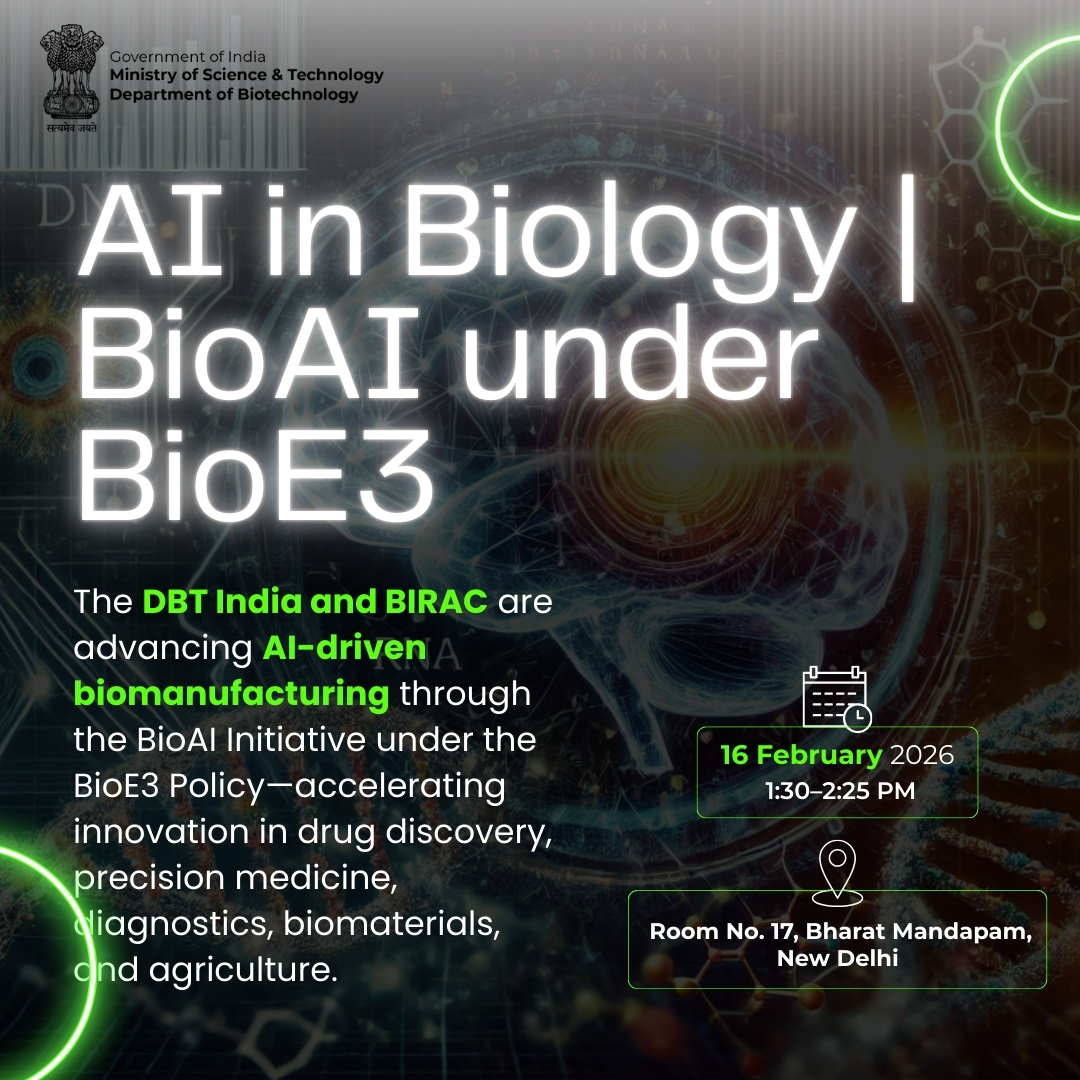
Artificial intelligence is being positioned as a catalytic force in reshaping biomanufacturing, with policymakers, scientists and industry leaders outlining a roadmap that blends computational power with biological science to accelerate drug discovery, industrial enzymes and sustainable materials. Discussions at the India AI Impact Summit placed BioAI at the centre of a strategy aimed at using genomics, in-silico modelling and closed data loops to build scalable and trusted production systems.
The convergence of AI and biology has moved from laboratory experimentation to commercial ambition. India's biotechnology sector, valued at over $80 billion and targeting significant expansion by the end of the decade under the BioE3 policy framework, is seeking to harness machine learning tools to shorten development cycles that traditionally take years. Speakers at the summit argued that AI-enabled simulation and predictive modelling can reduce trial-and-error experimentation in fields ranging from vaccine development to precision fermentation.
BioAI refers to the integration of artificial intelligence techniques with biological data, particularly genomic sequencing, proteomics and metabolic engineering. The approach relies on large datasets and advanced algorithms capable of identifying patterns invisible to conventional research methods. Advances in protein structure prediction, including breakthroughs in computational biology over the past few years, have demonstrated how neural networks can model complex molecular interactions with remarkable accuracy.
At the summit, researchers described how generative AI systems are being trained to design novel proteins and enzymes tailored for industrial use. By feeding genomic datasets into predictive algorithms, scientists can simulate biological pathways in silico before conducting physical experiments. This method reduces costs and speeds up scaling, particularly in biopharmaceutical production and alternative protein manufacturing.
See also Trustworthy AI shapes India's innovation path in 2026Government representatives outlined plans to expand national AI infrastructure to support such applications. IndiaAI Mission initiatives include the creation of high-performance computing resources and domain-specific data repositories to ensure that biotech firms and research institutes have access to secure and interoperable datasets. Officials emphasised that trust frameworks and regulatory clarity would be essential to encourage private investment while safeguarding data privacy and biosafety standards.
Industry leaders echoed that sentiment, highlighting that biomanufacturing requires rigorous validation. Unlike digital products, biological outputs interact with living systems, making quality control paramount. AI-driven feedback loops-where laboratory results continuously refine algorithms-were presented as a mechanism to maintain reliability while scaling up production. Data integrity, traceability and auditability were recurring themes, reflecting global debates about AI governance.
The global context underscores the strategic significance of BioAI. The United States and European Union have invested heavily in synthetic biology and AI-assisted drug discovery. China has also advanced computational genomics and large-scale fermentation capabilities. Analysts note that countries able to combine AI talent with robust biotech ecosystems stand to capture a growing share of the global bioeconomy, projected by several industry reports to exceed $4 trillion over the coming decade.
India's strength in information technology services and pharmaceutical manufacturing offers a foundation for this convergence. The country is a major supplier of generic medicines and vaccines, supported by a network of research institutions and startups. By integrating AI tools into these value chains, stakeholders believe production timelines can be compressed and new therapeutic molecules identified with greater precision.
Academic voices at the summit stressed the importance of interdisciplinary training. Biologists must understand algorithmic thinking, while data scientists need grounding in molecular biology. Collaborative platforms linking universities, startups and established pharmaceutical firms were proposed to ensure knowledge transfer and talent development. Investment in computational biology curricula and shared research facilities is seen as critical to sustaining momentum.
See also UAE President begins India working visitEthical considerations formed part of the dialogue. AI models trained on genomic data raise questions about consent, ownership and equitable benefit sharing. Experts argued for transparent governance structures aligned with international norms, noting that trust is fundamental when dealing with health-related information. Regulatory agencies are exploring how to evaluate AI-generated biological designs within existing approval pathways.
Private sector participation is accelerating. Venture capital funding in biotech startups leveraging machine learning has grown steadily, reflecting confidence in AI-assisted discovery platforms. Companies are experimenting with digital twins of biological systems, enabling simulation of fermentation processes before industrial deployment. Such capabilities can enhance efficiency and reduce resource consumption, aligning with sustainability goals.
Sustainability featured prominently in discussions on biomanufacturing. AI-optimised microbes can produce bio-based chemicals and materials that substitute fossil-derived inputs. Precision fermentation techniques, guided by predictive analytics, may lower energy use and waste. As global supply chains face pressure to decarbonise, the combination of AI and biotechnology is viewed as a pathway to cleaner industrial production.
Participants also highlighted challenges. High-quality biological datasets remain fragmented, and interoperability across laboratories is uneven. Ensuring cybersecurity in research networks is another concern, given the sensitivity of genetic information. Scaling laboratory successes to commercial volumes demands capital expenditure and regulatory compliance that can deter smaller enterprises.
Notice an issue? Arabian Post strives to deliver the most accurate and reliable information to its readers. If you believe you have identified an error or inconsistency in this article, please don't hesitate to contact our editorial team at editor[at]thearabianpost[dot]com. We are committed to promptly addressing any concerns and ensuring the highest level of journalistic integrity.

Legal Disclaimer:
MENAFN provides the
information “as is” without warranty of any kind. We do not accept
any responsibility or liability for the accuracy, content, images,
videos, licenses, completeness, legality, or reliability of the information
contained in this article. If you have any complaints or copyright
issues related to this article, kindly contact the provider above.
Most popular stories
Market Research

More Story







Comments
No comment