




403
Sorry!!
Error! We're sorry, but the page you were looking for doesn't exist.
South Sudan's White Army Explained: What It Is And What It Isn't
Author: Jan Pospisil
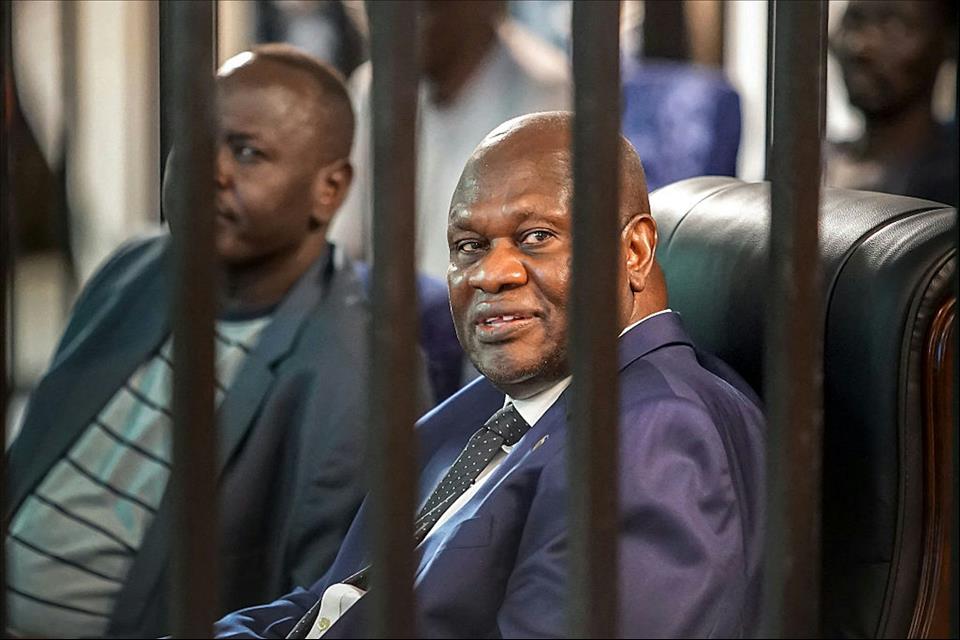
(MENAFN- The Conversation) The UN issued warnings of potential mass violence between the South Sudanese government and the White Army in January 2026. A peace agreement ended a five-year civil war in the country in 2018. This was followed by a period of relative calm that ended in 2025 in the wake of clashes between the government and White Army. Attempts to bring peace since have faltered. The government has charged and suspended first vice-president Riek Machar over claims he commanded the White Army during the violence in Nasir, Upper Nile State. Jan Pospisil, who has studied South Sudan's conflict dynamics, explains the origins of the White Army and its political impact.What is the White Army?

The White Army is best understood as a set of temporary, community-mandated self-defence mobilisations, organised along sectional and clan lines.
The term“White Army” refers to the ash traditionally used in Nuer cattle camps to repel mosquitoes. The ash is smeared on the bodies and faces of young men and gives them a whitish appearance. The Nuer are one of South Sudan's largest ethnic groups. They primarily keep cattle and inhabit the greater Upper Nile region.
Authority in the White Army flows upward from communities, not downward from political leaders.
The White Army's orientation is primarily defensive: protecting cattle, land and local autonomy in an environment where the state is experienced less as a provider of security than as a source of threat.
But this defensive logic coexists with raiding and inter-communal violence.
Its history explains its ambivalent role.
The White Army grew out of Nuer youth self-defence formations that had existed since the 1960s.
In 1991, the White Army started to pro-actively use this name and was drawn into national conflict around the so-called Nasir split. This is when suspended vice-president Riek Machar and other predominantly Nuer commanders broke with John Garang's Sudan People's Liberation Movement. Garang, who died in 2005, was from another of South Sudan's major ethnic groups, the Dinka.
White Army forces fought alongside the Nasir faction (led by, among others, Machar) and were central to a massive attack on Bor later in 1991. The Bor massacre led to the death of several thousand Bor Dinka, a sub-group of the Dinka people who primarily inhabit Jonglei State.
Attacks were carried out largely by White Army fighters pursuing revenge over cattle raids and local objectives that aligned only partially with Machar's political aims. This is an episode Machar apologised for in 2011, saying he
The apology was revealing. It acknowledged political responsibility without implying operational command.
The Bor massacre remains a dominant lens through which many Bor Dinka understand the White Army: as an organised anti-Dinka force opposing the ruling party. This is understandable, but is also a source of lasting misperception about how the group operates.
What's the relationship between Riek Machar and the White Army?Machar has benefited politically from White Army mobilisation. But he does not direct it.
His current prosecution is therefore deeply ironic. Machar is accused of commanding a force that has, time and again, demonstrated its structural resistance to sustained external control, including his own.
He is now being tried for exercising a form of command that he has long sought but never fully possessed.
From the 1991 Nasir split to the civil war between the government and the Machar-led opposition that erupted in December 2013 and the renewed violence of 2025, White Army forces have repeatedly fought alongside Machar's forces.
However, the White Army exists as an amalgamation of community militias that are tied to particular areas rather than as one organised force. Their size depends on the capacity of regional leaders to mobilise the youth at a given time.
During the civil war, White Army mobilisations delivered some of the opposition's most significant battlefield successes.
Yet these forces often withdraw once immediate objectives – such as the defeat of militias aligned with the government in a certain territory – are achieved. This leaves opposition units unable to hold territory.
The assumption that's made is that these temporary alliances equate to control of the White Army. They don't. Confusing the two has repeatedly distorted how South Sudan's conflicts are understood – and mismanaged.
Conflating the White Army with the Sudan People's Liberation Movement/Army-in-Opposition (SPLM/A-IO) serves a political purpose. It legitimises state counterinsurgency, including airstrikes over the course of 2025 that hit civilian areas. It recasts local resistance as elite manipulation.
But it also obscures deeper drivers of South Sudan's violence: the collapse of civilian protection, the outsourcing of force to allied ethnic militias such as the Agwelek or the Abushok, and the ethnicisation of political belonging since 2013.
If the White Army continues to be misunderstood, the danger is further ethnicisation of South Sudan's politics. This is where complex communal violence is reduced to criminal conspiracy and used to legitimise militarised state responses.
Treating political crises as matters for prosecution rather than compromise risks deepening the very dynamics that have fuelled South Sudan's wars since 2013.
The state portrays the White Army as a terrorist group: why is this a problem?In the case it has brought against Machar, the government is advancing a familiar claim: that the White Army is an armed wing of the SPLM/A-IO acting on Machar's orders.
The charge matters. It underpins not only Machar's prosecution, but also a wider narrative that treats community mobilisations as opposition conspiracy in South Sudan.
The claim rests on a fundamental misunderstanding of what the White Army is, and has been for more than three decades.
Firstly, the group draws on long-standing Nuer community self-defence traditions, even if it became politically visible in national conflict in the early 1990s. It is neither purely protective nor purely predatory. This makes the White Army difficult to incorporate into elite peace agreements, and easy to mischaracterise as irrational or terrorist.
Secondly, the White Army is not a standing militia, nor an insurgent organisation with a central command. Authority flows from the community.
To understand why the White Army mobilises as it does, it is important to consider December 2013. The mass killing of Nuer civilians in Juba at the outbreak of civil war marked a decisive rupture in South Sudan's political order. Violence that had previously been mediated through elite rivalry and fragmented local conflicts became overtly tribalised.
For many Nuer communities, December 2013 was experienced not as a power struggle within the ruling party, but as an existential attack marked by mass killings, displacement and the collapse of civilian protection.
This interpretation – whether accepted or rejected by external observers – has shaped mobilisation ever since. White Army fighters interviewed by journalists and researchers over the past decade have been consistent: they did not fight because Machar was removed from office, but because Nuer civilians were killed.
And since 2013, Nuer diaspora networks across North America, Europe and east Africa have played a role in supporting White Army mobilisations. This support has taken multiple forms: fundraising, advocacy and social media campaigning, logistical assistance, and political pressure on opposition leaders.
Diaspora involvement reinforces White Army mobilisation by amplifying narratives of collective victimhood and unfinished justice, often from a distance that strips away the everyday constraints faced by communities on the ground.
As a result, South Sudan's 2013 war did not merely fragment the state; it reshaped political identities far beyond its territory.
Institution:Österreichisches Institut für Internationale Politik (OIIP)

Legal Disclaimer:
MENAFN provides the
information “as is” without warranty of any kind. We do not accept
any responsibility or liability for the accuracy, content, images,
videos, licenses, completeness, legality, or reliability of the information
contained in this article. If you have any complaints or copyright
issues related to this article, kindly contact the provider above.
Most popular stories
Market Research

More Story



Comments
No comment