


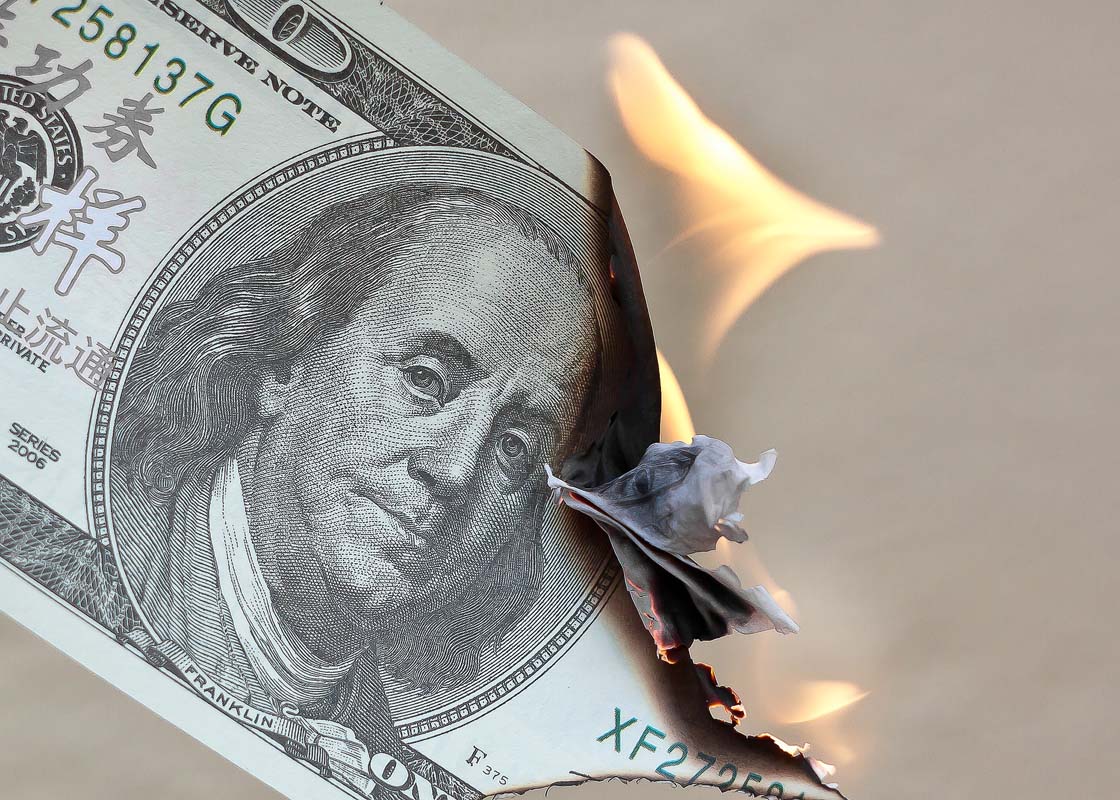
US Suffers Its Worst Single-Day Decline in Nearly One Year


(MENAFN) The US currency recorded its sharpest one-day drop in almost a year on Tuesday, sinking to its lowest level in four years after President Donald Trump openly expressed approval of the dollar’s decline.
A widely followed index that tracks the dollar’s performance against other major currencies saw its steepest fall since April of last year, sliding to levels last seen in February 2022. According to reports, the sell-off intensified immediately after Trump addressed questions from reporters in Iowa about whether the dollar had weakened excessively.
“No, I think it’s great,” he responded. “I think the value of the dollar – look at the business we’re doing. The dollar’s doing great.”
Trump went on to explain that he prefers the currency to “just seek its own level, which is the fair thing to do,” while drawing a contrast with previous disputes involving China and Japan, both of which he accused of intentionally pushing down their currencies. “It’s hard to compete when they devalue,” he said.
Market observers viewed these remarks as a notable break from the long-standing emphasis on a “strong dollar” traditionally endorsed by both Democratic and Republican administrations. As stated by reports, Trump’s decision not to repeat this familiar “boilerplate” message unsettled traders and added to market volatility.
The latest drop is part of a broader downward movement that began after Trump introduced a wide-ranging global tariff strategy in April 2025. Additional downward pressure has emerged from a strengthening Japanese yen following political developments in Tokyo, with investors closely watching for possible coordinated currency action by US and Japanese officials.
A depreciating dollar has mixed implications for the US economy and households. While it can enhance the competitiveness of American exports overseas and potentially support domestic manufacturers, it also raises the price of imported goods, increasing inflation risks. In addition, overseas travel and foreign products become more expensive for US consumers, and analysts caution that prolonged weakness could reduce the appeal of US assets to international investors.
A widely followed index that tracks the dollar’s performance against other major currencies saw its steepest fall since April of last year, sliding to levels last seen in February 2022. According to reports, the sell-off intensified immediately after Trump addressed questions from reporters in Iowa about whether the dollar had weakened excessively.
“No, I think it’s great,” he responded. “I think the value of the dollar – look at the business we’re doing. The dollar’s doing great.”
Trump went on to explain that he prefers the currency to “just seek its own level, which is the fair thing to do,” while drawing a contrast with previous disputes involving China and Japan, both of which he accused of intentionally pushing down their currencies. “It’s hard to compete when they devalue,” he said.
Market observers viewed these remarks as a notable break from the long-standing emphasis on a “strong dollar” traditionally endorsed by both Democratic and Republican administrations. As stated by reports, Trump’s decision not to repeat this familiar “boilerplate” message unsettled traders and added to market volatility.
The latest drop is part of a broader downward movement that began after Trump introduced a wide-ranging global tariff strategy in April 2025. Additional downward pressure has emerged from a strengthening Japanese yen following political developments in Tokyo, with investors closely watching for possible coordinated currency action by US and Japanese officials.
A depreciating dollar has mixed implications for the US economy and households. While it can enhance the competitiveness of American exports overseas and potentially support domestic manufacturers, it also raises the price of imported goods, increasing inflation risks. In addition, overseas travel and foreign products become more expensive for US consumers, and analysts caution that prolonged weakness could reduce the appeal of US assets to international investors.

Legal Disclaimer:
MENAFN provides the
information “as is” without warranty of any kind. We do not accept
any responsibility or liability for the accuracy, content, images,
videos, licenses, completeness, legality, or reliability of the information
contained in this article. If you have any complaints or copyright
issues related to this article, kindly contact the provider above.


Comments
No comment