




403
Sorry!!
Error! We're sorry, but the page you were looking for doesn't exist.
Frozen Roads, Forgotten Lives: The Silent Suffering Of Tirah's Displaced Women
(MENAFN- Tribal News Network) -->
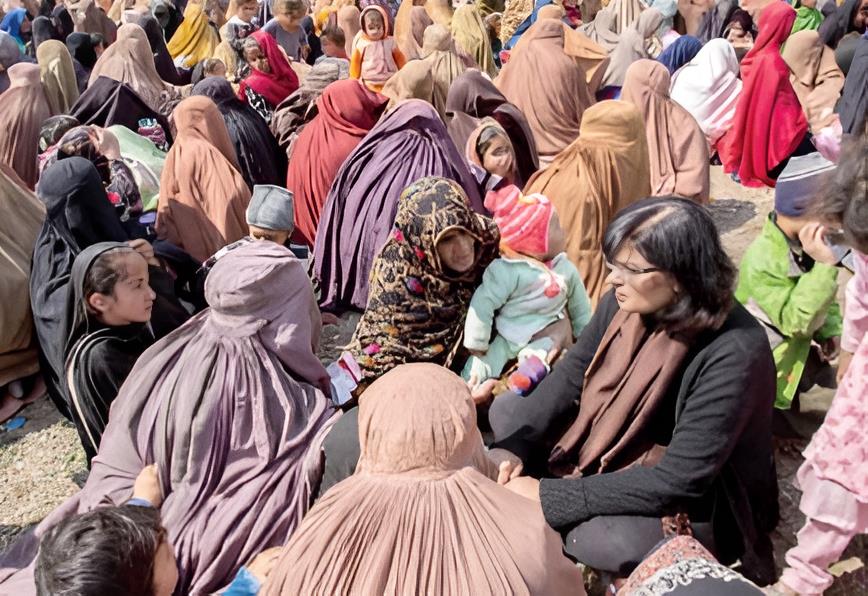
In the freezing cold of January, long lines of vehicles stand along the roadside. Inside those vehicles sit the women of Tirah Valley, their innocent children in their laps. Fear is frozen in the children's eyes, and in the hearts of the mothers only one question circles endlessly: what was our fault?
A mother wraps her little child in her shawl and holds them tightly to her chest, sitting in a queue of vehicles on a snowy night. Sometimes waiting for the road to open, sometimes clinging to the faint hope of registration. The cold has seeped into their bones, but even colder is the indifference that is becoming their fate with every passing moment.
This is not the story of just one woman, but the collective cry of thousands of women from Tirah Valley. Women who were forced to leave their homes to save their lives, their dignity, and the future of their children. On one side is the life of deprivation in Tirah, and on the other, explosives, drones, and a fear that at any moment the roof might collapse over their heads. These very conditions forced them to migrate, yet the state has turned even this migration into torment.
On the way, there is no food, no clean water. There are no separate and safe spaces for women, no proper arrangements for privacy, no transparent registration system, and no basic medical facilities.
Surely, pregnant women are also among these caravans, women who require immediate and continuous medical care, yet no arrangements are visible for them. How many accidents occurred during this harsh displacement, and how many precious lives were lost, may never be fully known. But the real question is: who is responsible for all this? Was the decision to carry out displacement in such freezing and snowy conditions truly unavoidable and justified?
This displacement has become a severe mental and psychological crisis, especially for the women and children of Tirah Valley. Women of tribal society, already deprived of education, healthcare, and basic facilities, are enduring double oppression in this migration. Homelessness, fear, cold, and humiliation have all become their destiny at once.
In this entire situation, the incompetence of the provincial government has also become evident, and the silence of federal state institutions is equally heartbreaking.
The Constitution of Pakistan guarantees every citizen protection of life, property, and dignity - so why are these constitutional rights not available to the tribal people? The state and the provincial government are busy blaming each other, and this indifference brings not surprise, but deep sorrow. The very people whose votes brought them to power have today been left alone.
Now, after the displacement has already occurred, after mothers have lost their children, and after women have endured humiliation, fear, and cold, a statement emerges from the federal government saying that the state did not issue any orders for displacement.
Also Read: Long Roads, Lost Lives: The Cost of Weak Emergency Services in Swat
The question is: when these caravans were on the roads, when children were shivering, and when women were crying out for help, why did this statement not come then? Is this what a government or a state looks like?
International and local human rights organizations in Pakistan are silent. Organizations working for women's empowerment and human rights - why are they silent today on the suffering of tribal women? Are tribal women not women? Are their pains not worthy of attention?
The people of Tirah Valley are going through severe mental and emotional stress. Continuous deprivation and uncertainty have created anxiety and fear among the people, which, if not addressed in time, may lead to further problems.
In such a situation, it is the responsibility of the state to take effective and serious measures to control the conditions; otherwise, this issue will not remain limited to Tirah Valley but its effects may be felt across a broader social level.
Note: This article reflects the personal opinion of the writer, which the organization is not necessarily required to agree with.

Legal Disclaimer:
MENAFN provides the
information “as is” without warranty of any kind. We do not accept
any responsibility or liability for the accuracy, content, images,
videos, licenses, completeness, legality, or reliability of the information
contained in this article. If you have any complaints or copyright
issues related to this article, kindly contact the provider above.
Most popular stories
Market Research

More Story




Comments
No comment