


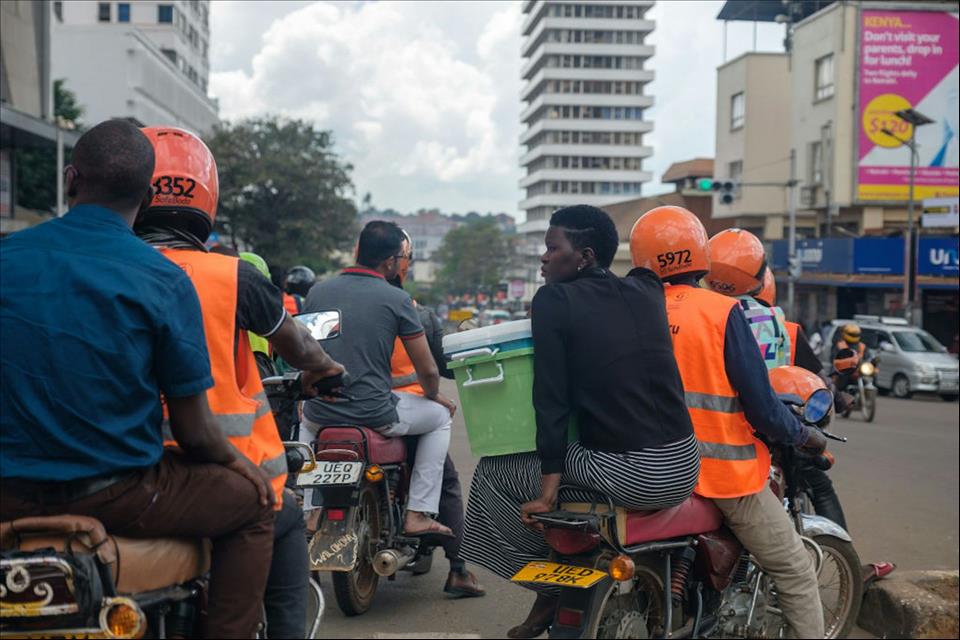
Uganda's Boda-Boda Drivers: The Digital Economy Hasn't Been The Route To Formal Work And Better Protection Research


In western countries like the UK and the US, their rise has intensified a process of labour casualisation already several decades in the making. Under the guise of“flexibility”, platforms have heralded a return to insecure, temporary forms of employment that offer few rights or benefits to workers.
But in“less developed” countries like Uganda, the growth of the digital gig economy is often considered a boon. Across the global south, it has been claimed that platforms are not only creating millions of new jobs, but they are actually helping to formalise an informal economy so vast it accounts for an estimated 70% of total employment in low- and middle-income countries.
Existing research suggests that by guiding informal workers towards compliance with registration and licensing requirements or making them more visible to state authorities, digital labour platforms are capable of“counteracting informal economic activity”.
But is it all as straightforward as it seems?
In a new research paper I put this claim to the test through a case study of moto-taxi work in the Ugandan capital city, Kampala.
Moto-taxi (or boda boda) work is a hugely important source of income in Uganda, providing livelihoods for an estimated 350,000 people in the capital alone. Over the past decade, ride-hail platforms have descended upon this vast industry, claiming to offer safer, better paid work and a step towards formality.
Drawing on 112 interviews, 370 driver surveys and scans of relevant media, my research reaches a different conclusion. Despite shifting online, digital moto-taxi drivers remain as they always were – informal workers in an unprotected labour market.
This raises fundamental questions about the capacity of digital labour platforms to bring about positive transformations in the global informal economy.
Fallacies of 'plat-formalisation'As the new paper shows, moto-taxi workers' inclusion within the new platform economy brings them no closer to formal labour status in any meaningful way.
This is illustrated by three key insights from my findings.
First, despite early collaborative engagement with state actors, Uganda's ride-hail companies have tended to operate in unilateral, platform-specific ways that undermine prospects for sectoral standardisation. Each platform enforces its own rules over drivers, and these do not always line up with government legislation.
Take driver licensing, for example. While some companies insist that drivers must have a valid driving permit before working through their apps, others bypass this requirement completely. Market leader SafeBoda, for instance, instead chooses to enrol new drivers in road safety training at a purpose-built“academy”. Though a positive step towards safer driving standards, this is not the same as formalisation.
Second, Uganda's ride-hail platforms accept zero legal responsibility for the welfare and safety of those using their apps, including cases of“bodily injuries, death, and emotional distress and discomfort”. Despite claiming to help regulate the industry, these companies' designation of informal moto-taxi workers as independent“gig workers” keeps drivers distanced from state labour regulation.
And third, my findings indicate corporate reluctance to share data with government. According to one city planner I talked with, while the platforms tended to talk positively about public-private collaboration, when push came to shove they would often“withhold their data”. Recent evidence suggests this is continuing to happen, further highlighting the limits of private data ownership and non-binding agreements around data sharing. Without access to this information, it is difficult for governments to register workers, tax them effectively and extend labour protections.
Profiting from informalityRide-hailing may not have led to better, more formalised work for Uganda's moto-taxis. But what is has done is open up new revenue streams for the various local and international companies involved. The result: a formalisation not of drivers' labour but of their wealth.
As detailed in the paper, some of the techniques here include:
- Commissions. Drivers regularly lose 15%-20% of their trip fares in the form of company commission fees. With digital technology, these are increasingly being captured via cashless payment systems that deduct fees and other equipment-related debts automatically.
Equipment. Many companies operate by selling drivers the gear they need to function in the ride-hail economy. SafeBoda, for instance, regularly charges new riders somewhere in the region of US$140 for a smartphone, crash helmets and branded uniforms. Drivers often take this on as debt and pay it back incrementally over time, only to later discover that this does not, in all cases, entitle them to actual ownership. As one former employee at the company told me:
- Corporate tie-ins. Through a series of funding relationships and“private-private partnerships”, Uganda's ride-hail platforms make drivers visible and accessible to a whole host of banks, insurance agencies and alternative credit lenders. These financial actors are all keen to find lucrative new markets at the“bottom of the pyramid”. Ride-hailing is simply the vehicle for this.
The formalisation agenda remains important. It is central to achieving better working conditions and stronger labour protections for hundreds of millions of workers around the world.
But for private digital platforms operating across Africa's informal economies, the bottom line is often not about“counteracting informal economic activity” at all. It is about profiting from it.


Legal Disclaimer:
MENAFN provides the
information “as is” without warranty of any kind. We do not accept
any responsibility or liability for the accuracy, content, images,
videos, licenses, completeness, legality, or reliability of the information
contained in this article. If you have any complaints or copyright
issues related to this article, kindly contact the provider above.


Comments
No comment