







403
Sorry!!
Error! We're sorry, but the page you were looking for doesn't exist.
Global Investors Pivot To AI, Private Markets And Em As Rates Fall: 2026 Playbook
(MENAFN- Khaleej Times)
As global markets enter 2026, investors are navigating a landscape shaped by technological acceleration, shifting monetary cycles and evolving geopolitical dynamics. Across major asset managers, a broadly consistent picture emerges: artificial intelligence is becoming a defining economic force, falling interest rates are reshaping return expectations, and portfolios are tilting toward quality, private assets and selective emerging‐market opportunities.
“Artificial intelligence and its transformative power has taken centre stage, igniting both excitement and apprehension about its expansive reach,” says Mathias Gonzalez, Head of Investments for Middle East and Switzerland at Barclays Private Bank. He argues the technology's productivity lift“keeps us optimistic about the future,” but warrants careful monitoring as markets shift“from momentum to moderation, where fundamentals and diversification regain the upper hand.”
Recommended For You 3 killed in shooting at Australia lakeside town, gunman at largeBen Powell, APAC & Middle East Investment Strategist, BlackRock Investment Institute, agrees that AI is the macro force to watch, calling it a capital‐intensive buildout whose“scale and speed... could be unprecedented.” In BlackRock's 2026 Global Outlook, he sums up the regime in three themes:“micro is macro” as a handful of capex decisions move growth and markets;“leveraging up” because AI spend is front‐loaded while revenues lag, leaving a“more levered financial system”; and a“diversification mirage” that can turn supposed hedges into concentrated bets-making agility and contingency plans essential.
Nannette Hechler‐Fayd'herbe, Head of Investment Strategy, Sustainability and Research, CIO EMEA at Lombard Odier, sees the ripple effects landing most forcefully across the developing world.“Emerging markets look well positioned... supported by accommodative fiscal and monetary policies,” she says, highlighting“EM equities with] appealing earnings growth” and“EM bonds with] compelling yields in US dollar terms,” aided by prospective US rate cuts that“will be a tailwind for EM currencies.”
The rate path is the second shared pillar. Barclays expects“interest rates are set to fall further-cash will erode one's purchasing power,” pushing investors to be“creative to balance risks and rewards.”
Lombard Odier also anticipates policy easing, forecasting no recession in major developed markets and noting that“policy rate cuts... in both the US and the UK” should help extend the cycle. That easing backdrop intersects with AI‐driven capex and already‐high sovereign debt, BlackRock cautions, contributing to a system“vulnerable to shocks, including bond yield spikes.”
Allocation-wise, all three point to a broadening beyond public mega‐cap tech. Gonzalez notes“valuations dispersion, improving financing conditions, and structural demand” supporting“selective opportunities across private equity, private debt, infrastructure, and real assets.” He also remains“positive on gold... as a risk‐mitigating asset which is liquid and deserves an allocation.
Hechler‐Fayd'herbe echoes the commodities angle, arguing that AI‐era power needs and electrification are“boosting investment in renewables and electrification” and lifting demand for“copper, aluminium, rare earths and uranium,” while geopolitics and central‐bank diversification are“underpinning]... higher gold prices.”
China remains a nuanced call. Lombard Odier acknowledges volatility but says“sectors designated as strategic policy priorities can outperform,” favouring“technology and sustainability” where domestic firms span“cloud computing, AI, e‐commerce, electric vehicles, and semiconductors” and where the country is“closing the tech gap with the US.” BlackRock, for its part, frames China within a larger fragmentation narrative where tariff frictions raise uncertainty without single‐handedly derailing global growth-a world where outcomes“diverge more sharply across regions depending on policy choices and exposure to trade disruption.”
Geopolitics and trade are a parallel cross‐current. Barclays sees“uncertainty around tariffs, fiscal policy, and... the sustainability of the K‐shaped economy” as key risks, even as US growth is“supported by AI capex spending.”.
Lombard Odier expects“unspectacular growth in 2026” with muted tariff impacts for GCC exports, while warning that“the return of spheres of influence” could force Latin America to rebalance“commercial relations with China.” BlackRock places tariffs within a broader structural reset and reiterates the need for robust risk frameworks amid the“diversification mirage.”
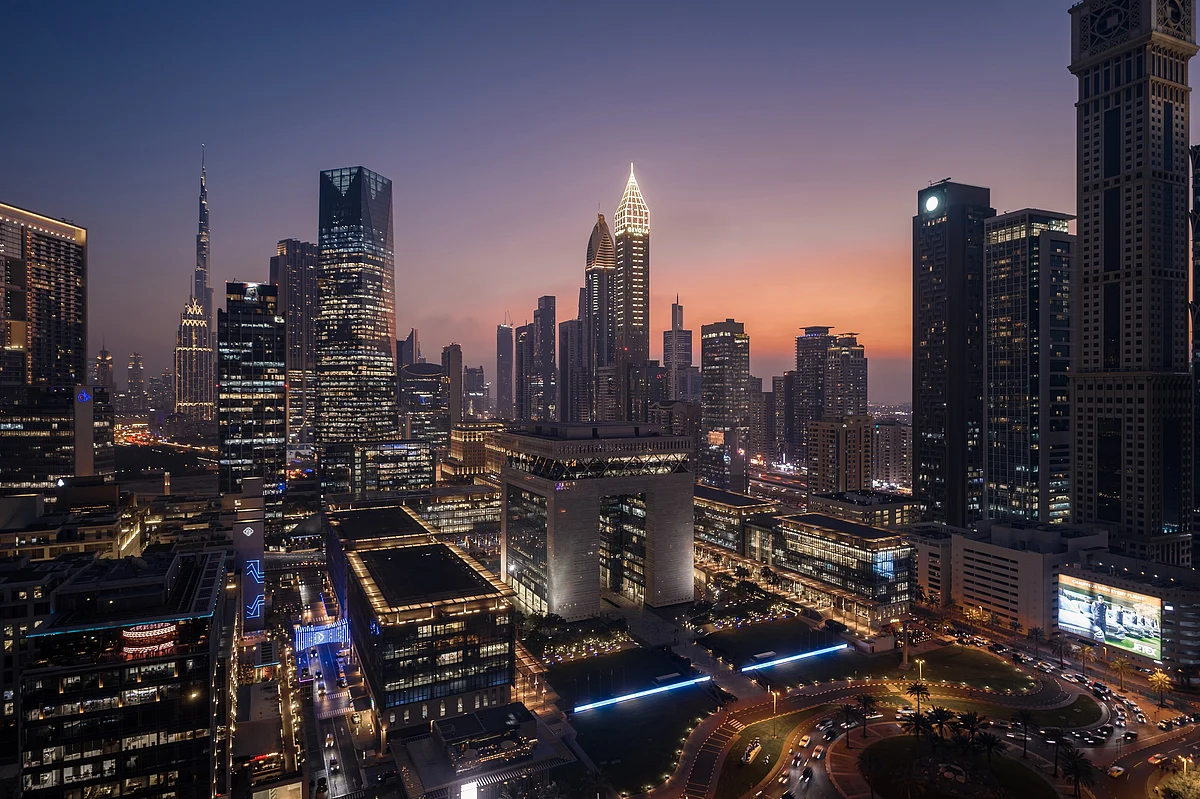
One region where these macro forces converge is the Gulf-and especially Dubai. Barclays underscores the emirate's“stability, welcoming environment to foreigners, and futuristic ambitions,” projecting it will“continue to grow as a hub” for global investors. Bobin Thomas, Head of Family Office, Endowments and Foundations, BlackRock Middle East, stresses the city's deepening market infrastructure:“Dubai's growing appeal to ultra‐high‐net‐worth individuals... reflects its evolution... into a globally relevant investment centre,” with family offices expanding into“private credit, infrastructure and select alternative strategies.” Lombard Odier adds that the UAE's draw rests on“attractive fiscal rules and quality of life,” high‐end real estate and“ease of doing business,” while cautioning that“stability in the Middle East region” is essential.
For GCC fundamentals, Hechler‐Fayd'herbe notes that while softer crude can widen deficits,“US interest rate cuts will... strengthen credit growth and support the non‐oil economy,” with immigration fueling consumption and“a further financial services buildout.” BlackRock points to robust balance sheets that mean“financing is not a binding constraint” for long‐term transformation programmes even in a softer energy‐price environment. Barclays sees continued“diversification]” and new“pockets of opportunities” as the region opens to foreign capital.
The bottom line for 2026: Anchor around quality and income; lean into AI's capex supercycle while managing leverage and liquidity risks; diversify intentionally across private markets, gold and selective commodities; and tap emerging markets poised to benefit from easing policy and tech diffusion-especially as Dubai strengthens its status as a command centre for global capital.

Legal Disclaimer:
MENAFN provides the
information “as is” without warranty of any kind. We do not accept
any responsibility or liability for the accuracy, content, images,
videos, licenses, completeness, legality, or reliability of the information
contained in this article. If you have any complaints or copyright
issues related to this article, kindly contact the provider above.
Most popular stories
Market Research

More Story






Comments
No comment