




403
Sorry!!
Error! We're sorry, but the page you were looking for doesn't exist.
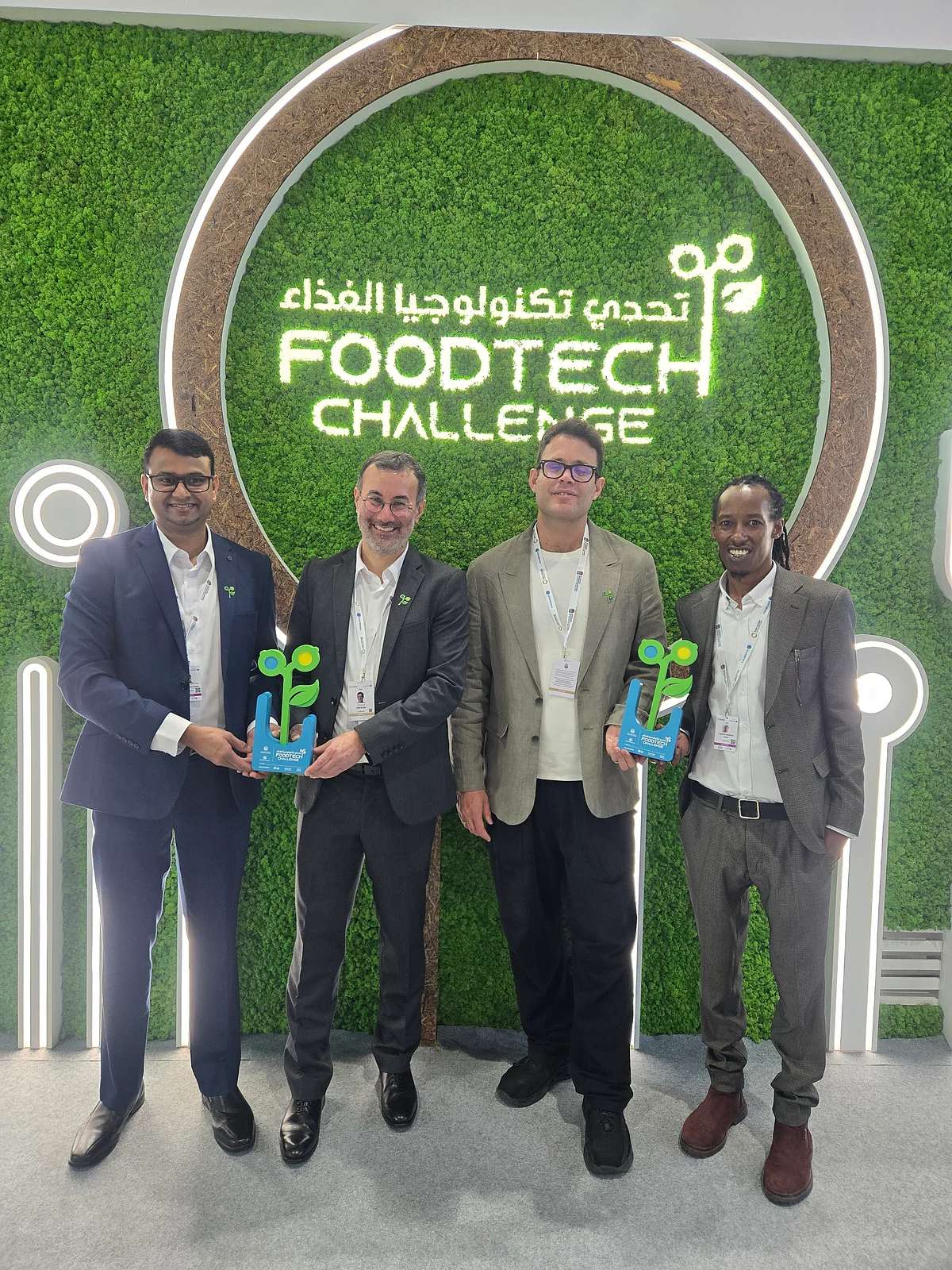
Edible Coatings, AI Palm Care: UAE's Foodtech Challenge Winners Fight Waste, Farm Losses
(MENAFN- Khaleej Times)
Natural produce protectors, tree-health sensors and insect-based waste recycling systems were among the winning ideas that secured $500,000 (Dh1,836,250) each after demonstrating real-world impact on food loss, yields and resource efficiency.
Food waste that rots before reaching supermarket shelves, palm trees that die before farmers know they are infected, and organic waste that ends up in landfill instead of being reused - these are some of the problems the latest FoodTech Challenge winners say they are already fixing on the ground.
Recommended For You Trump says nations doing business with Iran face 25% tariff on US tradeAnnounced on the sidelines of Abu Dhabi Sustainability Week, the four winners - three of whom spoke to Khaleej Times - are working on practical technologies designed for hot climates, fragile supply chains and regions where food loss is costly for both farmers and consumers.
How boredom during Covid sparked Akorn's idea
The idea behind Akorn Technology took shape during the first year of the Covid-19 pandemic, when lockdowns halted normal business activity and left its founders with unexpected time on their hands.“We started working on this right around the beginning of Covid, primarily out of boredom,” said co-founder and CEO Anthony Zografos.“We didn't know what to do.”
That pause, Zografos said, created space to focus on a problem he and his partners had witnessed for decades in agriculture: how much food is lost between harvest and the consumer, and how little action is taken to prevent it. "There's a lot of talk. There isn't a lot of action,” he said. Akorn's solution is a completely natural edible coating that extends the shelf life of fresh produce by preserving quality after harvest.
Unlike existing products, which Zografos described as chemical-based, the company's coating relies on proteins extracted from non-GMO corn, sourced from agricultural by-products.“You take an old natural apple and throw some chemistry on top of it - that's what's been done,” he said.“We wanted to do something completely natural that does the same function, only better.”
The protein is derived from corn that is milled for cornstarch, with the remaining material, typically treated as waste or animal feed, extracted, and functionalised for use in the coating. According to the founders, sourcing non-GMO corn is increasingly difficult, but essential to the product's design.“Most corn is genetically modified. We don't work with that,” Zografos said.
Development during the pandemic relied heavily on global collaboration. With travel restricted and laboratories underused, Akorn worked with researchers and agronomists across Latin America and Southeast Asia to test the coating immediately after harvest - a critical step for effectiveness.
"You can't test pineapples in California,” Zografos said.“So, we worked with people in Costa Rica, Peru and Brazil, collaborating with local experts.” The company's first commercial focus was mangoes, followed by avocados, citrus, stone fruit and sweet potatoes. Over time, the product portfolio expanded as testing continued in regions where spoilage rates are high and supply chains are long.
Interest from the UAE came through practical market needs rather than research outreach. Co-founder and CMO Xander Shapiro said Akorn received calls from grocery distributors in the Emirates struggling with fruit spoilage.“They said they had trouble with fruit that goes bad in stores,” he said.“It's a very demanding market, and you don't want to have waste.” Shapiro explained that the technology helps retailers and exporters reduce losses inside shipping containers.“If they ship a container of fruit, what we do is save a whole ton of fruit that would have been wasted,” he said.“It's like they get a whole extra pallet.”
Based on early sales and average waste-reduction rates, Zografos estimated that Akorn helped save between $1 million and $2 million worth of food in its first year of commercial activity.“If you can save a couple of million dollars' worth of food at the very beginning,” he said,“you understand what happens when you scale this up.”
Following its FoodTech Challenge win, Akorn plans to deepen its work in the UAE by exploring date-based raw materials as active ingredients for future coatings. Zografos said large volumes of date-processing by-products already exist locally but lack a clear commercial pathway.“There's raw material here, there's technology at universities here, but they don't know what to do next,” he said.“That's where we come in.”
Listening to trees before it's too lateWhile Akorn focuses on what happens after harvest, Permia Sensing is targeting losses that occur long before crops are picked. The UK-based company, led by CEO Efrem De Paiva, has built a sensor-driven platform that detects early stress, disease and pest infestations in palm trees - including dates and coconuts - before visible symptoms appear. The idea originated with the red palm weevil, one of the most destructive pests affecting palm trees in the Middle East and South Asia.“It's invisible. It stays inside the tree,” De Paiva said.“When you see the effects, it's too late - you have to cut the tree down.”
Permia's system combines satellite imagery, drone data and bioacoustics sensors that are temporarily attached to trees, alongside agronomist input. Artificial intelligence then analyses the data and recommends actions farmers can take, such as adjusting irrigation, nutrients or pest control. The technology has been deployed for more than three years in Sri Lanka, where De Paiva said it has already protected millions of trees. In one case, a disease threatening 15 per cent of a coconut farm was eliminated within three months after early detection.
Beyond pest control, the platform addresses what De Paiva described as a broader productivity gap.“On average, plantations produce only about half of their potential,” he said.“Our goal is to double productivity.” The company now plans to establish Abu Dhabi as a regional hub, localising its technology for date palms and expanding into Egypt and India, using the prize funding to scale operations and integrate into regional agricultural ecosystems.
Turning food waste into proteinFor Flybox, the challenge was not just food production - but what happens to food after it is thrown away. Founded in 2020, the company develops low-cost insect farming systems that convert organic waste into animal feed and fertiliser, using fly larvae as what CEO Larry Kotch described as "nature's recyclers".
"They grow 5,000 times their size in seven days," he said. "They eat everything." Organic waste is processed into feed for larvae, which are later separated into insect protein powder and fertiliser. The protein can replace fishmeal or soy in animal feed, while the fertiliser is reused in agriculture. Flybox has already rolled out 12 projects across Africa, Europe and Australia, collectively processing up to 20,000 tonnes of organic waste annually. The company's technology ranges from smart polytunnels to container-based insect farms designed for hot climates and low-resource settings.
The UAE presents a unique opportunity - and challenge“Not a single tonne of organic waste is treated here right now. It all goes to landfill,” he said, adding that Flybox's next-generation automated facilities could become part of the solution as waste separation and landfill restrictions increase. The company is already partnering with Khalifa University to install its container-based system and plans to establish a base in Abu Dhabi to build larger facilities in the coming years.
The FoodTech Challenge, launched by the UAE to encourage innovation in food security, attracted more than 1,200 applicants, which were narrowed down to 42 semi-finalists before four winners were selected. Each winner received $500,000, with the focus this year on solutions addressing food loss, waste, and agricultural efficiency.

Legal Disclaimer:
MENAFN provides the
information “as is” without warranty of any kind. We do not accept
any responsibility or liability for the accuracy, content, images,
videos, licenses, completeness, legality, or reliability of the information
contained in this article. If you have any complaints or copyright
issues related to this article, kindly contact the provider above.
Most popular stories
Market Research

More Story






Comments
No comment