




403
Sorry!!
Error! We're sorry, but the page you were looking for doesn't exist.
Street Food In Mombasa: How City Life Shaped The Modern Meal
Author: Devin Smart
(MENAFN- The Conversation) As Kenya's cities grew, more and more people left their rural homes and subsistence farming systems to go to urban settlements like Mombasa to find work. In the city, meals were paid for with cash, a major transformation in Kenya's food systems.

A new book called Preparing the Modern Meal is an urban history that explores these processes. We asked historian Devin Smart about his study.
What's the colonial history of Mombasa?At the turn of the 20th century, the British were expanding their empire throughout sub-Saharan Africa, including the parts of east Africa that would become Kenya.
They built a railway that connected the port town of Mombasa on the Indian Ocean coast with the newly established Protectorate of Uganda in the interior. This created the foundations of the colonial economy and drove urbanisation.
While Nairobi grew in the Kenyan highlands, Mombasa became the most important port in east Africa. The city grew fast as people came to work at the railway, docks and in other parts of the urban economy.
After independence in 1963, cities like Mombasa carried on growing rapidly and more and more people started working in the informal sector, which included making and selling street food.
How did rural people get their food?During the early 1900s, the cuisines of east Africa's agrarian (farming) societies were mostly vegetarian. Much of the food people ate was grown in their own fields, though there were also regional markets.
These communities grew lots of staple crops like sorghum, millet, maize, bananas, cassava, and sweet potatoes. They also had legumes, greens, and dairy products as regular parts of their meals.
These ingredients were prepared into a variety of dishes, like the Kikuyu staple irio, a mash of bananas with maize kernels and legumes added to it. The Kamba often ate isio, a combination of beans and maize kernels, while the Luo who lived along the shores of Lake Victoria regularly included a dish called kuon as part of their cuisine. It's a thick porridge of boiled milled grain (often millet), eaten with fish or vegetables to add contrasting flavours and textures.
In these communities, the daily meal was also defined by seasonal variety. Food changed depending on what was being harvested or what stores of ingredients were dwindling. These were also gendered food systems, with women doing much of the farming work and nearly all the cooking.
In my book, I consider the dramatic changes in how east Africans came by their food when they left these rural food systems for the city.
How was food organised in the city?In Mombasa, they entered a food system organised around commercial exchange. My study is about Kenya, but the story it reflects is one that's unfolded on a global scale. The shift from subsistence to commodified food systems, from growing your own to buying it from others, has been one of the central features of the modern world.
By the 1930s, most people in Mombasa bought nearly all their food with cash, visiting small dried-goods grocers, fresh-produce vendors, and working-class eateries. In this urban food system, the seasonal variety of rural cuisines was increasingly replaced by the regularity of commercial supply chains.
This was especially the case with staple grains. In the countryside, people ate a variety of grains, but in Mombasa maize meal and wheat became daily staples eaten year-round, transforming east African foodways.
Migration also changed domestic labour in the kitchen. Many migrant men now lived in homes without women, which meant they had to prepare their own food, often for significant periods of their lives.
However, the idea that cooking was the work of women proved enduring. When women joined these households in the city, they again prepared the family's meals.
How did street food emerge?By the 1930s, Mombasa had a fast-growing working class. The majority of the town's workers spent their days in the industrial district, around the railway and port. Many also had to commute a considerable distance to work.
With the long working day of urban capitalism, returning home for a filling lunch wasn't practical, which created strong demand for affordable prepared food at midday. As this was happening, many in the city also struggled to find consistent jobs and turned to informal trades like street food to earn a living.
This convergence of supply and demand led to the rapid growth of the street food industry around the 1950s, with people opening eateries in makeshift structures outside the gates to the port and in nearby alleyways, parks, and other open spaces.
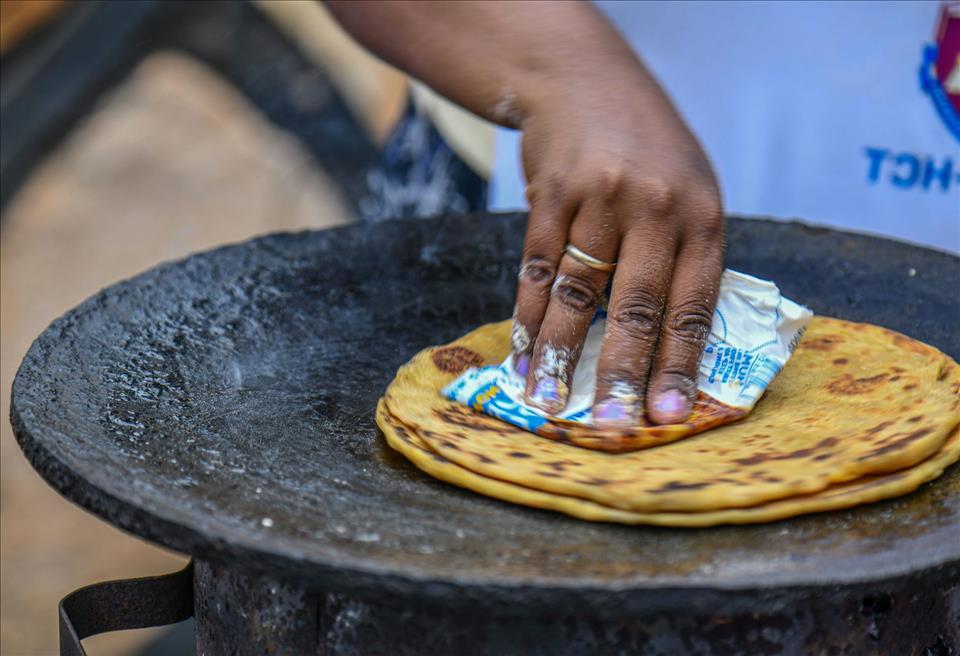
What kind of food was served?At these working-class food spots, a popular dish was chapati, an east African version of the South Asian flatbread. People could complement it with beans, meat, or fried fish, along with githeri, a mixture of maize kernels and beans (similar to isio).
In later decades, ugali, the ubiquitous Kenyan staple made from maize meal, became more common at street food eateries, as did Swahili versions of Indian Ocean dishes like pilau (aromatic rice with meat) and biryani (rice with meat braised in a spice-infused tomato sauce).
How were street food vendors policed?The business model that made street food work in Mombasa's economy also brought these vendors into regular conflict with the city's administration. Street food vendors kept overheads and thus prices low because they avoided rents and licensing fees by squatting on open land in makeshift structures.
But, in an era of urban development and modernisation, many officials desired a different kind of city, one without this kind of informal land use and architecture. Authorities began campaigns to remove these businesses from Mombasa's landscape, arresting vendors and demolishing their structures.
This also created a tension, though, because the city's workers, including those at the port and railway who ran the most important transportation choke point in east Africa's regional economy, needed affordable meals at lunch.
Given that informal trade had become essential to Mombasa's economy, there were limits on how far these campaigns could be pushed. However, arrests and demolitions did still occur, and sometimes on a dramatic, city-wide scale, which made street food a precarious way to earn a living in Kenya's port town.
For example, in 2001, the Kenyan government launched a massive demolition campaign to clear informal business structures from city sidewalks, parks and open spaces.
After the demolitions, many rebuilt and reopened their street food businesses, but in less visible parts of town and on side streets rather than main roads. Today, these eateries remain an essential part of Mombasa's economy and food system.
What do you hope readers will take away from the book?I hope that readers will see how food history helps us understand the ways that capitalism transformed the modern world.
The regional focus of the book is east Africa, but it explores themes relevant to the history of capitalism more generally, including the gendered division of household labour, the commercialisation of everyday needs and wants, and the political and economic struggles of working-class communities to find space for themselves in modern cities.
Institution:West Virginia University

Legal Disclaimer:
MENAFN provides the
information “as is” without warranty of any kind. We do not accept
any responsibility or liability for the accuracy, content, images,
videos, licenses, completeness, legality, or reliability of the information
contained in this article. If you have any complaints or copyright
issues related to this article, kindly contact the provider above.
Most popular stories
Market Research

More Story




Comments
No comment