




403
Sorry!!
Error! We're sorry, but the page you were looking for doesn't exist.
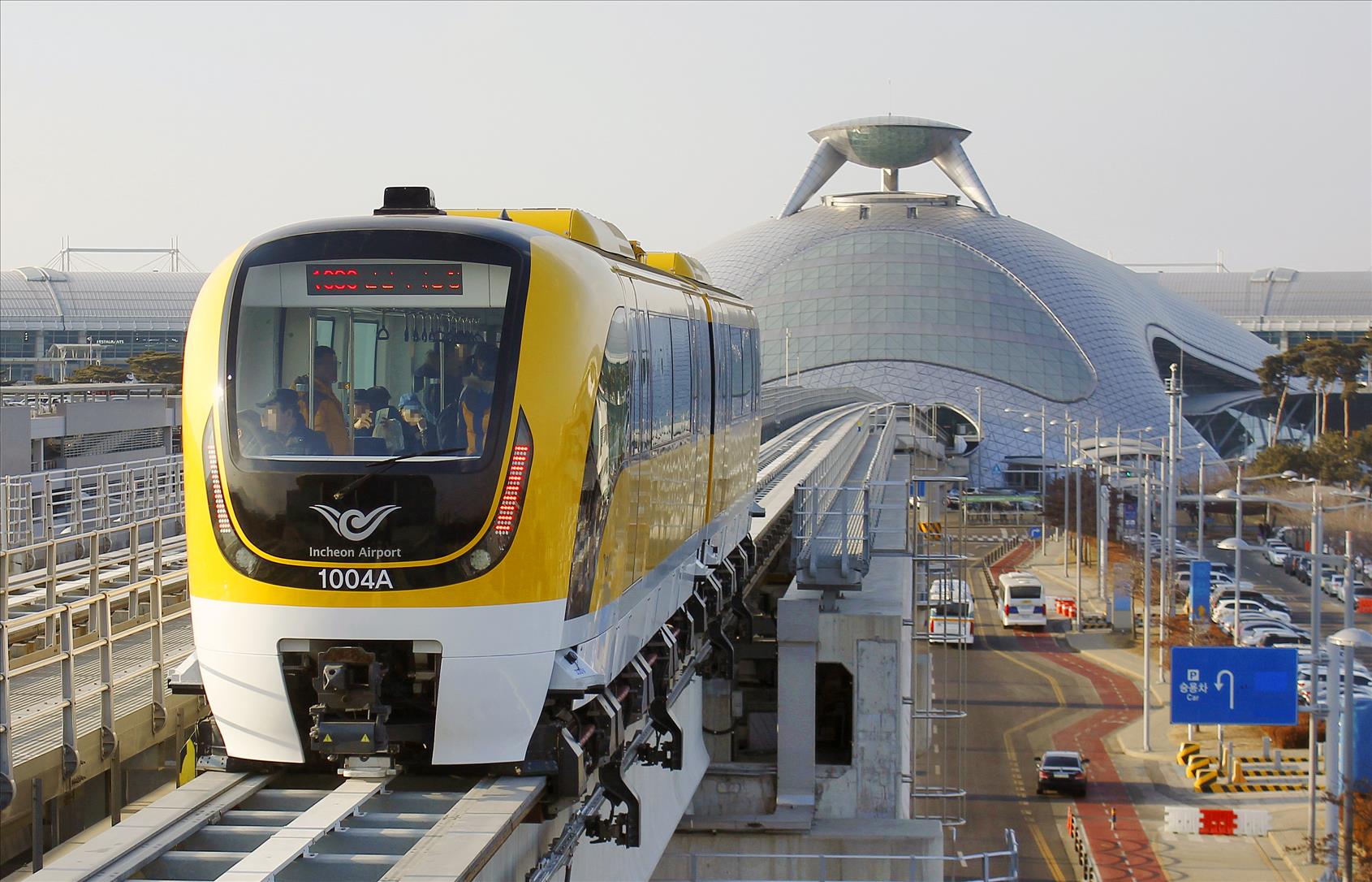
China's Maglev Leap Rewrites Speed Benchmarks
(MENAFN- The Arabian Post)

A magnetic levitation test run in China has pushed rail engineering into uncharted territory, with a prototype train reaching 700 kilometres an hour in roughly two seconds during a controlled acceleration trial. The demonstration, carried out on a short test track designed for extreme propulsion experiments, underscores Beijing's drive to redefine high-speed ground transport and narrow the gap between rail and short-haul aviation.
Engineers involved in the programme said the run focused on acceleration rather than sustained cruising, highlighting the system's ability to generate enormous thrust while maintaining stability and passenger safety. The train did not travel long enough to establish a new endurance speed record, but the burst of acceleration surpassed benchmarks reported in earlier maglev trials globally, according to technical briefings released after the test.
Maglev technology eliminates wheel-rail friction by lifting the train above the guideway using electromagnetic forces. That allows far higher speeds than conventional high-speed rail, where steel wheels and tracks impose physical limits. China already operates the world's fastest commercial maglev service in Shanghai, connecting Pudong International Airport with the city at speeds up to 431 kilometres an hour. The new experiment signals ambitions well beyond existing passenger services.
Researchers said the trial validated a new propulsion system that combines ultra-high-power linear motors with advanced power electronics and real-time control software. These components were developed to handle extreme loads without destabilising the levitation field, a key challenge when acceleration forces spike. Engineers also tested braking systems capable of rapidly dissipating energy while keeping deceleration within safe limits.
China's transport planners have framed maglev as a strategic complement to high-speed rail rather than a replacement. Conventional bullet trains, which already operate at up to 350 kilometres an hour on thousands of kilometres of track, remain the backbone of intercity travel. Maglev, by contrast, is being positioned for dense corridors where time savings justify higher construction and operating costs.
See also Disinformation surge followed northern Japan quakeThe latest test fits into a broader push to build a next-generation transport ecosystem linking megacities into what officials describe as“one-hour travel circles”. Routes under discussion include city pairs separated by 1,000 kilometres or more, distances that currently favour aviation. At cruising speeds above 600 kilometres an hour, maglev could cut door-to-door travel times while avoiding airport congestion.
Internationally, maglev development has been uneven. Japan's superconducting maglev programme holds the current sustained speed record, set during testing at 603 kilometres an hour, and aims to open a commercial line between Tokyo and Nagoya in the coming years. Germany, once a pioneer of electromagnetic maglev, scaled back after cost concerns. China's renewed focus has altered the competitive landscape, combining state backing with an expansive domestic market.
The acceleration feat also has implications beyond passenger travel. Freight applications, particularly for high-value or time-sensitive goods, are being explored by research institutes. Rapid acceleration and deceleration over short distances could enable logistics hubs to move cargo between airports, ports and industrial zones far faster than road transport.
Safety remains central to the debate. Critics have long questioned whether ultra-high-speed ground transport can deliver acceptable risk levels, especially in densely populated regions. Engineers say the new test addressed these concerns by demonstrating precise control under extreme conditions. Sensors monitored levitation gaps, temperature changes and electromagnetic interference throughout the run, with data showing parameters remained within design thresholds.
Economic viability is another unresolved issue. Maglev lines require dedicated infrastructure, including elevated guideways and specialised power systems. Construction costs can exceed those of conventional rail by a wide margin. Analysts note that while China's central planning model can absorb such investments, scaling the technology for widespread commercial use will depend on careful route selection and long-term demand forecasts.
See also China magnet shipments to US stay under pressureEnvironmental considerations are also shaping the narrative. Proponents argue that high-speed maglev, powered by electricity, could reduce reliance on short-haul flights and cut carbon emissions if supplied by low-carbon energy. Detractors counter that the energy intensity of sustaining very high speeds may offset some gains, particularly if trains operate below capacity.
Notice an issue? Arabian Post strives to deliver the most accurate and reliable information to its readers. If you believe you have identified an error or inconsistency in this article, please don't hesitate to contact our editorial team at editor[at]thearabianpost[dot]com. We are committed to promptly addressing any concerns and ensuring the highest level of journalistic integrity.

Legal Disclaimer:
MENAFN provides the
information “as is” without warranty of any kind. We do not accept
any responsibility or liability for the accuracy, content, images,
videos, licenses, completeness, legality, or reliability of the information
contained in this article. If you have any complaints or copyright
issues related to this article, kindly contact the provider above.
Most popular stories
Market Research

More Story







Comments
No comment