




403
Sorry!!
Error! We're sorry, but the page you were looking for doesn't exist.
Peace And Austerity: How Britain Celebrated Christmas In 1945
Author: Tim Luckhurst
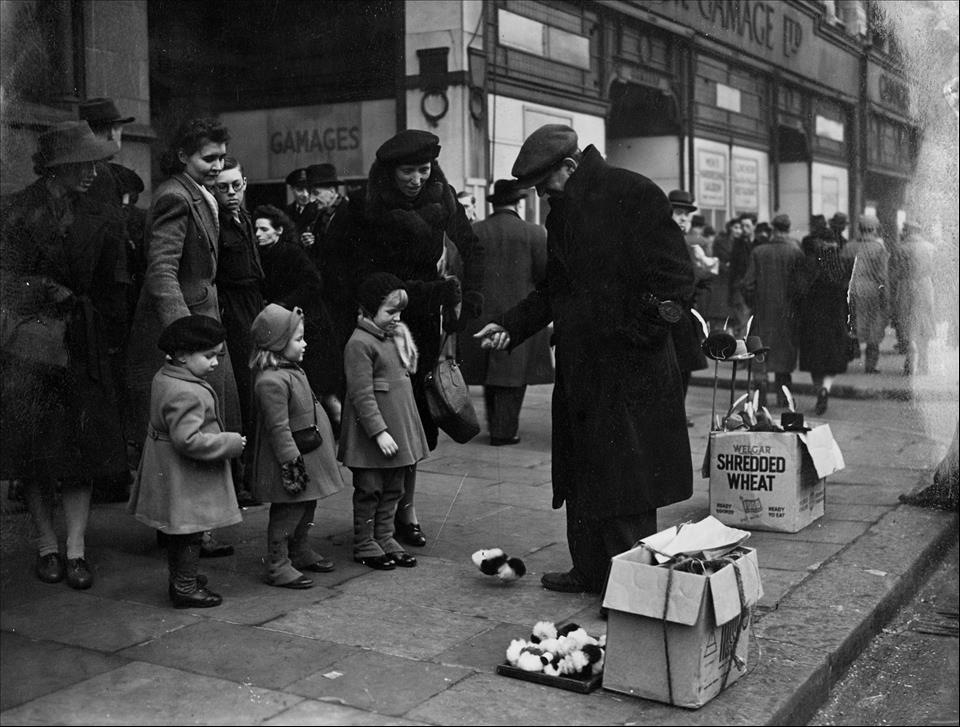
(MENAFN- The Conversation) Eighty years ago, Britain celebrated its first peacetime Christmas since 1938. It was a time of hope indeed, but a look through newspaper archives reveals a complex picture. Christmas 1945 was an austerity Christmas. One in which grief and suffering, remembrance and loneliness mingled with reunions, church attendance and muted celebration.

It was the first Christmas under the Labour government elected in 1945, though Prime Minister Clement Attlee did not address the nation. The Christmas address was by King George VI, who noted that Britons still had to“make a little go a long way”.
The government had negotiated a colossal loan from the United States because Britain was close to bankruptcy. The Times reported that extra meat, margarine, sugar and sweets“allocated in good time” would permit“a near approach to traditional fare in most homes”. However, rationing remained in force and for many, the top priority was simply to get back to their families.
On December 22, the mass circulation Daily Mirror reported that“with only three days to go till Christmas, mainline stations throughout the country were jam-packed with servicemen and civilians anxious to get home for the greatest get together holiday for six years”. It noted that“here and there was a lucky passenger with a turkey or goose wrapped in brown paper to take home for the Christmas feast”.
The Labour-supporting Daily Herald reflected that“You may not have a turkey or much coal. Toys are scarce and taxes heavy. But have you reflected how much better off we are than a year ago?”
It reported that the railway network was running“duplicate and triplicate trains” on some routes, but could not meet the demand for seats. The Daily Herald noted that“the first Christmas of the peace began with a battle – the battle of Waterloo”. There were“long queues four abreast at Euston” and parcels piling up at King's Cross Station. Such scenes might feel familiar to today's travellers trying to make it out of London in the days before Christmas.
Joy amid mourningSome travellers would not reach their families. Staunch in its defence of servicemen, the Daily Mirror reported that a“War Office Muddle” meant that men who had“spent five Christmases abroad” were“still being sent overseas, despite a War Office promise that they would not be”. This situation arose because men were still required to fill essential posts.
Many such jobs were in Berlin. The Manchester Guardian's correspondent reported from the German capital that Germany and Austria had no fuel to heat homes. The defeated nations faced“a Christmas of hunger or black market”. However,“in Berlin Christmas will at least be cheap. Bread is four pence a two-pound loaf, potatoes are three half-pence a pound”.
The Daily Mail remained cheerful. It reported a BBC broadcast of Johann Sebastian Bach's Christmas Oratorio:“A young BBC singer stepped straight from the chorus to a leading part” in this performance. Gladys Ripley, a leading contralto, had fallen victim to“a severe cold”. Into her place stepped the unknown Miss Maud Baker who gave“a magnificent performance”.
Still, many citizens were mourning. Britain had lost about 348,000 military personnel and 70,000 civilians. Atomic bombs had brought about the surrender of Japan. Losses were mourned in churches across the land. The Times displayed pictures of choristers at Salisbury Cathedral practising for a carol service. Carols were sung on Christmas Eve and Christmas Day. Many readers attended services at churches throughout the UK.
The Listener, a magazine published by the BBC, captured the mood in an editorial headlined, simply,“Christmas 1945”:
Today, many people around the world are facing destruction and deprivation comparable to that which Britons experienced between 1939 and 1945. This Christmas, our thoughts as we enjoy peace and plenty should, perhaps, be with them.
Institution:Durham University

Legal Disclaimer:
MENAFN provides the
information “as is” without warranty of any kind. We do not accept
any responsibility or liability for the accuracy, content, images,
videos, licenses, completeness, legality, or reliability of the information
contained in this article. If you have any complaints or copyright
issues related to this article, kindly contact the provider above.
Most popular stories
Market Research

More Story







Comments
No comment