





403
Sorry!!
Error! We're sorry, but the page you were looking for doesn't exist.
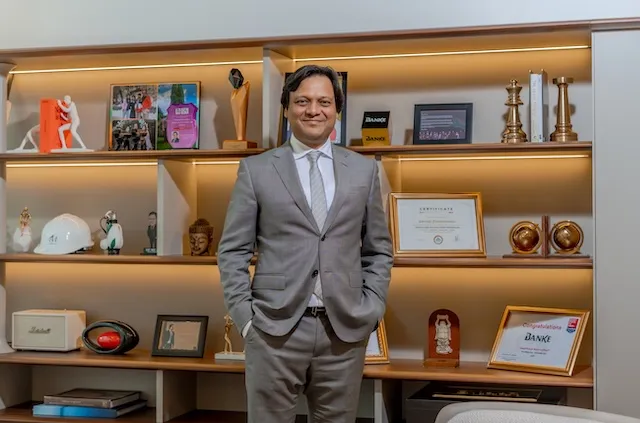
Dubai's 2025 Real Estate Market Defined By Lifestyle-Led Demand And Diverse Global Buyer Activity
(MENAFN- Mid-East Info)
The year saw significant activity from GCC, Indian, UK and European buyers, contributing to sustained momentum across both off-plan and secondary segments. With over AED 431 billion recorded across 125,538 deals in H1 2025 alone. By October 2025, total real estate sales had already surpassed AED 559.4 billion, reflecting continued confidence from both end-users and international investors as the city's population and economic diversification accelerated1. Dubai maintained its position as one of the world's most attractive and resilient property markets. Families remained drawn to villa and townhouse communities such as Dubai Hills Estate, Arabian Ranches, Tilal Al Ghaf and Mudon, prioritizing space, school access and lifestyle infrastructure. Investors continued to target high-yield apartment corridors, including JVC, Dubai Marina, Business Bay and JLT, encouraged by stable rental returns and consistent occupancy. Dubai's long-term demand trajectory remains strong, supported by sustained expatriate inflows and expanding economic sectors. According to the Dubai Urban Master Plan 2040, the city's population is projected to reach 5.8 million residents by 2040, reinforcing long-term housing requirements across both established and emerging communities2. “2025 was the clearest indication yet that Dubai has entered a new era of real estate maturity. These decisions are being shaped by lifestyle, long-term value, and real demand rather than short-term speculation,” said Porush Jhunjhunwala, CEO of Banke International Properties.“Families are choosing communities that offer schools, green spaces, retail, and accessibility, while investors are gravitating toward developments with proven rental depth and stable yields. What we are seeing is not a spike in activity; it is the formation of a more balanced, fundamentals-driven market. Heading into 2026, the shift from momentum to sustainability will create opportunities across both districts and the upcoming corridors that are now benefiting from infrastructure, connectivity, and the UAE's long-term economic agenda.” We saw that ff-plan launches continued to dominate activity, especially in areas such as Dubai Creek Harbour, Dubai South, JVC, Arjan and new phases of MBR City, due to the support by flexible payment structures and other accessible price points. In Q3 2025, we also saw sustained off-plan momentum and high absorption across major master-developments3. Looking ahead, industry expectations point to a significant wave of new handovers through 2026, which may introduce pricing recalibration in mid-market levels. It is estimated that in 2026, we could see one of the largest delivery pipelines in recent years, supported by active off-plan launches through 2023–2025. Demand fundamentals remain strong, underpinned by continued population inflows, expatriate residency reforms, and national strategies such as We the UAE 2031 and the Dubai Urban Master Plan 2040, both emphasizing sustainable growth, liveability and housing diversification. -End-
-
The UAE recorded AED 431 billion in real estate transactions, across 125,538 deals in H12025
Total real estate sales surpassed AED 559.4 billion by October 2025
Dubai's population is estimated to reach 5.3 million
The year saw significant activity from GCC, Indian, UK and European buyers, contributing to sustained momentum across both off-plan and secondary segments. With over AED 431 billion recorded across 125,538 deals in H1 2025 alone. By October 2025, total real estate sales had already surpassed AED 559.4 billion, reflecting continued confidence from both end-users and international investors as the city's population and economic diversification accelerated1. Dubai maintained its position as one of the world's most attractive and resilient property markets. Families remained drawn to villa and townhouse communities such as Dubai Hills Estate, Arabian Ranches, Tilal Al Ghaf and Mudon, prioritizing space, school access and lifestyle infrastructure. Investors continued to target high-yield apartment corridors, including JVC, Dubai Marina, Business Bay and JLT, encouraged by stable rental returns and consistent occupancy. Dubai's long-term demand trajectory remains strong, supported by sustained expatriate inflows and expanding economic sectors. According to the Dubai Urban Master Plan 2040, the city's population is projected to reach 5.8 million residents by 2040, reinforcing long-term housing requirements across both established and emerging communities2. “2025 was the clearest indication yet that Dubai has entered a new era of real estate maturity. These decisions are being shaped by lifestyle, long-term value, and real demand rather than short-term speculation,” said Porush Jhunjhunwala, CEO of Banke International Properties.“Families are choosing communities that offer schools, green spaces, retail, and accessibility, while investors are gravitating toward developments with proven rental depth and stable yields. What we are seeing is not a spike in activity; it is the formation of a more balanced, fundamentals-driven market. Heading into 2026, the shift from momentum to sustainability will create opportunities across both districts and the upcoming corridors that are now benefiting from infrastructure, connectivity, and the UAE's long-term economic agenda.” We saw that ff-plan launches continued to dominate activity, especially in areas such as Dubai Creek Harbour, Dubai South, JVC, Arjan and new phases of MBR City, due to the support by flexible payment structures and other accessible price points. In Q3 2025, we also saw sustained off-plan momentum and high absorption across major master-developments3. Looking ahead, industry expectations point to a significant wave of new handovers through 2026, which may introduce pricing recalibration in mid-market levels. It is estimated that in 2026, we could see one of the largest delivery pipelines in recent years, supported by active off-plan launches through 2023–2025. Demand fundamentals remain strong, underpinned by continued population inflows, expatriate residency reforms, and national strategies such as We the UAE 2031 and the Dubai Urban Master Plan 2040, both emphasizing sustainable growth, liveability and housing diversification. -End-

Legal Disclaimer:
MENAFN provides the
information “as is” without warranty of any kind. We do not accept
any responsibility or liability for the accuracy, content, images,
videos, licenses, completeness, legality, or reliability of the information
contained in this article. If you have any complaints or copyright
issues related to this article, kindly contact the provider above.
Most popular stories
Market Research

More Story






Comments
No comment