


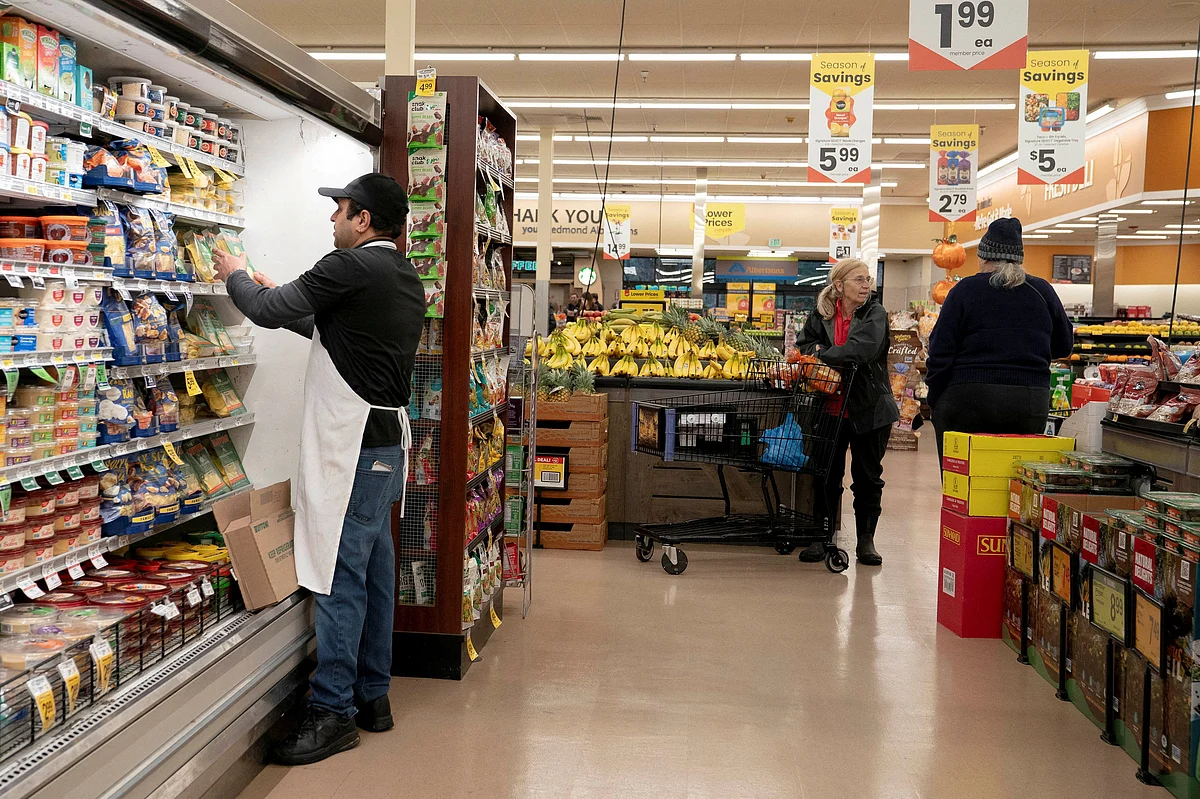
Indian Rupee Hits Record Low Against Dirham Will UAE Grocery Prices Fall?


The Indian rupee is hitting an all-time low against the UAE dirham, and the US dollar comes with a mixed bag of fortunes, resulting in a drop in some goods but rising production and transportation costs in the South Asian country often outweigh the currency advantage.
The rupee has hit a record low against the Emirati currency and the US dollar, reaching 24.6 against the dirham and 90.4 against the greenback.
Recommended For YouShuaib Alhammadi, director of community relations, Union Coop, said this is an opportunity to import more from India as the items will be more competitive.
Stay up to date with the latest news. Follow KT on WhatsApp Channels.
“We have already noticed for the last few months a decrease in the price of some items versus last year, like the red onion. The decrease is estimated for some items, reaching currently 10 per cent. The decrease started with fresh items, and will be followed by consumer goods,” said Alhammadi.
India is one of the UAE's largest trading partners, with bilateral trade non-oil trade reaching $38 billion (Dh139.46 billion) in the first half of 2025. The trade has increased significantly after the two countries signed the Comprehensive Economic Partnership Agreement (CEPA) in May 2022. The UAE imports a variety of consumer goods from India, including rice, fruits and vegetables, textiles, gems and jewellery among others.
India is one of the main source markets for large retailers such as Union Coop, Al Adil Trading and Al Maya Group, who boast a strong presence in the UAE.
'Outweigh currency advantage'Dr Dhananjay Datar, chairman and managing director, Al Adil Trading, the rupee touching a record low has created a complex situation for importers.
“At first glance, a weaker rupee should make imports cheaper for countries like the UAE. But the reality on the ground is different. Rising production costs in India - raw materials, labour, fuel, packaging, transport - have increased significantly in recent months. These internal cost pressures often outweigh the currency advantage. As a result, the overall landed price of many items continues to rise. For essential foods that are part of every household's daily basket, we see the impact more clearly. Our priority remains ensuring uninterrupted supply and stable pricing for the community,” he said.
The Purchasing Manufacturing Index (PMI) in India fell to a nine-month low in November as companies reported weaker factory production.
Kamal Vachani, group director and partner, Al Maya Group, said the weaker rupee has a mixed impact.“For UAE importers, it can help reduce some costs, making certain Indian products more competitive. However, the overall effect also depends on supplier pricing, raw material costs in India, and global demand. So the impact is not fully positive or negative, but somewhere in the middle,” he said.
Vachani noted that the weakening rupee alone has not caused major price increases.“Some categories remain stable, while a few items - affected by global commodity prices and logistics - have seen small adjustments of around 3-7 per cent. In most cases, fluctuations are driven more by production costs than currency movements,” he said.
Products impactedThe group director and partner of Al Maya Group added that items like rice, spices, pulses, and FMCG products may see slight movements if supplier costs rise.“But overall, the weaker rupee itself does not directly push prices up; other market factors play a larger role in determining final export prices.”
Dr Dhananjay Datar added that staples such as lentils, flour, spices, and everyday FMCG items have seen consistent inflation because their input costs in India have risen.
“Even though the exchange rate gives some breathing room, manufacturers' costs – plus logistics and compliance charges – result in higher shelf prices. We try to absorb as much of this as possible to protect customers, but some upward correction becomes unavoidable,” said Dr Datar – fondly known as“Masala King” for his company's strong presence in the spices industry.
Dr Datar sees prices of premium spices, edible oils, branded packaged foods, ready-to-eat items, ghee, and certain FMCG products more vulnerable to hikes.

Legal Disclaimer:
MENAFN provides the
information “as is” without warranty of any kind. We do not accept
any responsibility or liability for the accuracy, content, images,
videos, licenses, completeness, legality, or reliability of the information
contained in this article. If you have any complaints or copyright
issues related to this article, kindly contact the provider above.


Comments
No comment