



403
Sorry!!
Error! We're sorry, but the page you were looking for doesn't exist.
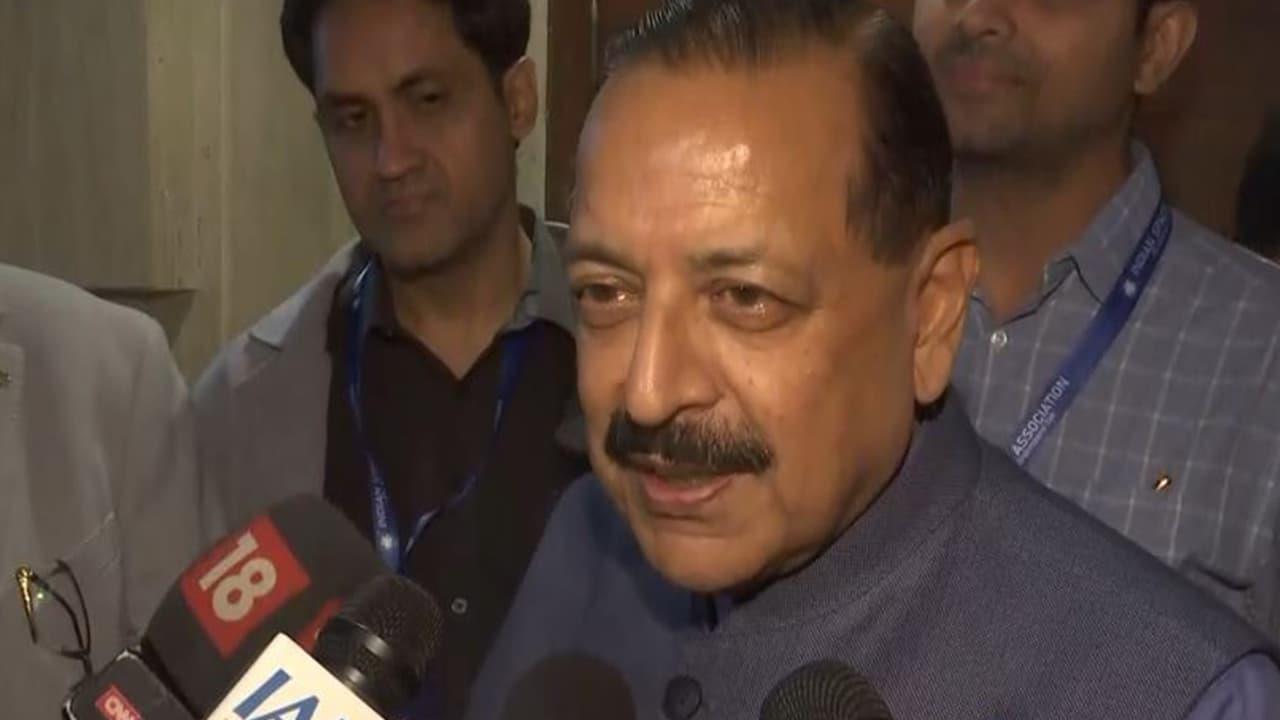
India's Private Sector To Play Larger Role In Space, Nuclear Sectors
(MENAFN- AsiaNet News)
Private Sector's Expanding Role in Strategic Industries
India's private sector is set to play a significantly larger role in the country's space and nuclear industries, a shift that was unimaginable a decade ago, Minister of State for Science and Technology Jitendra Singh said on Friday.
Speaking at the CII Global Summit on Industry-Academia Partnership, Singh said India had transformed from being counted among the "fragile five" emerging economies to becoming "first among four," building confidence in its scientific and industrial capabilities.
He said the opening of the space sector to private players marked a major policy change. "Nobody could have imagined this ten years back," Singh said, adding that India's private companies were now emerging as partners in strategic areas such as space and defence. He noted that even in the nuclear sector -- traditionally dominated by the state -- non-government entities were beginning to find a role.
"Government support cannot happen without the support of non-government entities," he said. "Nowhere in the world does the government finance private industry the way it is happening in India. We are acting as a catalyst, giving a push to the private sector to scale up." Singh called for stronger collaboration among research institutions, academia and startups, arguing that such synergy was essential for innovation-led growth. He also highlighted India's expanding genetic data bank, calling it "unique" and unmatched globally, and said it could become a valuable resource for industry and scientific research.
Industry Calls for Stronger Collaboration Framework
India must strengthen coordination among government, industry and academia to turn research intent into meaningful innovation, Hindustan Unilever's Head of R & D Aniket Gandhi told ANI at the same event. Describing the partnership model as a "golden triangle," he said MoUs require significant groundwork and that the real focus should be on converting dialogue into lasting collaboration.
Overcoming Barriers to Partnership
Gandhi flagged three barriers: limited stakeholder interaction, weak human infrastructure and gaps in co-funding models. Clear business cases, he noted, are essential for projects to take shape. He called for incentives to boost private R & D investment, including a clearer tax structure, a supportive Global Capability Centre policy, and a stronger ecosystem of academia, startups, industry, and government, backed by a robust IP framework.
Bridging the 'Valley of Death'
Rohit Bansal, Group Head Corporate Communications, Reliance Industries, told ANI that the industry and academia identify their problems and also opportunities. Academia should catch up with the industry's demand and technical requirements. This gap is called the valley of death. He stressed that the reward should be given to companies that are working more closely with academia. Likewise, in academia, IITs are working closely with the industry on their projects and requirements. Such collaborations should be incentivised. (ANI)
(Except for the headline, this story has not been edited by Asianet Newsable English staff and is published from a syndicated feed.)
Legal Disclaimer:
MENAFN provides the
information “as is” without warranty of any kind. We do not accept
any responsibility or liability for the accuracy, content, images,
videos, licenses, completeness, legality, or reliability of the information
contained in this article. If you have any complaints or copyright
issues related to this article, kindly contact the provider above.
Most popular stories
Market Research

More Story







Comments
No comment