



403
Sorry!!
Error! We're sorry, but the page you were looking for doesn't exist.
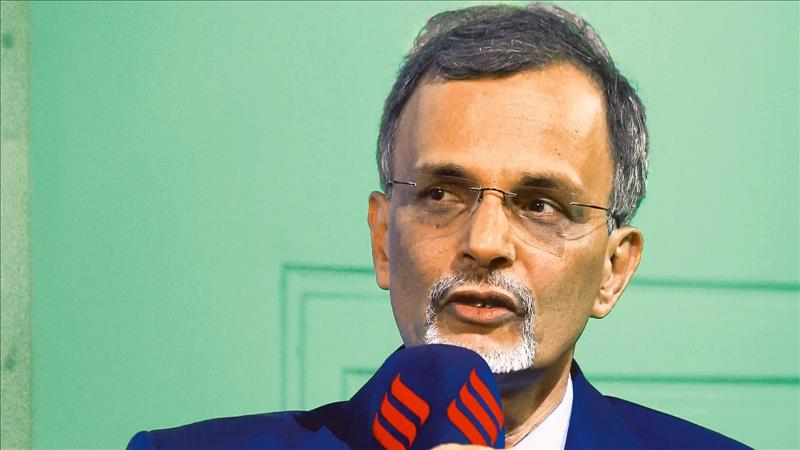
CEA's Calmness Over Steep Fall Of Rupee Ignores Key Risks To India
(MENAFN- The Arabian Post)
By Dr. Gyan Pathak
When Indian rupee was falling in the Mumbai market against US dollar on Wednesday, December 3, 2023 – sliding past the 90-a-dollar mark for the second day, plumbing a new low of 90.29 in the morning trade after opening flat at 89.96, analysts were pegging the next level for the beleaguered unit at 92-93. However, the Chief Economic Advisor of the Government of India V Anantha Nageswaran was audaciously saying in an industry event in the same city,“It will come back next year. Right now, it's not hurting our exports or inflation. I am not losing my sleep over it. If it has to depreciate now probably is the right time.”
CEA's calmness over the fall of rupees was surprising for many since it ignored certain key risks to India. His statement was merely economically comforting and politically convenient, which only reflected a technocratic optimism that sits uneasily with the structural realities of the Indian economy.
CEA was actually underplaying the political cost of inflation, which is not merely a macroeconomic variable, but also a political variable. Three factors should be taken seriously in this regard. First – Even moderate imported inflation, if persistent, can destabilise household budgets; secondly, the government absorbs part of rising international prices through excise cuts or subsidies; and thirdly, this fiscal burden has political consequences, especially before elections.
By claiming that depreciation is“not hurting inflation,” the CEA effectively dismisses the lived inflation of ordinary citizens-especially food and fuel inflation that disproportionately affects the poor. The statement glosses over the politics of price stability in a consumption-heavy economy where wages lag price increases.
CEA's overconfidence masks India's external vulnerabilities. The CEA's assurance that the rupee will“come back next year” ignores the deeper structural imbalance: India imports far more than it exports, and its export basket remains low-value and commodity-sensitive.
Politically, presenting depreciation as harmless allows the government to avoid difficult questions: First – Why has export competitiveness stagnated despite multiple schemes? Why is domestic manufacturing still heavily import-dependent? Why does India still lack resilient supply chains despite a decade of“Make in India”?
See also COP30 So Far Have Some Achievements, But Finance Remains A Sticking PointCEA's optimism avoids confronting these fundamental vulnerabilities, which weaken India's bargaining power in the global economy.
Apart from that CEA by making this statement was shielding Government's performance narratives. The assertion that“now is the right time” for depreciation subtly shifts the narrative: it frames the rupee's fall not as a sign of weakness but as a strategic adjustment.
Politically, this serves two purposes: First – Protect the government's economic image by implying the depreciation is expected and benign; Secondly, Pre-empt criticism from opposition parties who link rupee weakness to poor economic management.
Yet global investors interpret persistent currency depreciation differently-often as a signal of structural weaknesses, rising risk, and poor policy credibility. The CEA's narrative avoids acknowledging this reputational risk.
CEA's statement also ignores distributional consequences. It is a well known fact that Depreciation does not hurt all groups equally, and the winners and losers are politically salient. Winners of the fall of rupees would be Exporters (IT, textiles, pharma) and Outsourced-services sector. Losers will be Import-dependent SMEs, Consumers, Students studying abroad, Oil-dependent sectors (aviation, transport), and State governments facing higher subsidy burdens. By declaring the depreciation harmless, the CEA sidesteps the uneven burden it places on different segments of society. This is a political issue-not a purely macroeconomic one.
When we consider rupee depreciation as a substitute for structural reform, we have also a different picture. The government has often relied on rupee depreciation to create artificial export competitiveness instead of undertaking hard reforms, such as improving logistics, reducing compliance burdens, deepening labour reforms, supporting technology upgrades, and energising manufacturing R&D.
Depreciation offers a temporary illusion of competitiveness, but it does nothing to fix structural inefficiencies. Therefore, the CEA's statement implicitly reinforces this complacency.
See also Behind India's Rising Foreign Debt Is Growing Trade DeficitEconomists inside the government often portray shocks as manageable to maintain public confidence. However, when the rupee loses value, external debt becomes costlier, inflation passes through supply chains, people do not care about macroeconomic optimism. They care about prices, jobs, and household stability.
The CEA's tone of“not losing sleep” conveys a detachment from the socioeconomic anxieties of millions of Indians living with high food inflation and stagnant real wages.
In brief, CEA's statement is politically convenient and economically risky narrative. It can be technically defensible in the immediate term, but in the long term, it is politically and structurally problematic. They underplay the risk of imported inflation, ignore India's weak export diversification, dismiss real household stresses, provide convenient cover for the government, and reinforce reliance on currency depreciation instead of reform.
He is partly right while asserting the current depreciation is not hurting exports. But has important caveats – merchandise exports have high import content (electronics, chemicals, and engineering goods) which will become costlier and limit gains. Further, if global demand slows (e.g., US/EU slowdown), a weaker rupee won't automatically boost exports.
Rupee's depreciation is not hurting inflation is true only in short term. However, in medium term it is more uncertain. From a macroeconomic perspective,“right time for depreciation” is defendable, which economists call a“controlled, timed flexibility” approach, but“rupee will come back next year” is speculative, since it will depend on several factors such as – US Fed rate cycle, crude oil prices, global risk sentiment, India's trade deficit, and FPI flows. Therefore, recovery is extremely uncertain.
A wiser stance would combine realism with vigilance-not complacency wrapped in technical language. (IPA Service)
The article CEA's Calmness Over Steep Fall Of Rupee Ignores Key Risks To India appeared first on Latest India news, analysis and reports on Newspack by India Press Agency).

Legal Disclaimer:
MENAFN provides the
information “as is” without warranty of any kind. We do not accept
any responsibility or liability for the accuracy, content, images,
videos, licenses, completeness, legality, or reliability of the information
contained in this article. If you have any complaints or copyright
issues related to this article, kindly contact the provider above.
Most popular stories
Market Research

More Story







Comments
No comment