



403
Sorry!!
Error! We're sorry, but the page you were looking for doesn't exist.
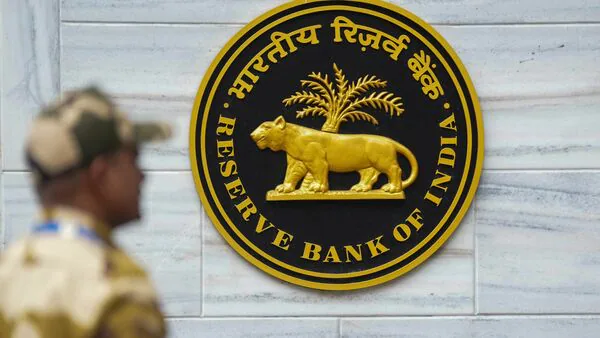
RBI Tightens Rules For Foreign Bank Exposure To Overseas Branches
(MENAFN- Live Mint) Foreign lenders will no longer be exempted from large exposure caps to their branches outside India, and they will also have to comply with stricter intragroup exposure limits, according to the latest changes made by the regulator to curb concentration risk.
The Reserve Bank of India (RBI) has clarified that exposures of an Indian branch of a foreign bank to its head office or any overseas branches or subsidiaries must be treated as regular counterparty exposures and brought under Large Exposures Framework (LEF) limits, according to the amendments announced on Thursday.
Earlier, such exposures were often interpreted as falling under an exemption clause.
Also Read | RBI may hold rates steady in December, economists split on possible cutThe RBI also mandated that all transactions between foreign bank branches in India and their head office or overseas branches must be computed on a gross basis, regardless of whether they are centrally cleared. This prevents netting and ensures a conservative assessment of risks.
The changes come into effect from 1 April 2026, though banks may adopt them earlier, RBI said.
The updated rules, which follow feedback on draft circulars released on 29 September, aim to ensure consistent measurement of concentration risk and align the framework with evolving bank structures and global practices. The final amendments remove ambiguities in the treatment of foreign bank exposures, the central bank said in a press release.
Also Read | Why Indian businesses will resolve disputes faster with amended BillExposure limits have also been refined. For Indian branches of foreign globally systematic important banks (G-SIBs), the exposure limit to their head office or other such banks will be 20% of eligible tier I capital, while exposures to non-G-SIB banks will be capped at 25%.
For branches of foreign non-G-SIB banks, the limits are reversed, with 25% for exposures to the head office and other non-G-SIBs, and 20% for exposures to G-SIBs.
The RBI also clarified that exposures to overseas branches of Indian banks and foreign bank head offices are not covered under intragroup exposure norms limits, except for proprietary derivatives.
Also Read | New RBI digital banking rules kick in 2026-here's what it meansBanks must compute exposure based on credit and investment exposure, but exclude equity and regulatory capital instruments. Banks that breach intragroup limits under the revised rules will get six months to rebalance exposures, the central bank said.
RBI has repealed the chapter on enhancing credit supply for large borrowers through market mechanisms, effective 1 January, signalling a shift in approach to concentration risk.

Legal Disclaimer:
MENAFN provides the
information “as is” without warranty of any kind. We do not accept
any responsibility or liability for the accuracy, content, images,
videos, licenses, completeness, legality, or reliability of the information
contained in this article. If you have any complaints or copyright
issues related to this article, kindly contact the provider above.
Most popular stories
Market Research

More Story








Comments
No comment