



403
Sorry!!
Error! We're sorry, but the page you were looking for doesn't exist.
The Science Is Clear. Kashmir Must Build For Shaking.
(MENAFN- Kashmir Observer)
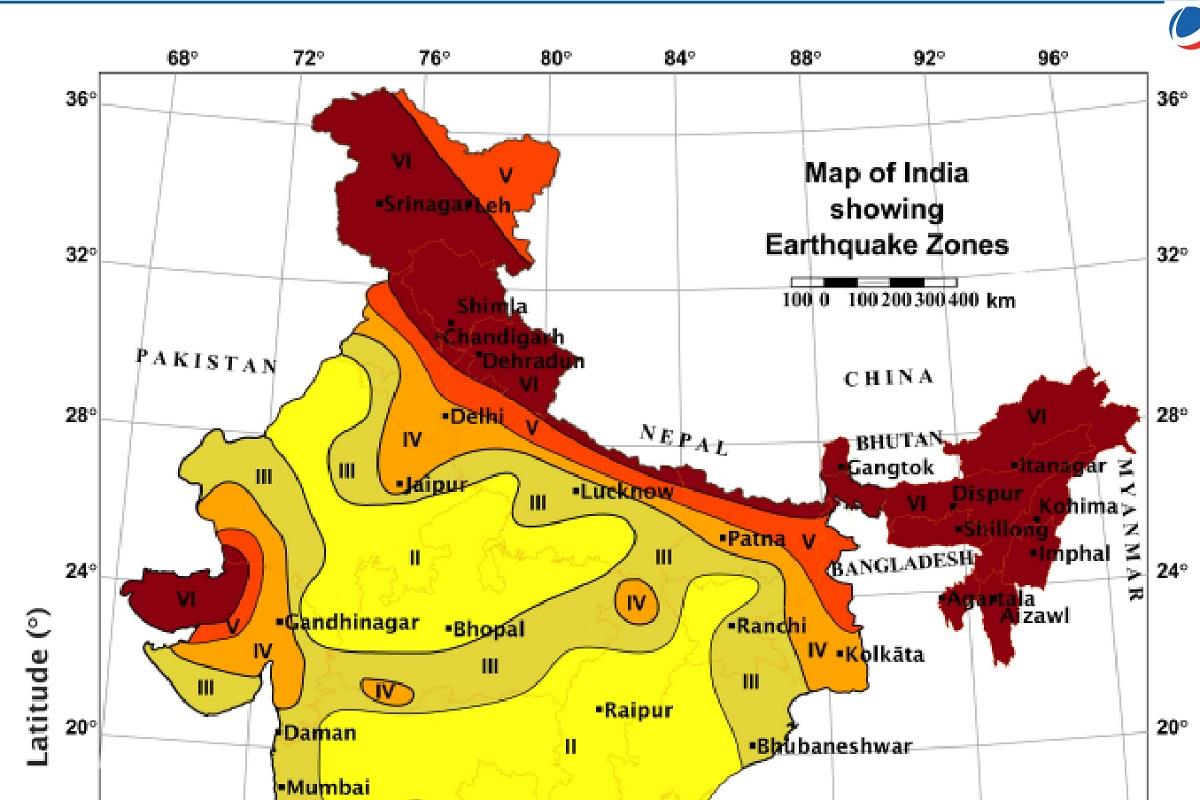
New Seismic Map Puts J&K in Highest Danger Zone
New Seismic Map Puts J&K in Highest Danger Zone
The Kashmir Valley is a distinct topographic depression in the northwestern Himalayas, formed by ongoing deformation associated with the India-Eurasia collision.
The valley's origin lies in plate convergence that created the Himalayas and a complex system of faults, folds, and intermontane basins.
This tectonic environment makes Kashmir highly susceptible to earthquakes, reflecting both its geological setting and its associated risks.
ADVERTISEMENTHistorically, several earthquakes with magnitudes exceeding 7 have occurred along the Himalayan front. The most recent major event in the region was the 2005 Muzaffarabad earthquake (Mw 7.6), which caused more than 80,000 deaths and extensive damage.
A similar-magnitude event would likely produce far fewer losses in countries such as Japan, Taiwan, or the United States, where seismic design is embedded within engineering practice.
This contrast highlights the role of scientific and engineering preparedness in reducing earthquake impacts.
The 2025 national seismic zonation map released by the Bureau of Indian Standards (BIS) recognises the high seismic potential of the Himalayan belt by classifying the entire arc, including Jammu and Kashmir, as Zone VI, the highest hazard category in India.
The updated zonation acknowledges the potential for large earthquakes generated by long-locked segments of the Main Himalayan Thrust and associated structures.
This represents a more realistic assessment of seismic hazard for Kashmir, and has direct implications for its infrastructure safety, planning, and policy.
Seismology consistently demonstrates that earthquakes are natural processes, rather than disasters by themselves.
The long gaps between major events may give an impression of safety, but tectonic strain continues to accumulate.
Disasters occur when vulnerable infrastructure is exposed to strong shaking.
Much of the existing built environment, particularly older urban cores and rural settlements, does not meet modern seismic standards.
Many essential facilities, including schools, hospitals, bridges, transport corridors, and utilities, have not been comprehensively assessed for seismic safety.
Combined with high seismic hazard, this infrastructure vulnerability substantially increases the risk of severe consequences during moderate or large earthquakes.
The revised BIS zonation reinforces these concerns.
Rapid, often unregulated, urban growth has increased building density, including along slopes where shaking may be amplified. The concentration of lifeline infrastructure within narrow corridors further raises the likelihood of widespread disruption during a major event.
Given the updated classification and known tectonic conditions, the need for risk-reduction actions is immediate.
The updated BIS seismic zonation and the IS 1893 (2025) Design Code together highlight the need for a structured, scientific approach to earthquake risk management in Kashmir.
The designation of the region as Zone VI reflects the established tectonic reality of the Himalayan collision system, where large earthquakes are inevitable. Reducing future losses requires strengthening hazard assessment, improving infrastructure resilience, enhancing public preparedness, and expanding monitoring and research.
A critical requirement is the development of detailed seismic hazard maps and microzonation studies for all major urban centres.
These factors must account for active faults, ground-motion amplification, local soil conditions, and slope stability.
Microzonation results should be formally integrated into land-use planning and building-permit processes. Improving active-fault mapping through coordinated geological, geophysical, and geodetic studies is essential, especially where blind or distributed faults may influence future rupture behaviour.
A region-wide seismic vulnerability assessment of existing infrastructure is also necessary.
Buildings, bridges, critical facilities, and lifeline infrastructure should be evaluated using standardised criteria and assigned vulnerability levels to guide retrofitting priorities.

Legal Disclaimer:
MENAFN provides the
information “as is” without warranty of any kind. We do not accept
any responsibility or liability for the accuracy, content, images,
videos, licenses, completeness, legality, or reliability of the information
contained in this article. If you have any complaints or copyright
issues related to this article, kindly contact the provider above.
Most popular stories
Market Research

More Story








Comments
No comment