



403
Sorry!!
Error! We're sorry, but the page you were looking for doesn't exist.
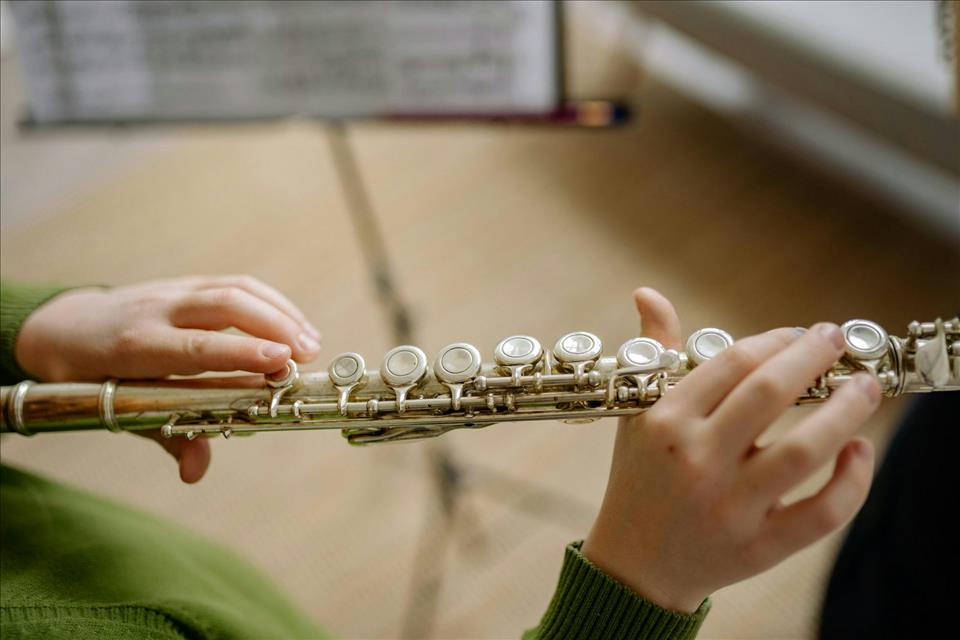
It's End-Of-Year Concert Season. Why Do Some Kids Struggle With Performance Anxiety?
Author: end-of
(MENAFN- The Conversation) End-of-year school concerts showcase children's talents and hard work, often filling performers with pride. But for some, the idea of performing live is terrifying.

Performance anxiety, also known as glossophobia or stage fright – can manifest in ways that range from excitement or mild discomfort, such as tummy butterflies, to severe physical reactions such as racing heart, shaking, sweating, nausea, fainting or hyperventilating.
Even seasoned artists, such as Adele and Barbra Streisand, have spoken openly about lifelong struggles with performance anxiety.
Studies suggest up to 75% of children develop performance anxiety. While some children recover quickly from a stressful performance, others may be deeply affected. Negative experiences can lead to long-term impacts, including chronic stress, headaches and a loss of confidence.
The good news is there are effective strategies to prevent and manage stage fright.
My experience with performance anxietyI've had my own experiences of stage fright. As a child, I loved performing and learned to psyche myself up for solos on classical guitar, clarinet, trumpet and singing.
But in my first year at university, moments before a recital, I discovered my print music was not inside my instrument case. Forced to play from memory, my performance unravelled with repeated memory lapses caused by heightened anxiety. Mortified, I changed my degree focus from performance to composition.
As a music educator, I have since seen countless students experience extreme stage fright: a saxophonist fainting on stage, a singer losing her voice, a pianist running from the hall in tears before playing a note.
What helps in the moment?Anxiety is often driven by fear. In a concert setting, perfectionism can contribute to this feeling, including fear of making mistakes, disappointing others, or fear of failure.
When our brain perceives a threat, working memory (the mental space for storing short-term memory, such as following a set of instructions) is interrupted by the body's“fight or flight” response. This causes the body to be flooded with hormones, such as adrenaline. This can lead to shaking, sweating and temporary memory loss.
Telling the brain“there is no threat” helps restore memory and focus.
Useful strategies to do this include sipping water, taking deep breaths, or walking slowly to calm the nervous system.
Younger performers often need a teacher or family member to help them recognise when they are overwhelmed and guide them through these steps.
How can we prevent stage fright before it starts?Research shows music performance anxiety typically emerges around age ten, and perfectionism increases through adolescence.
Positive experiences and self-belief can reduce the likelihood of stage fright.
In a study, students used breathing and silent repetition of the words“bold”,“confident” and“free” to counter negative self-talk, with strong results, outperforming their peers. Judges, in a blind rating, noted the students exhibited significantly superior expression in their playing, dynamic range and timing.
Teachers can also have an influence. Research shows it helps performance anxiety if teachers follow a“positive instruction” model. This includes:
- encouraging a student to use their strengths – for example, curiosity or perseverance
acknowledging when the student has done something positive and analysing what was good about it praising the process, not just the outcome (for example,“I can hear you slowing down there to master that complicated section” as opposed to“good job hitting that high note”).
Cultural aspects may contribute to anxiety. One of my students refused to perform because he feared how his non-Western family might react to his role in a school musical. After discussing his concerns and speaking with his mother – who was very supportive – he performed proudly and was thrilled to see his family in the audience.
How to support first-time performersStudents who have never performed may suffer from fear of the unknown.
Teachers can help here by“gradual release” strategies. This is where teachers gradually support a child's independence around a skill. The teacher can move between modelling the skill and then guided and independent activities.
This could include a nervous student performing with a buddy, playing in a trio, or sharing the stage with their teacher. Informal experiences – performing for a few peers or playing casually in the schoolyard – can also build confidence.
Another approach is to prerecord a piece on video and then show it during the concert. This can be a stepping stone towards live performance.
Being preparedNeurodiverse students or students with disability may experience heightened anxiety in high-stress settings, including the fear of being perceived, or being“hyperaware of how they are viewed by others”.
Teachers can reduce potential stress triggers through understanding what students need. Examples might include adjusting lighting, ensuring suitable stage access, and shortening waiting times.
All students benefit from well-prepared concerts with detailed cue sheets and dress rehearsals that closely match the final performance. Additional staff or volunteers backstage help manage noise, provide reassurance and support students through anxious moments.
Why it's worth the effortThe benefits of performing make the effort worthwhile. Streisand said:
Research shows performance nurtures pride, belonging and confidence, despite anxiety. Other research notes how the arts can improve student learning and school experiences generally. A literature review found school students with access to high-quality arts experiences were more engaged and motivated in their learning, achieved better grades, and were better able to cope with stress.
By taking steps to help kids work through their fears, we can ensure the benefits of performance outweigh their anxiety.
Institution:Australian Catholic University

Legal Disclaimer:
MENAFN provides the
information “as is” without warranty of any kind. We do not accept
any responsibility or liability for the accuracy, content, images,
videos, licenses, completeness, legality, or reliability of the information
contained in this article. If you have any complaints or copyright
issues related to this article, kindly contact the provider above.
Most popular stories
Market Research

More Story







Comments
No comment