




403
Sorry!!
Error! We're sorry, but the page you were looking for doesn't exist.
The UK's Food Supply Is More Fragile Than You Might Think Here's Why It Should Be A National Priority
Author: Sven Batke
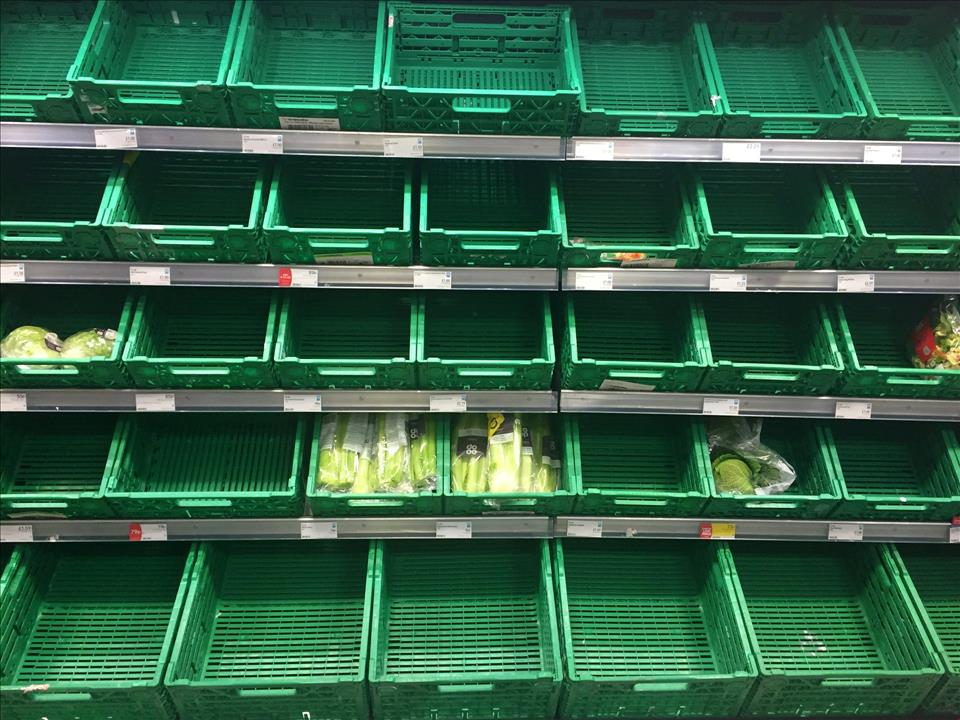
(MENAFN- The Conversation) If you walked into a supermarket during a supply hiccup, storm, fuel protest, or even the early days of the COVID pandemic, you will remember the sight of empty shelves. For most people in the UK, these moments are surprising, even unsettling, precisely because they are rare. We are a generation largely spared the rationing, shortages and hunger our grandparents and great-grandparents once endured.
An expert explains the meaning of climate resilience. Lessons from the past


But that rarity is exactly why we must not become complacent. Food security (the reliable availability, access and affordability of food) should be recognised as a major national concern. That means placing it firmly on the UK's national risk register.
The national risk register is the UK government's openly available list of the most serious risks that could affect the country in the short to medium term. These risks range from flooding and heatwaves to threats such as cyberattacks and energy shortages.
Being listed on the register does not mean the event is likely to happen tomorrow (but it could). It means the government has assessed it as significant enough, based on impact and probability, to require planning and mitigation measures.
Think of the national risk register as the country's official“what could really go wrong?” list. If a threat is on the register, policymakers, emergency planners and critical industries take it seriously and plan accordingly. If it is not, the risk can drift into the background (even when it should not).
For all its importance, food security occupies a limited and somewhat indirect presence in the risk register. It only appears within broader categories such as supply-chain disruption, fuel shortages and animal disease. It's not mentioned as a clearly defined risk in its own right.
Placing food security on the national risk register as its own defined category would send a clear signal that safeguarding stable, affordable food is a national priority – on par with energy, health and security. My team's recent white paper for the government highlights this urgency.
Our modern food system is more complex, interconnected and vulnerable than many people realise. The UK imports around half of its food.
Some categories, such as fruit and vegetables, depend on imports for as much as 80–95% of supply. We rely on long, intricate supply chains involving overseas farming conditions, global shipping routes, international labour markets and constantly changing energy prices. When any of these are disrupted, our food system feels the shock.
In 2023, extremely bad weather in Spain and Morocco reduced crop yields, leaving UK supermarkets rationing tomatoes and peppers. The war in Ukraine has caused spikes in grain and sunflower oil prices. And the COVID pandemic and subsequent labour shortages have exposed how reliant farming and food distribution are on migrant workers.
An uncomfortable truth lies behind each of these disruptions: we are more dependent on global systems than the public think. Those systems are under pressure from climate change, geopolitical instability and resource competition.
Food systems also operate with tight margins. Fresh produce is harvested, shipped and sold quickly. Livestock feed supply needs to be constant. Fertiliser production depends heavily on natural gas for providing both the hydrogen feedstock and the energy required to make ammonia, the key ingredient in most nitrogen fertilisers. All of these dependencies create points of vulnerability. When several of those break at once, shortages can cascade.
Read more: How unsustainable global supply chains exacerbate food insecurity
For many households, even small disturbances lead to real consequences: higher prices, reduced choice and increased stress about meeting weekly food bills. Families on tight budgets feel these effects most sharply.
While we are nowhere near the wartime rationing experienced by earlier generations, food banks across the UK are already serving record numbers, and food-price inflation has recently reached levels not seen in decades. Food insecurity is not a hypothetical risk for millions, it is a reality.
An expert explains the meaning of climate resilience. Lessons from the past
Historically, Britain has faced food insecurity before. During the second world war, German U-boats targeted supply ships, leading to rationing that lasted until 1954. Earlier still, crop failures and poor harvests in the 19th century caused widespread hardship. Today we benefit from refrigeration, global trade, advanced agriculture and data-driven logistics, but those advantages can create an illusion of invulnerability that our supply chains are robust.
Food security, even in the UK, is more fragile than it might seem. Our shelves look full until suddenly they do not. A combination of climate-driven harvest failures, rising energy prices and trade disruptions could create national shortages or unaffordable prices much more quickly than many people may expect.
Including food security on the national risk register would prompt government departments to plan coordinated responses. It would drive investment in resilient agriculture, storage and domestic production while encouraging diversification of food imports to avoid overreliance on just a few regions.
Better risk planning would also support households through better safety nets and targeted interventions such as emergency rations and direct support to vulnerable households. Raising public awareness that food security is a shared national responsibility does not suggest panic – it means preparation.
Don't have time to read about climate change as much as you'd like?
Get a weekly roundup in your inbox instead. Every Wednesday, The Conversation's environment editor writes Imagine, a short email that goes a little deeper into just one climate issue. Join the 47,000+ readers who've subscribed so far.
Institution:Edge Hill University

Legal Disclaimer:
MENAFN provides the
information “as is” without warranty of any kind. We do not accept
any responsibility or liability for the accuracy, content, images,
videos, licenses, completeness, legality, or reliability of the information
contained in this article. If you have any complaints or copyright
issues related to this article, kindly contact the provider above.
Most popular stories
Market Research

More Story






Comments
No comment