




403
Sorry!!
Error! We're sorry, but the page you were looking for doesn't exist.
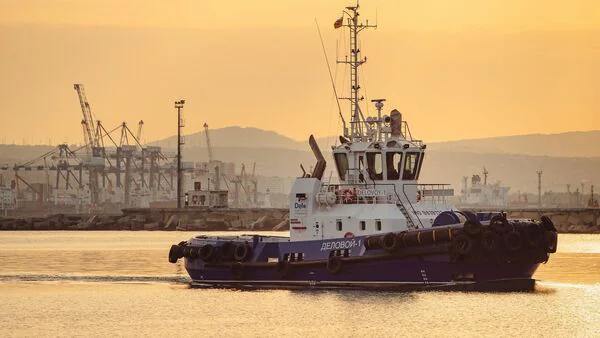
Russia's Delo Group Eyes Terminals, Shipbuilding Push In India As Putin Arrives
(MENAFN- Live Mint) New Delhi: Russia's state-affiliated Delo Group plans to develop terminals on India's inland waterways such as rivers and canals as well as at strategic ports including Mormugao in Goa through joint ventures with local public and private shipyards, three people aware of the matter said.
The plan by the shipping and logistics major, founded by Russian oligarch Sergey Shishkarev, is expected to gain traction, with a firm agreement expected to be inked after Russian President Vladimir Putin's visit to India later this week, they said, requesting anonymity.
After courting Japan and South Korea, New Delhi is turning to long-time ally Moscow to fuel the next phase of its shipbuilding and port development ambitions.
"An Indian delegation comprising government officials and industry representatives will be shortly leaving for Moscow to finalize partnerships between Indian and Russian entities in shipbuilding, ship breaking, along with port and terminal development projects," said the first of the three persons cited earlier.
Also Read | India's mega shipbuilding plan sets sail with 8 new clustersA Delo Group team was in India last month for joint collaborations for anchoring a Russia-led maritime infrastructure footprint in India; with its entry to mark a significant expansion of Russia's maritime presence in the Indo-Pacific. While Shishkarev, a former member of Russia's lower house Parliament Duma, owns a 50% stake in Delo Group, State Atomic Energy Corporation Rosatom owns 49% stake. Delo operates shipping terminals across three key maritime basins of Baltic Sea, Black Sea and Far East, and provides critical freight links within Russia and to global markets.
A senior official at India's ministry of ports, shipping and waterways (MoPSW) said representatives from Delo were part of the Russian delegation that visited India last month. The company is keen on investing in India, and discussions are being facilitated for possible joint ventures with public and private shipbuilders to support Russia-led shipping infrastructure projects in India.
Gamut of projectsThe first person quoted above said that among other development projects, the Delo Group is considering the launch of a regular sea container service connecting Russia's Novorossiysk Port with Mormugao Port in Goa, which discontinued container operations many years ago.
According to the second person, the Russian company would also partner Indian entities to provide technical expertise in making barges, small vessels, catamarans and container flatcars that would allow India to use its inland waterway systems and bolster both freight and passenger services.
Queries sent to the Delo group, Russian Embassy in New Delhi, India's ministry of ports, shipping and waterways remained unanswered till press time.
India has so far reached out to Japanese and Korean shipbuilders to invest and develop ship manufacturing and repair facilities in the country. Russia is now being considered because of its strong transportation and logistics industry, particularly its expertise in developing waterway systems.
Also Read | India's ₹70,000 cr package de-risk shipbuilding programmes, says ministerIndia transported a record 145.5 million tonnes (MT) of cargo via its inland waterways in fiscal year 2024–25 (FY25), a significant increase from 18.1 MT in 2013–14. This surge was driven by government initiatives like the Jalvahak Scheme, which provides incentives for shifting cargo to waterways, and extensive infrastructure development, including the creation of more National Waterways and the expansion of operational length.
C. Uday Bhaskar, a Navy veteran and director at think-tank Society for Policy Studies, said:“India and Russia have been trying for a long time to widen their partnership. So far, the partnership has been largely based on one vertical - defence. Energy ties are currently under strain amid pressure from the US.”
Major partnerRussia, with its expertise and experience, could be a major partner to develop the Indian maritime space in line with the government's vision to develop the sector, he said.
"It would be beneficial for the Indian maritime sector to partner with Russia, with some caution, though. It would be important to see what Russia brings to the table," he added.
The government targets making 76 waterways operational by 2027, increasing cargo volume to 156 million tonnes per annum (MTPA) by March 2026, and expanding coverage to 23 states and 4 Union territories. Further targets include reaching over 200 MTPA by 2030 (Maritime India Vision 2030) and over 500 MTPA by 2047 (Maritime Amrit Kaal Vision 2047), while aiming to increase the modal share of freight from 2% to 5%.
“Russia has a lot of funds in India, and investment in shipping can be a productive application of funds, provided the ships are flagged in India. Russian companies have experience in operation of mid- to small container feeder services as well as large dry and wet bulk vessels," said Anil Devli, chief executive officer (CEO), Indian National Shipowners' Association (INSA), an industry body.
Also Read | Govt plans incentives, ban on foreign vessels to boost local shipbuildingRussia also has a huge experience in shipbuilding and they should be invited to explore collaborations as well as place orders for ships to be operated in Russia or flagged in India. Besides, the INSTC corridor needs to be developed so that cargo from India to Russia can use the said route, Devli added.
INSTC, or International North-South Transport Corridor (INSTC), is a multi-modal trade route connecting India, Russia, Iran, and several European and Central Asian nations.
Moscow has offered New Delhi several shipbuilding initiatives, including sharing existing designs or developing new ones for fishing, passenger, and auxiliary vessels, as part of efforts to boost maritime cooperation across the Indo-Pacific and the Indian Ocean Region.
During the consultations held last month between President Putin's trusted aide and former national security adviser (NSA) Nikolai Patrushev and Indian shipping minister Sarbananda Sonowal, the two sides explored bilateral cooperation in the civilian maritime sector, with a focus on collaboration in shipbuilding, port infrastructure and maritime logistics. Delo was also part of the delegation that interacted with government officials last month. The talks will further gain ground during Putin's official visit to India later this week.
Strengthening shipbuildingUnder Vision 2047 plan, India aims to build a strong shipbuilding ecosystem with adequate infrastructure and policy enablers to become a leader in the shipbuilding, repair and recycling industry. Policy measures followed by other key shipbuilding nations suggest that each country has pursued a mix of fiscal and non-fiscal incentives for encouraging development and growth of the shipbuilding industry. Similar incentives are to be introduced in Indian industry to keep pace with leading nations, the vision document said.
According to Mordor Intelligence, the global shipbuilding market size is estimated at $157 billion in 2025, and is projected to grow to $199 billion by 2030. A September report by Directorate General of Shipping in the ministry of ports shipping and waterways suggests India's share in the global markets is just about 1%. Under Maritime Amrit Kaal Vision 2047, the ministry is targeting investments worth ₹80 trillion with the aim of increasing India's share in global shipbuilding to 5% by 2030 and to reach the goal of being among the top five shipbuilding countries in the world by 2047.
Also Read | India earmarks ₹5,000 crore loan support to boost domestic shipbuildingIn ship-recycling, India is one the market leaders, with about 25% share of the global market, according to a Directorate General of Shipping report released in September. However, there is rising potential competition from countries like Bangladesh and Pakistan on account of higher yield and limited regulatory compliances.
Efforts by Russia to boost energy partnership and supplies to India have also aided these talks, said the third official. Although US sanctions on two of Russia's largest oil suppliers Rosneft and Lukoil have impacted import of oil by India in the past few weeks, Russia is still the largest supplier. Since FY23, Russian oil has comprised 30-35% of India's total oil import basket.
India's ambitious plans for the maritime space has led to state-run companies eyeing global tie-ups. Mint recently reported that a joint venture of Shipping Corporation of India, Indian Oil Corporation Ltd, Bharat Petroleum Corporation Ltd and Hindustan Petroleum Corporation Ltd are in talks with major ship manufacturing companies of South Korea including Hawnha Ocean, HD Hyundai and Samsung Heavy Industries.

Legal Disclaimer:
MENAFN provides the
information “as is” without warranty of any kind. We do not accept
any responsibility or liability for the accuracy, content, images,
videos, licenses, completeness, legality, or reliability of the information
contained in this article. If you have any complaints or copyright
issues related to this article, kindly contact the provider above.
Most popular stories
Market Research

More Story





Comments
No comment