




403
Sorry!!
Error! We're sorry, but the page you were looking for doesn't exist.
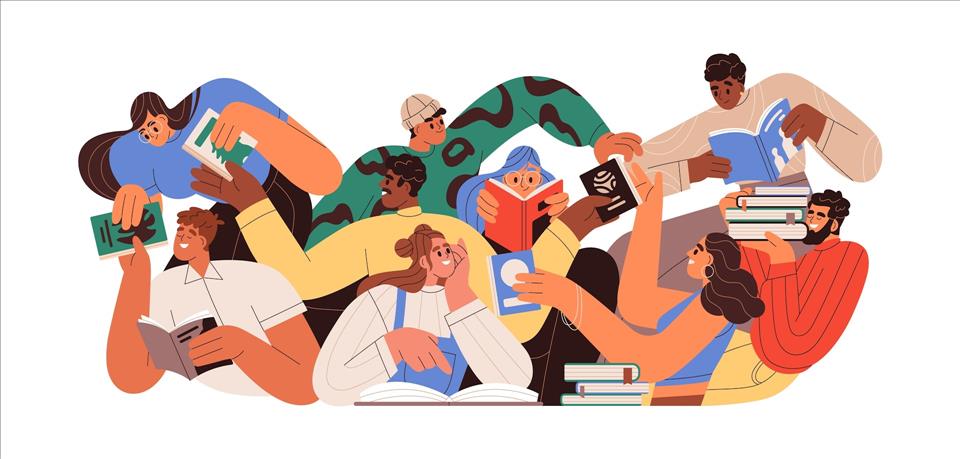
Twenty Experts On The Book That Got Them Through Their 20S Part One
Author: Mathelinda Nabugodi
(MENAFN- The Conversation) Your 20s can be an intense decade. In the words of Taylor Swift, those years are“happy, free, confused and lonely at the same time”. Many of us turn to literature to guide us through the highs and the lows of this formative era. We asked 20 of our academic experts to recommend the book that steered them through those ten years. And we'd love to know your pick – let us know in the comments below.1. Butterfly Burning by Yvonne Vera (1998) ![Book jacket of Butterfly Burning]()
Baobab Books![The Remains of the Day book jacket]()
Faber & Faber![Quarter life, a series by The Conversation]()
![The History Man book jacket]()
Picador![Palestine book cover]()
Jonathan Cape Ltd![Lost Illusions book cover]()
Penguin Classics![Hotel Du Lac by Anita Brookner jacket]()
Penguin![Never Far From Nowhere by Andrea Levy cover]()
Headline Review![The Long Goodbye by Raymond Chandler cover]()
Penguin![The City book jacket]()
Harvard University Press![The Mezzanine by Nicholson Baker book cover]()
Granta Books

Baobab Books
Growing up, I didn't have much guidance in discovering Black writers, especially not Black women writers. I'd read African classics like Chinua Achebe's Things Fall Apart (1958), Ngũgĩ wa Thiong'o's Devil on the Cross (1980), or Amos Tutuola's The Palm-Wine Drinkard (1952), but I found it hard to connect with them.
As a young woman I was drawn to feminist and poetic writing about the body rather than political parables about places I'd never been to. That's why Butterfly Burning – a fiercely poetic and mysteriously intimate novel – was such a revelation.
In 1997, Vera described her practice in a short essay called Writing Near the Bone. There she recalled her earliest memories of writing: being sent outside with her cousins where they would play by tracing their names in the mud and dust covering their legs.“We wrote deep into the skin and under skin where the words could not escape.” If a sentence can be a muse, this was destined to become mine.
Mathelinda Nabugodi is a lecturer in comparative literature
2. The Remains of the Day by Kazuo Ishiguro (1989)Faber & Faber
Do you lie awake at night wondering what it would be like to work as a butler in a magnificent British manor during the first half of the 20th century? No? Still, it's hard to escape such thoughts while reading Kazuo Ishiguro's masterful 1989 novel The Remains of the Day.
The protagonist, Stevens, strives to become a“great” butler, which – according to him – means being able to carry out his duties even in the most extreme circumstances.
Emotions have no place in that job description, which leads to tragic consequences. Stevens is unable to express his deep feelings for his colleague Miss Kenton. Nor does he question his employer Lord Darlington's political misjudgments.
The novel is a brilliant portrayal of class divisions and restrained masculinity – alas, traits not limited to a bygone era. In many ways, these are timeless themes. We must all reflect on how we balance our inner butler in our daily lives.
Torbjörn Forslid is a professor in literary studies
No one's 20s and 30s look the same. You might be saving for a mortgage or just struggling to pay rent. You could be swiping dating apps, or trying to understand childcare. No matter your current challenges, our Quarter Life series has articles to share in the group chat, or just to remind you that you're not alone.
Read more from Quarter Life:
- Why Charli XCX might be gen Z's answer to the Romantic poets
Let 'performative males' be – gender has always been a performance and our need for authenticity is bad for us Is today's political climate making dating harder for young people?
The History Man is my favourite campus novel. Like most successful satires, it pinballs between funny and bleak.
Picador
It follows an academic year in the life of sociology professor Howard Kirk, his wife Barbara, students and colleagues. His alternate charming and bullying outraged moralists and feminists on the book's release.
After the #MeToo campaign, Howard is yet more likely to be termed emotionally and sexually abusive. I read the book the year I started teaching and immediately put it on my syllabus. Some cohorts loved it, some loathed it. Either reaction from my class of 20-somethings was better than indifference.
The political and activist energy of youth will be recognisable to many in their 20s, though the book cautions readers to consider who is agitating and why. It confronts readers with unethical and unjust scenarios in workplace and social settings that, unfortunately, will still be relatable to many young people – even if, today, their responses might differ from those of the characters.
Sarah Olive is a senior lecturer in English literature
4. Palestine by Joe Sacco (1993)Jonathan Cape Ltd
I was 25 when I first read Joe Sacco's Palestine. Drawn in serialised chapters in the early 1990s, in the wake of the first intifada and on the eve of the Oslo accords, Sacco's non-fiction comic offers a snapshot of history that will open your eyes to the deprivations of the Israeli occupation of Gaza.
It overturned the west's media blackout on the Palestinian experience when it was first published, and it continues to serve as urgent testimony to the suffering of civilians who have lived their whole lives under settler colonial power. Sacco maintains his self-deprecating style throughout, reflexively satirising his reader's consumption of war and violence as entertainment and bringing the architecture of the occupied territories to life.
Palestine will make you see through to the roots of conflict and feel the thickness of history as a force that accumulates in real people's lives – in their eyes, their bodies, their homes, their landscapes.
Dominic Davies is a Reader in English
5. Lost Illusions by Honoré de Balzac (1843)Penguin Classics
Reading Lost Illusions profoundly shaped my 20s. It follows Lucien de Rubempré, a poor young poet from the provinces who arrives in Paris full of idealism, believing talent alone ensures success. He soon learns that literary success in Paris depends more on corruption, social connections and birth than on merit.
The novel prepared me for my own“loss of illusions”. In my youth, I joined the 2011 India Against Corruption movement and protests in Delhi, convinced that corruption could be eradicated overnight. That movement later became a political party which now faces corruption charges. Like many young people back then, I believed in the possibility of overnight transformation, only to confront the disappointments of reality and the slow nature of change.
What makes Balzac's novel valuable for people in their 20s is how it celebrates romantic idealism through the Cénacle (a group of idealist characters) all the while preparing readers, through Lucien's story, for inevitable disillusionment.
Harsh Trivedi is a teaching associate in French studies
6. Hotel Du Lac by Anita Brookner (1984)Penguin
I bought Anita Brookner's Hotel Du Lac at the Brookline Booksmith in Boston, having been stunned by the author's other novel, Look at Me (1983). I was 25, acquisitive and impulsive, and newly caught up in the restive and wordy life of US grad school.
The protagonist, Edith Hope, is a writer of romance novels. She's banished to the damp solitude of a Swiss hotel, with its assortment of affluent misfits, melancholics and the inveterately companionless. A hopeless affair and an abandoned wedding in her wake, Edith tries to restart her writing here, now that domesticity had been set aside like the“creditable” Chanel copy that was her bridal suit.
That novel is not written, the heart hardly mended, but she dodges another disastrous proposal. I credit this novel for teaching me the aliveness of being unhoused, benumbed, and lonely. How to be tortoise reader, not a hare, for“hares have no time to read”.
Ankhi Mukherjee is Professor of English and World Literatures
7. Never Far From Nowhere by Andrea Levy (1996)Headline Review
Andrea Levy's most acclaimed novels are those released in the early 21st century, but her 1990s novels are some of my favourites, and were important to me during my 20s.
Never Far From Nowhere is a coming-of-age story that follows sisters Olive and Vivien, born in London to Jamaican parents. The book's perspective alternates between sisters, and readers are brought into the very different lives they lead as they navigate diasporic identities, violence, racism, colourism friendships and more.
As a Caribbean woman raised in London, this book was influential in my 20s because of the carefulness with which Levy writes characters who are raised between places and cultures, and the way she explores strategies for belonging for her“third culture” characters (“third culture” refers to people who are raised in different cultures to that of their parents). This novel, as with all of Levy's work, probes the intimate and fluid relationship between Britain and the Caribbean through prose that is beautifully crafted and full of heart.
Leighan Renaud is a lecturer in the Department of English
8. The Long Goodbye by Raymond Chandler (1953)Penguin
In my 20s I undertook a PhD examining representations of war trauma in the work of American crime writer Raymond Chandler. At the time, the Iraq and Afghanistan wars were intensifying, with misinformation over the so-called war on terror's effectiveness and a lack of transparency leading to mistrust and suspicion.
The Long Goodbye – where the“long goodbye” becomes a metaphor for the slow erosion of trust, friendship and human closeness in a commodified, cynical age – fit the era well. Chandler transforms the hardboiled story into a humanist meditation on the struggle to remain moral in a corrupt and dehumanising world.
Chandler revealed a deeply moral and human-centered worldview to me, where integrity triumphed over corruption, and human flaws and weaknesses were treated with compassion and empathy. This humanistic perspective developed further in me as I watched nightly accounts of increasing military casualties. It echoed Chandler's existential humanist concerns: how to live authentically in a world without clear moral or spiritual certainty.
Sarah Trott is a senior lecturer in American studies and history
9. The City by Valerian Pidmohylnyi (1928)Harvard University Press
If there is one book I could recommend to any 20-year-old, it would be The City by Ukrainian writer, Valerian Pidmohylnyi. The English translation is beautifully written by Maxim Tarnawsky.
It follows an ambitious young writer who has just arrived in a capital city and has to sleep in a shed of a friend of a friend to make ends meet. He enters university and starts his path to glory, using any means necessary to get the private apartment he covets in a bohemian neighbourhood, where he imagines sitting with a morning coffee and writing a bestseller.
Whether they're living in early 20th century Kyiv, or today's Edinburgh or London, there are certain things that young people want – and Pidmohylnyi captures them. The novel is sharp, very honest and bitingly funny. It's a book you need to read in your twenties, then return to it in your thirties – it will hit some very different notes a decade on.
Viktoriia Grivina is a PhD candidate in energy ethics
10. The Mezzanine by Nicholson Baker (1988)Granta Books
For many people, their 20s are their point of entry into the world of work. The lucky ones find professional fulfilment. Others, however, discover with horror that they are doing what the anthropologist David Graeber famously called“bullshit jobs”. Rather than feeling creative or empowered, they occupy one (or more) of the roles that Graeber identifies in the modern workplace:“flunkies,”“goons”,“duct tapers”,“box tickers” and“taskmasters”.
Nicholson Baker's wonderfully distinctive short novel, The Mezzanine (1988), offers respite from such stultification. Howie, its narrator, toils as a corporate drudge. Far from letting routine work matters absorb his thoughts, however, he allows his mind to take flight, dwelling for pages at a time on esoteric things such as drinking straws, staplers and footnotes (of which, quirkily, this novel is full).
The book stages a polite rebellion against the conformist professional life. Reading it in your 20s, as soon as you start to feel such pressures, will help to keep your imagination open.
Andrew Dix is a senior lecturer in American literature and film
Did a particular book help you navigate your 20s? Let us know in the comments below.
This article features references to books that have been included for editorial reasons, and may contain links to bookshop. If you click on one of the links and go on to buy something from bookshop The Conversation UK may earn a commission.
Institution:Aston University

Legal Disclaimer:
MENAFN provides the
information “as is” without warranty of any kind. We do not accept
any responsibility or liability for the accuracy, content, images,
videos, licenses, completeness, legality, or reliability of the information
contained in this article. If you have any complaints or copyright
issues related to this article, kindly contact the provider above.
Most popular stories
Market Research

More Story



Comments
No comment