




403
Sorry!!
Error! We're sorry, but the page you were looking for doesn't exist.
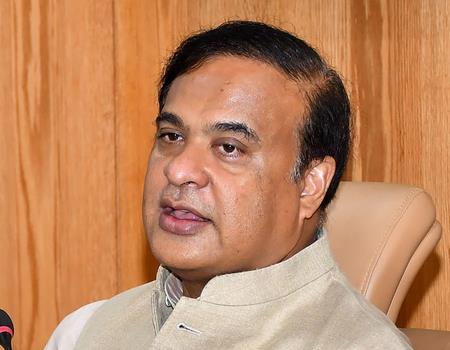
Assam CM Reiterates Commitment To Tea Garden Community, Calls Land Rights Move A Milestone
(MENAFN- IANS) Guwahati, Dec 1 (IANS) Assam Chief Minister Himanta Biswa Sarma on Monday reaffirmed his government's commitment to uplifting the state's tea garden community, describing people's trust as the“guiding force” behind ongoing welfare measures.
In a message posted on X, Sarma said,“People's trust and expectations guide every step of ours. Our government remains committed to empowering our tea garden community in every sphere. The granting of land rights in line areas of TEs is another milestone in this shared journey of ensuring security and self-respect.”
The Chief Minister's remarks come at a time when the state has rolled out some of its most significant interventions for the tea tribe population, whose contribution forms the backbone of Assam's globally recognised tea industry.
The historic decision to grant land rights to tea garden workers in the labour-line areas of tea estates is being seen as a transformative step.
For decades, workers lived on estate land without legal ownership, making them vulnerable to displacement and limiting access to government welfare schemes linked to land titles.
The recently passed amendment allowing pattas in these areas is expected to benefit lakhs of families, providing long-awaited tenure security and a pathway toward better housing, credit access and social empowerment.
The move also aligns with the government's broader strategy of integrating tea garden workers into mainstream development. Over the past year, the state has unveiled a series of targeted measures for the community.
Rs 342-crore welfare package under the“Eti Koli, Duti Paat” scheme promises financial assistance to roughly seven lakh workers and employees.
The education sector has seen a major push, with the government announcing 100 new high schools in tea garden areas in addition to over 120 already set up in recent years.
This seeks to close the long-standing gap in educational infrastructure that has contributed to low literacy levels within the community.
Healthcare has similarly received attention, with dedicated ambulances deployed to tea estates and renewed focus on maternal care, malnutrition and disease prevention. Skill development, housing subsidies and employment-linked training programmes have also been expanded.
For a community historically marked by socio-economic disadvantage, these initiatives collectively represent a shift toward dignity, opportunity and stability.
As Sarma emphasised, land rights signify not just administrative reform but the restoration of self-respect for Assam's tea garden workers - a community central to the state's identity and economy.

Legal Disclaimer:
MENAFN provides the
information “as is” without warranty of any kind. We do not accept
any responsibility or liability for the accuracy, content, images,
videos, licenses, completeness, legality, or reliability of the information
contained in this article. If you have any complaints or copyright
issues related to this article, kindly contact the provider above.
Most popular stories
Market Research

More Story







Comments
No comment