




403
Sorry!!
Error! We're sorry, but the page you were looking for doesn't exist.
Azerbaijani Expert Dismantles OSCE Minsk Group's Mediation Role, Calls It Geopolitical Platform
(MENAFN- Trend News Agency)
BAKU, Azerbaijan, December 1. The OSCE Minsk
Group was a platform for geopolitical interests instead of
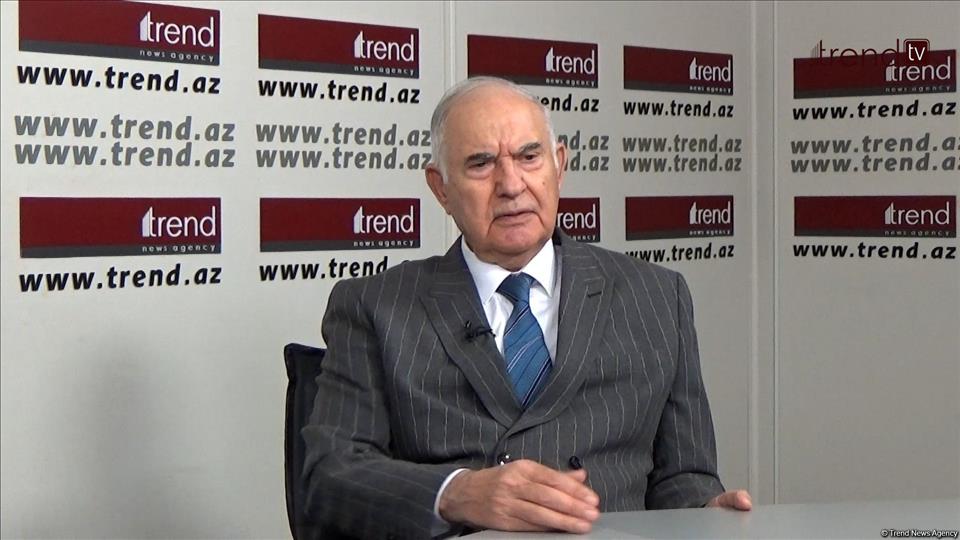
mediation, Azerbaijani political analyst Azer Garayev told Trend.
"The OSCE Minsk Group was an international mediation format established in 1992 to resolve the Karabakh conflict. The main goal was to organize peace negotiations and resolve the conflict in accordance with international law, through political means. However, despite its nearly thirty years of activity, the Minsk Group had been unable to prevent the conflict or put an end to the ongoing occupation," he said.
The analyst contended that the activities of the OSCE Minsk Group were rightly deemed as "ineffective," "formal," and largely "symbolic" within both Azerbaijani public discourse and international expert circles.
He argued that the three co-chairing countries of the Minsk Group, Russia, the U.S., and France, only made decisions based on consensus, which effectively paralyzed the group's ability to act. The differing geopolitical interests of these nations, coupled with each country's veto power, hindered any substantive progress. As a result, the group devolved into a series of endless diplomatic processes rather than providing a genuine resolution to the conflict.
The analyst further explained that none of the co-chair countries could adopt a truly neutral stance. Russia sought to maintain its influence in the region and keep the parties reliant on its power. France, meanwhile, was heavily influenced by its robust Armenian diaspora. The United States, for its part, viewed the conflict primarily through the lens of geopolitical balance with Russia. Rather than pursuing an objective resolution, the mediators focused on advancing their own national interests, a dynamic that, according to the expert, severely undermined the legitimacy of the Minsk Group's mediation efforts.
Garayev also said that as a result of the activities of the Minsk Group, Armenia's occupation of Azerbaijani lands was actually legitimized.
"The group didn't openly name the fact of occupation, didn't monitor the implementation of UN resolutions, and didn't exert real pressure on the aggressor. This allowed Armenia to use the negotiations as a tool of manipulation for its own interests. The appearance that the parties were equally responsible was created, which was an unfair approach," he noted.
The analyst emphasized that although the Minsk Group had proposed various solution packages over the years (Madrid principles, phased solution, package solution, etc.), there were serious contradictions in all documents.
"This uncertainty prolonged the negotiation process and opened up new opportunities for Armenia's occupation policy. The Minsk Group had never imposed sanctions on Armenia for violating the ceasefire, illegally settling in the occupied territories, or worsening the humanitarian situation in the region. This created an environment of impunity for Armenia. For Azerbaijan, it minimized confidence that the mediators would take a fair position," he recalled.
Garayev pointed out that a clear indicator of the Minsk Group's helplessness was seen in the 44-day Second Karabakh War of 2020.
"Azerbaijan liberated its territories in accordance with international law, thereby achieving in 44 days what the Minsk Group could not do in 30 years. This moment became the most dramatic proof of the organization's incompetence. After 2020, the relations between the co-chair countries (especially the Russia-West confrontation) became even more acute. The group was actually forced to stop its activities. President Ilham Aliyev's position on the complete abolition of the OSCE Minsk Group and its affiliated institutions reflects the principled and consistent political approach that Azerbaijan has been expressing for many years. The Minsk Group was unable to make a real contribution to the resolution of the conflict for nearly 30 years, but on the contrary, served to prolong the process and maintain the status quo," the analyst added.
The official closure of the OSCE Minsk process and all related structures proves that the 30-year-old format of mediation on the Armenian-Azerbaijani conflict has completely entered history. The Washington Declaration of August 8, 2025, mediated by US President Donald Trump and signed by the President of the Republic of Azerbaijan, Ilham Aliyev, and the Armenian Prime Minister Nikol Pashinyan, formed the main political basis for this process. Based on this document, both countries appealed to the OSCE, as a result of which a consensus of 57 member states decided to terminate the activities of the Minsk Group.

Legal Disclaimer:
MENAFN provides the
information “as is” without warranty of any kind. We do not accept
any responsibility or liability for the accuracy, content, images,
videos, licenses, completeness, legality, or reliability of the information
contained in this article. If you have any complaints or copyright
issues related to this article, kindly contact the provider above.
Most popular stories
Market Research

More Story



Comments
No comment