




403
Sorry!!
Error! We're sorry, but the page you were looking for doesn't exist.
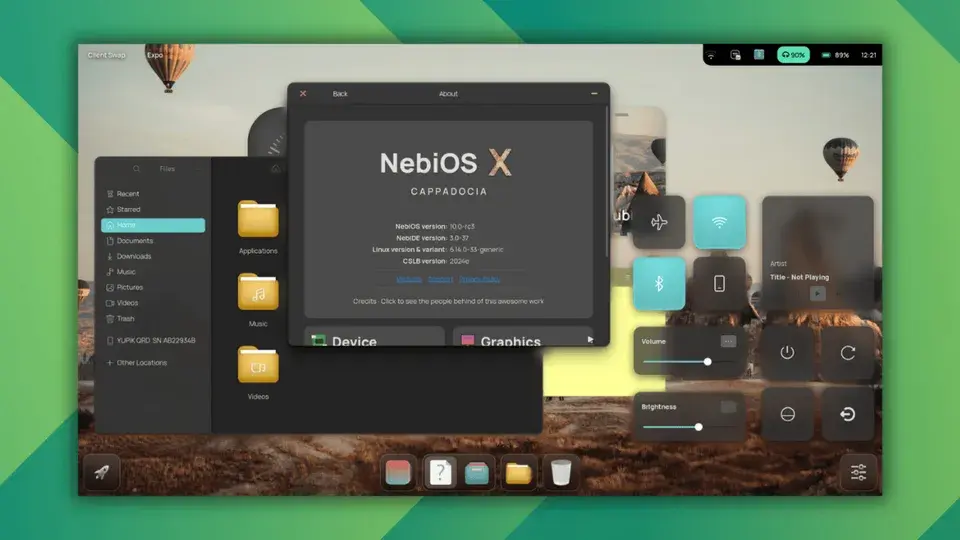
Fresh Ubuntu-Based Distro Nebios Launches With Its Own Wayland Engine
(MENAFN- The Arabian Post)

A new entrant to the Linux desktop space, the distro known as NebiOS, has been unveiled by Turkish developer Sarp Mateson under the umbrella of his company NebiSoft. Built on the foundation of Ubuntu and tailored for Wayland graphics instead of the older X11 system, NebiOS marks a distinct shift in how independent desktop Linux distributions are conceived and delivered.
Mateson's project began as a personal experiment in 2023 and has since evolved into a fully fledged operating system with its own desktop environment, dubbed NebiDE. According to his statement, NebiDE was“built from the ground up for Wayland”, emphasising a modern graphics architecture rather than backward-compatibility with legacy protocols. The upcoming release, named NebiOS X“Cappadocia” and based on Ubuntu 24.04 LTS, is slated for public availability on 1 November 2025.
The architecture of NebiOS centres on kernel 6.14 with NTSYNC support as well as integrated indicators for privacy and Bluetooth battery status in the top panel. Mateson positions the product as suitable not only for everyday use but also for creative and gaming workloads, touting the“container-based architecture” and tooling support optimised for developers and gamers alike. The official website highlights ecosystem features such as a NebiCloud file service and a NebiSoft Location Services platform for apps, signalling ambitions beyond a simple desktop OS.
That said, early hands-on reviews signal mixed impressions. In a virtual-machine test, reviewers noted lag and visual glitches-though they attributed those issues to the VM environment rather than the OS itself. The installer is the familiar Calamares toolkit, easing adoption for users familiar with Ubuntu-based systems. The desktop layout uses a Windows-7–style button placement and incorporates widgets for music, RSS and sticky notes; users appreciated the familiarity but flagged rough edges in display resolution settings and icon scaling.
See also Open-Source Pioneer Urges Scrapping Conduct CodesThe distro's ambitions are bold: while there have been many Ubuntu derivatives, fewer have introduced a wholly new desktop environment optimised for Wayland. This places NebiOS in a somewhat niche category-straddling between mainstream distributions like Ubuntu, Fedora or openSUSE and more specialist projects. Its independence from canonical UI frameworks could appeal to users seeking something fresh; however, it also raises longer-term questions about ecosystem support, driver compatibility and maintenance frequency.
In terms of trends, NebiOS reflects the broader momentum around Wayland adoption in Linux environments. Major distributions have been gradually shifting away from X11 as the default graphics system amid hopes of improved security, smoother rendering and better multi-monitor support. Nevertheless, many users still face compatibility issues-desktop-environment developers caution that Wayland is not yet a universal replacement for all workflows. NebiOS's alignment with Wayland thus places it at the leading edge of that transition, but also potentially among the earlier risers in the risk-zone of growing pains.
Turning to the market and community dynamics, the key players are numerous: core Ubuntu maintainers, desktop-environment projects, Wayland compositor developers and hardware-vendor driver teams. NebiSoft is operating as a smaller, independent actor-meaning its success may hinge on whether it can build sufficient community engagement, maintain timely updates and ensure compatibility with major applications and games. Early reviews note that standard productivity apps run out of the box, but for day-one gamer readiness and hardware optimisation the distro will need to demonstrate depth of testing and driver support.
In interviews with users exploring NebiOS, the appeal of a“fresh feel” without the corporate skin of larger distros comes through strongly. One tester observed:“There are cool pre-configured widgets... this reminds me of a simpler time,” while cautioning that“on a virtual machine I saw lag and visual glitches” and noting the resolution change workflow felt clunky.
See also openSUSE Leap 16 Unveils 24-Month Support With Modern OverhaulNotice an issue? Arabian Post strives to deliver the most accurate and reliable information to its readers. If you believe you have identified an error or inconsistency in this article, please don't hesitate to contact our editorial team at editor[at]thearabianpost[dot]com. We are committed to promptly addressing any concerns and ensuring the highest level of journalistic integrity.

Legal Disclaimer:
MENAFN provides the
information “as is” without warranty of any kind. We do not accept
any responsibility or liability for the accuracy, content, images,
videos, licenses, completeness, legality, or reliability of the information
contained in this article. If you have any complaints or copyright
issues related to this article, kindly contact the provider above.
Most popular stories
Market Research

More Story








Comments
No comment