




403
Sorry!!
Error! We're sorry, but the page you were looking for doesn't exist.
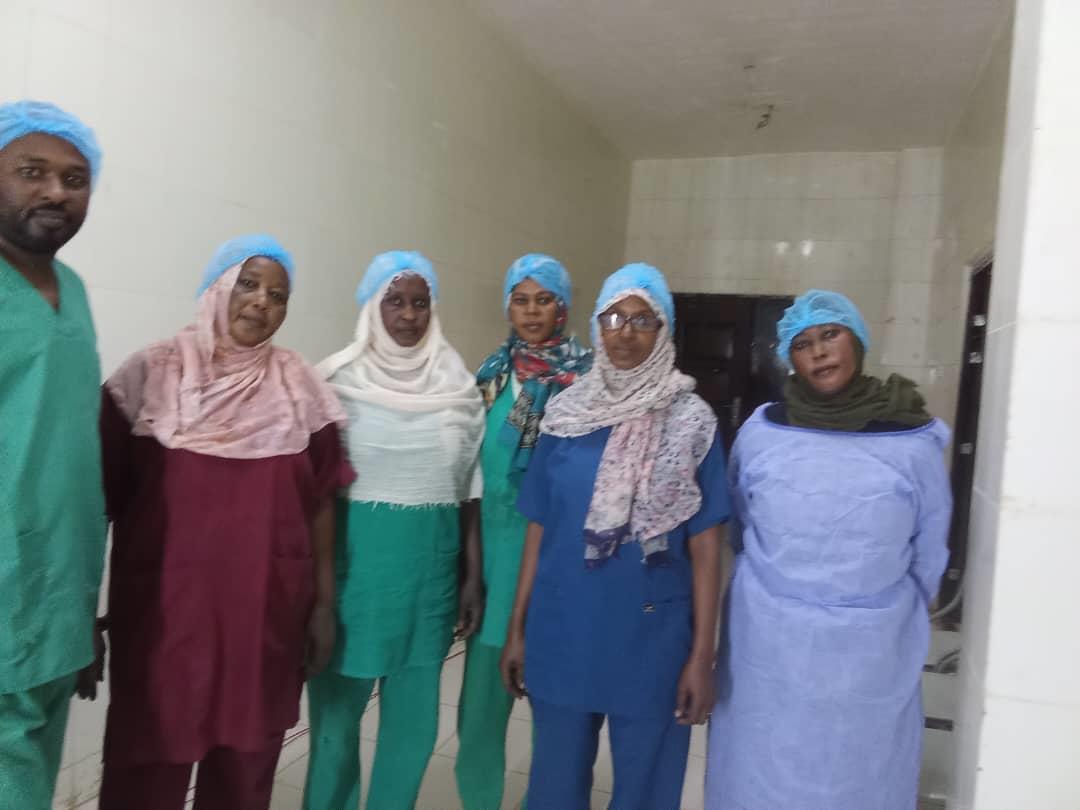
Stories From Within The Battlefield Sudanese Women Remain A Symbol Of Resilience And Survival In Times Of Collapse
(MENAFN- Sudanow Magazine)
By: Rogia al-Shafee
PortSudan(Sudanow)- When hardships intensify and trials increase upon a suffering and bleeding nation, the Sudanese woman remains steadfast and proud, walking with calmness and determination. The Sudanese woman in the war of dignity is not just a witness to pain but an active partner who has played a prominent role in various aspects of public and private life, within the home and in workplaces, with her experience and patience with determination and courage.
Refusing to break, repelling fear. These meanings and sacrifices are embodied for us by Dr. Azza Kamal Ahmed Awad Al-Karim, a registrar in obstetrics and gynecology. She played a distinguished and great role, offering a lesson in sacrifice and steadfastness to fulfill her humanitarian mission to save women and children amidst siege, hospital occupation, and complete service disruption.
The humanitarian doctor, Azza Kamal, was met by Sudanow phone in one of Sudan's distant villages in Abu Hujar city, Sennar State, to discuss the great role she played during the war in Sudan. Dr. Azza Kamal was born in Abu Hujar in late 1979. She received her primary and intermediate education in Abu Hujar city. She showed excellence and talent from a young age, and her mother, a teacher, provided her with extra attention and care.
She was the first in the locality, superior to boys and girls, so everyone called her a doctor, which was the initial impetus and nucleus to implement the desire to study medicine
She moved to the high school at Singa Girls' Boarding School due to the lack of high schools in the village at that time. She then attended the Faculty of Medicine at Imam Mahdi University in Kosti, White Nile State, graduating in 2005. She completed her internship and national service in Sennar State, then began her with the Registrar the Royal College of London exam in 2009, obtaining the first part of the Registrar in Obstetrics and Gynecology in 2010.
Four years later, she got married and moved with her husband, who was residing in the Kingdom of Saudi Arabia. There, she was diagnosed autoimmune disease, joint pain, and thyroid issues, which spread to her kidneys and other parts of her body, eventually rendering her completely immobile. The diagnosis revealed she had Lupus. As a result, her studies were halted, and she embarked on a journey to find treatment. All her ambitions and hopes were shattered, and her focus shifted to seeking treatment and recovery. She discontinued her studies and stepped away from the medical field entirely from 2015 to 2023, until the war broke out.
Dr. Azza says, "After returning from Saudi Arabia, I displaced to Sennar State, my homeland, and to escape the burden of rent and displacement struggles, I went to my family's home in Abu Hujar village. Due to my illness and prolonged absence from work, I hadn't considered working during this period. However, when I learned that the area desperately needed an obstetrician and gynecologist to perform cesarean sections and other specialized surgeries, and with the insistence of the locals and my sense of responsibility and humanitarian duty, I decided to take action. Given the critical need and the departure of most doctors from the area due to the war, I took my certificates and met with the Minister of Health in Sennar State, who welcomed me warmly, having known me previously. He agreed immediately and provided accommodation for me and my family, despite my not having completed the second part of my specialization. Five months later, my husband developed kidney failure due to displacement and lack of medication, so he traveled to Egypt for treatment, with the hope that my children and I would join him later.
Dr. Azza continues, "During this period, the rebel militia entered the city, and it was a horrific black day. I was in the staff neighborhood near the hospital where I worked. They knew all the employees and entered our home, threatening me in front of my children, accusing us of harboring a military personnel. They took my phone by force and I fled again to my family's home in Abu Hujar, losing my phone, all the money in my digital wallet, and contact with my sick husband, brothers, and everyone who supported me. I was in a state of confusion. Pregnant women started coming to my home after the hospital was taken over by the militia and mercenaries and became out of service."
After the destruction and looting of equipment, devices, and the pharmacy, on a dark day and under threat, some militia members at the time, who were from the local area, came to me. They knew I was a doctor and had worked at the hospital, and they took me by force, along with my children, under threat. All my attempts to convince them failed, as I explained that the surgical team had fled, the operating room was contaminated, the equipment was destroyed, and there were risks to patients. I emphasized that it was impossible for one person to perform surgery alone after the team had deserted.
The militia members didn't understand or care about the reasons that made performing surgeries impossible. Their sole concern was that I accompany them under threat and do what was necessary. So, I went with them and performed the first surgery with the help of a ward nurse who assisted with preparation only. I conducted surgeries under harsh conditions and intense pressure, taking on the roles of surgeon, midwife, and pediatrician. This continued until the militia managed to bring back the medical team that had fled, forcing them to return to the hospital under threat as well.
I assembled a sterilization team, and by the first week, news spread across Sennar State that an obstetrician and gynecologist was performing cesarean sections at the hospital. Women began arriving on animal backs, donkey carts, trucks, and on foot, braving rain and heat, covering themselves with tarps. They came from distant areas, including Jebel Moje, neighboring villages, Suki, and Abu Naama, in large numbers, with severe and critical conditions, such as hemorrhaging and uterine rupture. I worked around the clock, from early morning until 3 am the next day, without rest, except when water or electricity ran out. I would pause, waiting for the electricity to return and for water to be delivered by donkey cart from the Nile, to restart sterilization and cleaning of the operating room, clothes, and equipment.
I would see between 30 to 50 cases daily and perform around 13 cesarean sections per day. I would sustain myself on plain tea from morning till 1 am the next day, often collapsing to the ground due to extreme exhaustion, hunger, and lack of sleep. Before entering the operating room, I would rely on glucose drips and nutritional supplements. Despite the dire circumstances, I considered fleeing many times, anticipating the militia's arrival and threats at any moment. However, the sight of women lying on the operating table, vulnerable and helpless, with their lives hanging in the balance, and knowing that I was their only hope after God, would bring me to tears and fill me with sorrow.
I endured and persevered for the sake of women and children, fulfilling my humanitarian duty to save lives that would have been lost due to neglect. Thankfully, I remained steadfast and successfully performed surgeries under extreme conditions, including the sound of artillery, gunfire, and drones, as well as threats from militia members who would sometimes enter the operating room and threaten me, saying that if a patient died, I would be next. Before the army entered Sennar State, I performed over 1,070 cesarean sections, and an additional 200 after their arrival. I also conducted numerous procedures to address hemorrhaging and uterine cleaning, totaling nearly a thousand cases. Despite the limited resources and lack of a blood bank, I managed to save all the women, with a remarkably low mortality rate of only 7 mothers, who had arrived with severe conditions such as poisoning and uterine rupture.
Dr. Azza continued speaking to Sudanow with a mix of sadness, sorrow, and pride, expressing her satisfaction with the work she had done and the lives she had saved, particularly those of women and children. Her dedication and expertise had earned her widespread recognition across the state. People would greet her with respect and admiration, and some would even show her the children she had helped bring into the world, now toddlers over two years old.
Dr. Azza says, "During my work, my husband passed away, and I requested to stay home for a day to grieve. However, on the second day after his passing, I returned to work and performed surgeries as scheduled. Despite the Islamic tradition that requires a widow to observe a waiting period of four months and ten days, staying at home and only leaving for essential purposes, a religious scholar and a group of pregnant women arrived at my doorstep, literally on the back of a truck, on the second day after my husband's passing."
The sheikh told me that Islam is a religion of ease and that, given my unique role as the only doctor in the state, from east to west, including areas like Suki, where all hospitals had stopped functioning except for Abu Hujar Rural Hospital and Sennar City Hospital, I had a special dispensation to continue working. He cited the Islamic principle that allows a widow to leave her home for work if there's no one to provide for her and her children. Given the humanitarian nature of my work and its sacred role in saving women and children, I was obligated to continue until a replacement could be found. I returned to work, dedicating myself fully, and didn't have time to grieve or reflect during the entire period of the waiting period. I continued working with the same enthusiasm, strength, and determination, facing challenges and threats until the army entered the state. . I responded with courage and conviction, fueled by the hope that the army would soon arrive and bring the situation under control. I told them, "I won't flee because I haven't done anything wrong or collaborated with you. When you entered the hospital, you found me working to save women; when I tried to leave, you forced me to return and work under threat. When the army arrives, they'll find me still working to save women."
Concluding her conversation with Sudanow, Dr. Azza proudly reflects on her achievements, despite the lack of appreciation and recognition from others. She notes that many of her surgeries were performed free of charge or at a nominal fee, considering the patients' circumstances. She often waived her share to support the medical team, motivated by the Islamic principle that "Whoever relieves a believer's distress, God will relieve their distress on the Day of Judgment." After facing challenges, the medical team members were individually questioned by authorities. Eventually, Dr. Azza was also questioned, but the interrogation was routine, focusing on her identity, residence, and phone number. It became clear that she was not a collaborator but a humanitarian worker who had performed remarkable work under difficult circumstances.
Thanks and appreciation to the work team that helped me and without them, this achievement would not have been possible, namely, Aisha Abdullah Al-Ashi, an operation lecturer, Omar Ahmed Al-Dawi, the team of cleanliness and sterilization workers, Romisa Issa, Fatima Hamed and Zamzam, from the operating room, Mujtabi Sabd, Qusai, Sohaib and the nursing staff Samia Mergni, Abdullah and Esraa, in addition to the team of midwives Kasma Sabon, Elham Tirab, Zakia, Amal and Hweida Dosa, all under Dr. Azza Kamal Ahmed Awad Al Karim, the only doctor in Sinar state... Before the army entered the state.

Legal Disclaimer:
MENAFN provides the
information “as is” without warranty of any kind. We do not accept
any responsibility or liability for the accuracy, content, images,
videos, licenses, completeness, legality, or reliability of the information
contained in this article. If you have any complaints or copyright
issues related to this article, kindly contact the provider above.
Most popular stories
Market Research

More Story



Comments
No comment