

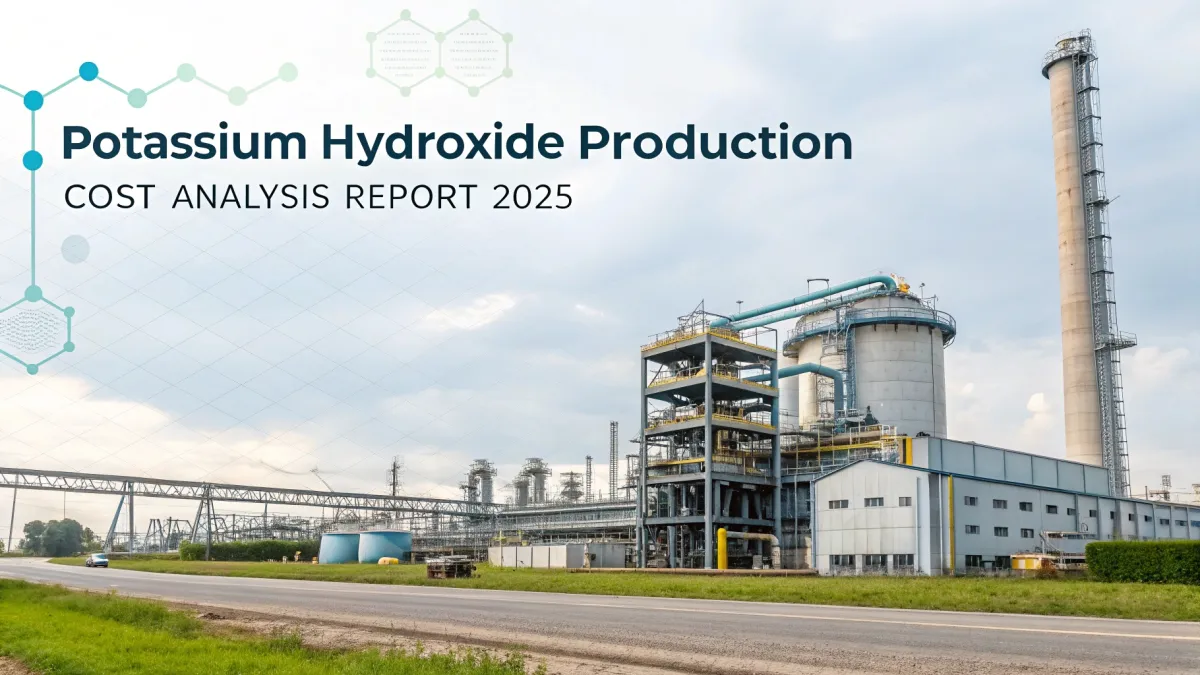
Potassium Hydroxide Production Cost Analysis 2025: Capex, Opex, And ROI Evaluation For Plant Setup


Establishing a potassium hydroxide production plant requires careful planning, with emphasis on raw material sourcing, electrolysis technology, safety protocols, and regulatory compliance. Strategic site selection, adequate energy supply, wastewater treatment, and adherence to environmental standards are essential for efficient operations.
IMARC Group's “Potassium Hydroxide Production Cost Analysis Report 2025: Industry Trends, Plant Setup, Machinery, Raw Materials, Investment Opportunities, Cost and Revenue” offers a detailed and practical guide for entrepreneurs and businesses looking to enter the production industry. The report includes in-depth analysis of capital investment requirements, project financing options, working capital needs, and projected returns.
This comprehensive business plan outlines every critical step involved in setting up a successful production plant unit from understanding the industry landscape to planning for real-world challenges. It provides valuable insights into essential components such as potassium hydroxide production plant cost, machinery cost, operating cost, raw material requirements, utility needs, infrastructure setup, and packaging logistics.
Request for a Sample Report : https://www.imarcgroup.com/potassium-hydroxide-manufacturing-plant-project-report/requestsample
Potassium Hydroxide Industry Outlook 2025:
The potassium hydroxide industry outlook for 2025 indicates steady growth driven by rising demand across biodiesel, fertilizers, pharmaceuticals, and cleaning agents. Increasing emphasis on renewable energy fuels and sustainable agricultural practices is boosting consumption, while advancements in electrolysis technology are enhancing production efficiency. Asia-Pacific remains the dominant market, supported by expanding industrial applications and strong manufacturing bases, while North America and Europe show consistent growth tied to chemical and pharmaceutical sectors. Environmental regulations and sustainable production methods are expected to shape industry dynamics, encouraging innovation and investment in eco-friendly processes.
Key Insights for Potassium hydroxide Production Plant Setup:
Detailed Process Flow:
-
Product Overview
Unit Operations Involved
Mass Balance and Raw Material Requirements
Quality Assurance Criteria
Technical Tests
Project Details, Requirements and Costs Involved:
-
Land, Location and Site Development
Plant Layout
Machinery Requirements and Costs
Raw Material Requirements and Costs
Packaging Requirements and Costs
Transportation Requirements and Costs
Utility Requirements and Costs
Human Resource Requirements and Costs
Capital Expenditure (CapEx) and Operational Expenditure (OpEx) Analysis:
Project Economics:
-
Capital Investments
Operating Costs
Expenditure Projections
Revenue Projections
Taxation and Depreciation
Profit Projections
Financial Analysis
Profitability Analysis:
-
Total Income
Total Expenditure
Gross Profit
Gross Margin
Net Profit
Net Margin
Key Cost Components of Setting Up a Potassium hydroxide Plant :
-
Raw Materials – Potassium chloride (KCl), water, and other chemical inputs required for electrolysis.
Electrolysis Equipment – Electrolyzers, electrodes, membranes, and supporting systems for production.
Utilities and Energy – High electricity consumption for electrolysis, water supply, and steam generation.
Infrastructure and Civil Works – Land acquisition, construction of plant buildings, storage facilities, and utilities network.
Machinery and Process Equipment – Reactors, separators, scrubbers, cooling systems, and material handling units.
Environmental and Safety Systems – Effluent treatment plants, emission control systems, and worker safety measures.
Labor and Staffing – Skilled workforce for operations, maintenance, and quality control.
Regulatory Compliance – Licensing, permits, and environmental certifications.
Logistics and Distribution – Packaging, storage, and transportation infrastructure for finished products.
Contingency and Working Capital – Reserve for unforeseen expenses and operational cash flow requirements.
Economic Trends Influencing Potassium Hydroxide Plant Setup Costs 2025 :
-
Energy Prices – Fluctuations in electricity costs significantly impact electrolysis-based production, making energy efficiency a critical factor.
Raw Material Availability – Global supply and pricing of potassium chloride influence overall production costs and plant feasibility.
Inflation and Construction Costs – Rising costs of construction materials, machinery, and labor contribute to higher capital expenditure.
Environmental Regulations – Stricter sustainability and waste management requirements increase compliance and operational costs.
Technological Advancements – Adoption of advanced electrolysis technologies can reduce long-term operating costs despite higher initial investment.
Global Trade Dynamics – Import-export tariffs, supply chain disruptions, and geopolitical factors affect equipment sourcing and raw material procurement.
Request for Customized Report: https://www.imarcgroup.com/request?type=report&id=9484&flag=E
Challenges and Considerations for Investors in Potassium hydroxide Plant Projects:
-
High Energy Consumption – Electrolysis processes demand substantial electricity, making operational costs sensitive to energy price fluctuations.
Raw Material Dependence – Consistent and cost-effective access to potassium chloride is critical, with supply risks impacting profitability.
Environmental Compliance – Strict regulations on waste management, emissions, and effluents require significant investment in sustainable technologies.
Capital-Intensive Setup – High initial expenditure on land, infrastructure, and specialized equipment poses a financial challenge.
Market Volatility – Price fluctuations in downstream sectors such as biodiesel, fertilizers, and chemicals can influence demand stability.
Technological Complexity – Advanced electrolysis technologies offer efficiency but require skilled workforce and higher upfront costs.
Logistics and Distribution – Safe storage and transportation of corrosive products necessitate robust infrastructure and safety measures.
Regulatory Risks – Changes in trade policies, tariffs, or chemical industry standards may affect long-term investment returns.
Conclusion:
The establishment of a potassium hydroxide production plant presents both opportunities and challenges for investors and industry stakeholders. Growing demand across diverse sectors such as biodiesel, fertilizers, pharmaceuticals, and cleaning agents ensures a stable market outlook, while advancements in electrolysis technology offer pathways for efficiency and sustainability. However, high energy requirements, raw material dependency, and stringent environmental regulations demand careful strategic planning and significant capital commitment. Success in this sector relies on securing reliable supply chains, adopting cost-efficient technologies, and maintaining compliance with evolving regulatory frameworks to achieve long-term profitability and competitiveness.
About Us:
IMARC Group is a global management consulting firm that helps the world's most ambitious changemakers to create a lasting impact. The company excel in understanding its client's business priorities and delivering tailored solutions that drive meaningful outcomes. We provide a comprehensive suite of market entry and expansion services. Our offerings include thorough market assessment, feasibility studies, company incorporation assistance, factory setup support, regulatory approvals and licensing navigation, branding, marketing and sales strategies, competitive landscape, and benchmarking analyses, pricing and cost research, and procurement research.
Contact Us:
IMARC Group
134 N 4th St. Brooklyn, NY 11249, USA
Email: sales[@]imarcgroup.com
Tel No:(D) +91 120 433 0800
United States: (+1-201971-6302)

Legal Disclaimer:
MENAFN provides the
information “as is” without warranty of any kind. We do not accept any
responsibility or liability for the accuracy, content, images, videos,
licenses, completeness, legality, or reliability of the information
contained in this article. If you have any complaints or copyright issues
related to this article, kindly contact the provider above.
Comments
No comment