





403
Sorry!!
Error! We're sorry, but the page you were looking for doesn't exist.
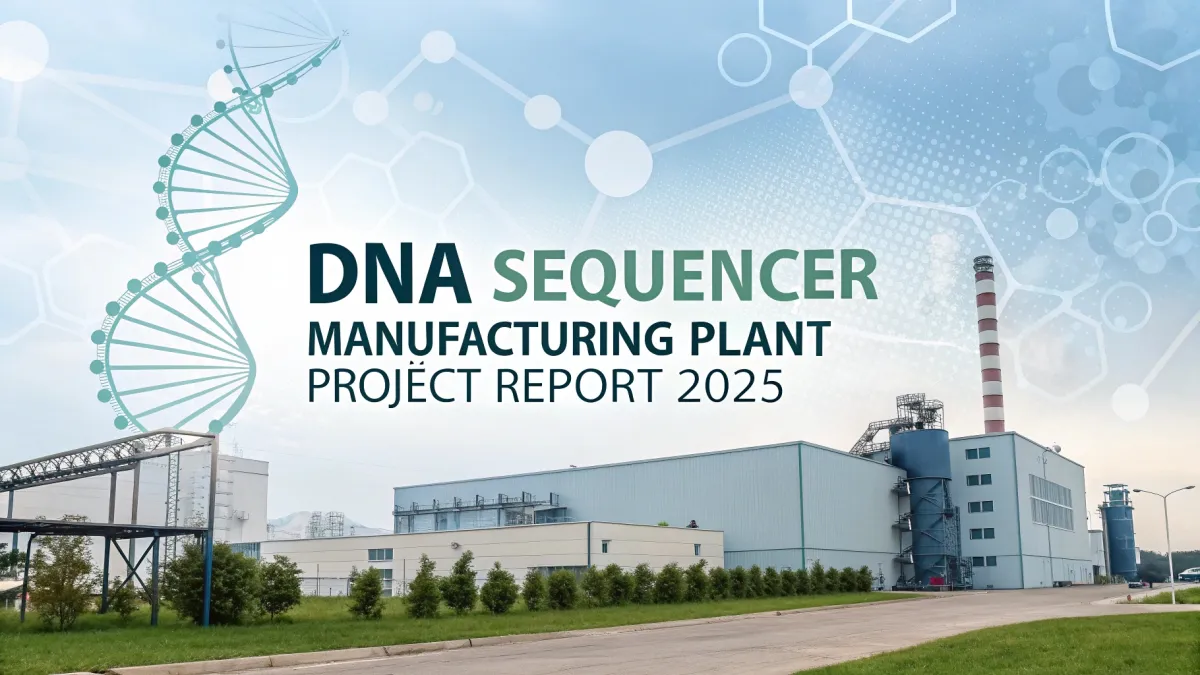
DNA Sequencer Manufacturing Plant Report 2025: Strategic Planning, Setup Details And Requirements
(MENAFN- IMARC Group)
Setting up a DNA sequencer manufacturing facility necessitates a detailed market analysis alongside granular insights into various operational aspects, including unit processes, raw material procurement, utility provisions, infrastructure setup, machinery and technology specifications, workforce planning, logistics, and financial considerations.
IMARC Group's report titled“ DNA Sequencer Manufacturing Plant Project Report 2025: Industry Trends, Plant Setup, Machinery, Raw Materials, Investment Opportunities, Cost and Revenue ” offers a comprehensive guide for establishing a DNA sequencer manufacturing plant, covering everything from product overview and production processes to detailed financial insights.
A DNA sequencer is a laboratory instrument that determines the exact sequence of nucleotides adenine, thymine, cytosine, and guanine in a DNA molecule. It converts biological samples into digital data that reveal genetic structures, enabling scientists to study genes, mutations, and molecular mechanisms. Earlier sequencing methods relied on Sanger sequencing, but modern advancements in Next-Generation Sequencing (NGS) and Third-Generation Sequencing (TGS) have made sequencing faster, more accurate, and capable of handling large and complex genomes efficiently.
The DNA sequencer industry is expanding rapidly, driven by the growing need for personalized medicine, precision diagnostics, and genetic testing across healthcare sectors. Widespread use of NGS in cancer research, infectious disease monitoring, and drug discovery is accelerating adoption. The shift toward advanced TGS technologies, offering real-time sequencing and longer read lengths, is further enhancing genomic research capabilities. Integration of artificial intelligence, bioinformatics, and cloud-based platforms is streamlining data analysis and reducing turnaround times. Rising government funding for genomics projects, coupled with increasing collaborations between research institutions and biotech companies, is supporting innovation and accessibility. Moreover, expanding applications in reproductive health, agriculture, and forensic science are broadening the industry's scope. While North America continues to dominate due to advanced healthcare infrastructure, Asia-Pacific is emerging strongly with rapid technological adoption, growing investments, and healthcare digitization, positioning the industry for sustained global growth.
Request for a Sample Report : https://www.imarcgroup.com/dna-sequencer-manufacturing-plant-project-report/requestsample
Key Steps Required to Set Up a DNA Sequencer Plant .
Market AnalysisThe report provides insights into the landscape of the DNA sequencer industry at the global level. The report also provides a segment-wise and region-wise breakup of the global DNA sequencer industry. Additionally, it also provides the price analysis of feedstocks used in the manufacturing of DNA sequencer, along with the industry profit margins.
-
Segment Breakdown
Regional Insights
Pricing Analysis and Trends
Market Forecast
Detailed information related to the process flow and various unit operations involved in the DNA sequencer manufacturing plant project is elaborated in the report. These include:
-
Land, Location, and Site Development
Plant Layout
Plant Machinery
Raw Material Procurement
Packaging and Storage
Transportation
Quality Inspection
Utilities
Human Resource Requirements and Wages
Marketing and Distribution
Request for Customized Report:
https://www.imarcgroup.com/request?type=report&id=11956&flag=E
The report provides a detailed location analysis covering insights into the plant location, selection criteria, location significance, environmental impact, and expenditure for DNA sequencer manufacturing plant setup. Additionally, the report also provides information related to plant layout and factors influencing the same. Furthermore, other requirements and expenditures related to machinery, raw materials, packaging, transportation, utilities, and human resources have also been covered in the report.
Machinery and Equipment
-
List of machinery needed for DNA sequencer production
Estimated costs and suppliers
Raw Material Costs
-
Types of materials required and sourcing strategies
Utilities and Overheads
-
Electricity, water, labor, and other operational expenses
A detailed analysis of the project economics for setting up a DNA sequencer manufacturing plant is illustrated in the report. This includes the analysis and detailed understanding of capital expenditure (CAPEX), operating expenditure (OPEX), income projections, taxation, depreciation, liquidity analysis, profitability analysis, payback period, NPV, uncertainty analysis, and sensitivity analysis.
Capital Expenditure (CAPEX)
-
Initial setup costs: land, machinery, and infrastructure
Operating Expenditure (OPEX)
-
Recurring costs: raw materials, labor, maintenance
Revenue Projections
-
Expected income based on production capacity, target market, and market demand
Financial Analysis
-
Liquidity Analysis
Profitability Analysis
Payback Period
Net Present Value (NPV)
Internal Rate of Return
Profit and Loss Account
-
Licenses and Permits
Regulatory Procedures and Approval
Certification Requirement
-
Total human resource requirement
Salary cost analysis
Employee policies overview
The report also covers critical insights into key success and risk factors, which highlight the aspects that influence the success and potential challenges in the industry. Additionally, the report includes strategic recommendations, offering actionable advice to enhance operational efficiency, profitability, and market competitiveness. A comprehensive case study of a successful venture is also provided, showcasing best practices and real-world examples from an established business, which can serve as a valuable reference for new entrants in the market.
About Us:
IMARC is a global market research company offering comprehensive services to support businesses at every stage of growth, including market entry, competitive intelligence, procurement research, regulatory approvals, factory setup, company incorporation, and recruitment. Specializing in factory setup solutions, we provide detailed financial cost modeling to assess the feasibility and financial viability of establishing new manufacturing plants globally. Our models cover capital expenditure (CAPEX) for land acquisition, infrastructure, and equipment installation while also evaluating factory layout and design's impact on operational efficiency, energy use, and productivity. Our holistic approach offers valuable insights into industry trends, competitor strategies, and emerging technologies, enabling businesses to optimize operations, control costs, and drive long-term growth.
Contact Us:
IMARC Group
134 N 4th St. Brooklyn, NY 11249, USA
Email: sales[@]imarcgroup.com
Tel No:(D) +91 120 433 0800
United States: (+1-201971-6302)

Legal Disclaimer:
MENAFN provides the
information “as is” without warranty of any kind. We do not accept
any responsibility or liability for the accuracy, content, images,
videos, licenses, completeness, legality, or reliability of the information
contained in this article. If you have any complaints or copyright
issues related to this article, kindly contact the provider above.
Most popular stories
Market Research

More Story








Comments
No comment