




403
Sorry!!
Error! We're sorry, but the page you were looking for doesn't exist.
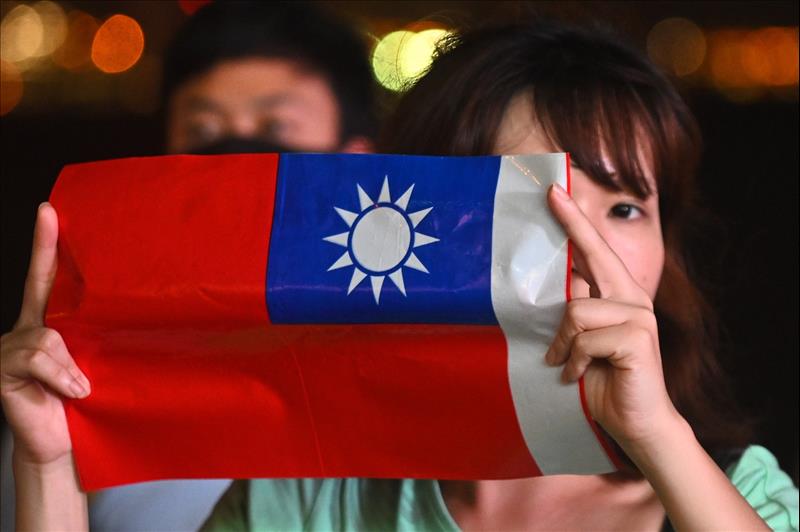
Eyes On Spies: Countering Chinese Espionage In Taiwan
(MENAFN- Asia Times)
This article was originally published by Pacific Forum . It is republished with permission.

Taiwan has seen a significant rise in espionage cases, particularly those linked to China. In 2024, 64 individuals were prosecuted for Chinese espionage, a threefold increase from 16 in 2021. Authorities have also uncovered over a thousand Taiwanese espionage cases in recent years and dismantled several espionage networks, according to the National Security Bureau (NSB).
Since 2020, prosecutors have indicted 159 suspected of spying for China , with 60% being active or retired military personnel. In 2025, Taiwan's national security services estimated there were over 5,000 spies working for China in Taiwan.
Chinese espionage is not confined to supporters of the Pan-Blue Coalition of relatively pro-China political parties, the largest of which is the opposition Kuomintang (nationalist party).
Looking also at the more independence-leaning Pan-Green Coalition, prosecutors have charged four Democratic Progressive Party members who held responsible staff positions in government, including in the foreign ministry, with spying for China.
The Chinese Communist Party is following a blueprint that gave it victory in the Chinese Civil War (1945-1949).
Many of the co-opted have strong connections with China. Their parents came to Taiwan in 1949 with Chiang Kai-shek. They lived in special villages set up by the government. They went to military-oriented high schools.
As a result, they gained admission to military academies. After graduation, they were guaranteed jobs for life. Many of the graduates assumed that they would return to China after the Communist government fell.
It's not only political groupings that are associated with colors. There are three basic approaches that Chinese espionage recruiters use to lure their prey and Taiwanese counterespionage sleuths refer to those three using color codes:
-
Blue – Overcoming any ill feelings that the potential target has about the People's Republic of China. This can involve mission obfuscation: Are we fighting to tear down an undemocratic regime or fighting for Taiwan independence? Another topic useful for inspiring dissatisfaction with the Taiwan government has been inadequate military funding that limits acquisition of state-of-the-art military equipment.
Gold – Financial inducement using cash or a lucrative business connection in China. This one was particularly effective after the previous President Tsai Ing-wen (for sound financial reasons) cut military pensions .
Yellow – Sex, including honey traps. (A Chinese phrase for behavior perceived as degenerate, such as prostitution and pornography, is huangse wenhua, 黄色文化, translating as“yellow culture.”)
The most notorious case is that of General Lo Hsien-che, former head of communications and electronic information at Taiwan's Army Command Headquarters.
Lo had access to a US-Taiwan communication project called“Po Sheng,” considered vital to Taiwan and US defense of the island in the event of Chinese attack.

Legal Disclaimer:
MENAFN provides the
information “as is” without warranty of any kind. We do not accept
any responsibility or liability for the accuracy, content, images,
videos, licenses, completeness, legality, or reliability of the information
contained in this article. If you have any complaints or copyright
issues related to this article, kindly contact the provider above.
Most popular stories
Market Research

More Story






Comments
No comment