










403
Sorry!!
Error! We're sorry, but the page you were looking for doesn't exist.

AI Vs Jobs, China Trade Truths And Dictator Economics
(MENAFN- Asia Times)
Here's a roundup of recent radical research.
1. It doesn't look like AI is taking jobs yet
Source: EIG
Source: EIG
Source: EIG
Source: EIG
It's practically conventional wisdom that AI is going to take jobs away from large numbers of humans, leaving them without anything useful to do in the economy. People are so convinced of this that they'll jump at practically any hint in the data that allows them to believe that it's happening.
A little while ago I wrote a post about why both economists and popular commentators are getting way over their skis on this.
Anyway, Sarah Eckhardt and Nathan Goldschlag of the Economic Innovation Group have a good new report on this, which shows that as far as we can tell, AI isn't taking jobs yet - at least, not on any measurable scale.
Eckhardt and Goldschlag start with a measure of predicted AI exposure for various jobs. These measures don't tell you which jobs are going to be replaced by AI; instead, they just tell you which jobs currently involve more tasks that can probably be done by AI. These measures actually have a pretty good track record at predicting which workers will end up using AI.
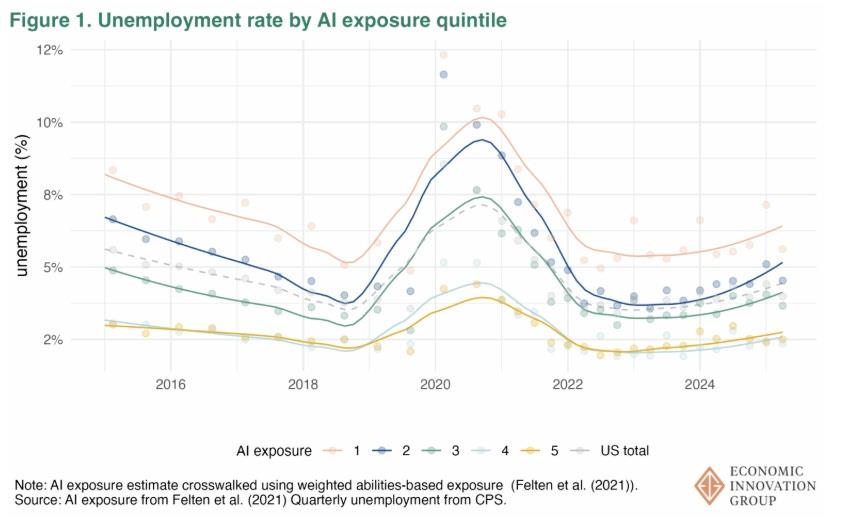
Basically, Eckhardt and Goldschlag find no correlation - or even a negative correlation - between that measure of AI exposure and any measure of labor market distress. For example, here's the unemployment rate of workers with varying degrees of predicted AI exposure (1 is the least exposed, 5 is the most exposed):
Source: EIG
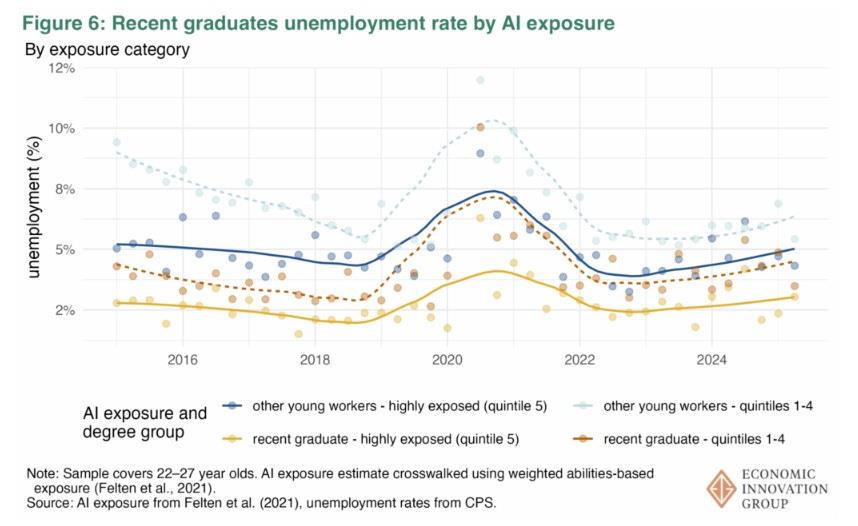
There has been a recent rise in unemployment, but it's concentrated among the people who are least exposed to AI, while those who are the most exposed almost all still have jobs. The same is true when we look only at recent college graduates, who have been the focus of the most concern in the media:
Source: EIG
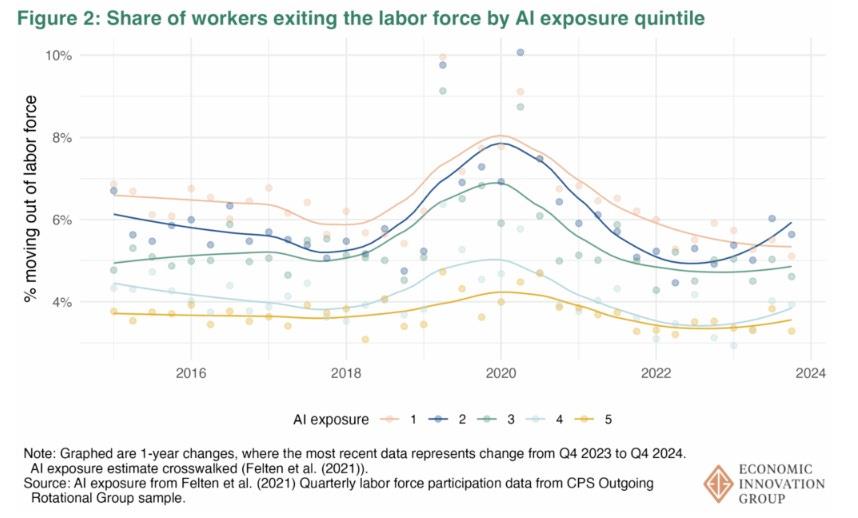
And the same is true when we look at which workers are exiting the labor force completely:
Source: EIG
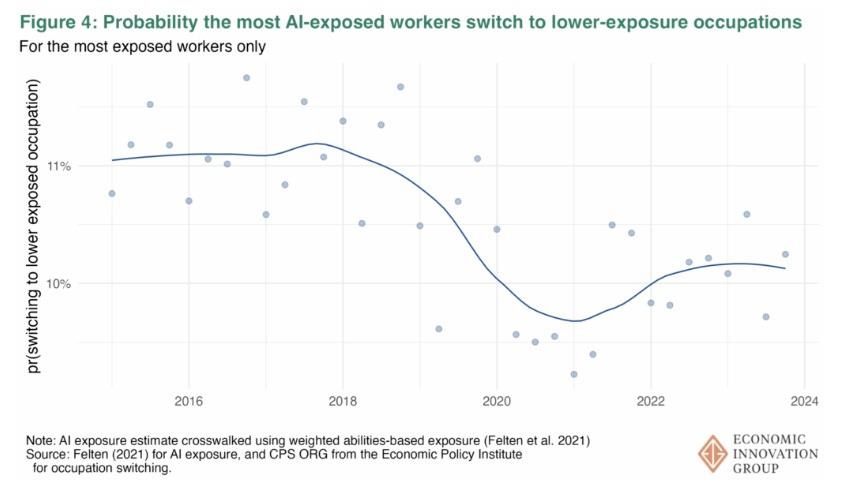
And one more interesting finding is that the most-exposed workers are actually less likely to switch to less-exposed occupations than they were before generative AI hit the market! In other words, coders and paper-pushers are not becoming plumbers to protect themselves from AI:
Source: EIG
The researchers also try using alternative measures of AI exposure, and they find pretty much the same thing.
In other words, AI job displacement just hasn't happened yet. It may happen in the future, but so far, every time people have jumped at a particular data point to claim it's finally happening, it has turned out to be a mirage.
2. Bernie's bad chartBernie Sanders and his followers deeply believe that America's economy is in a prolonged state of crisis - that capitalist economic policies have steadily immiserated the American public, creating a country where regular people are economically drowning even as corporate fat cats enrich themselves.
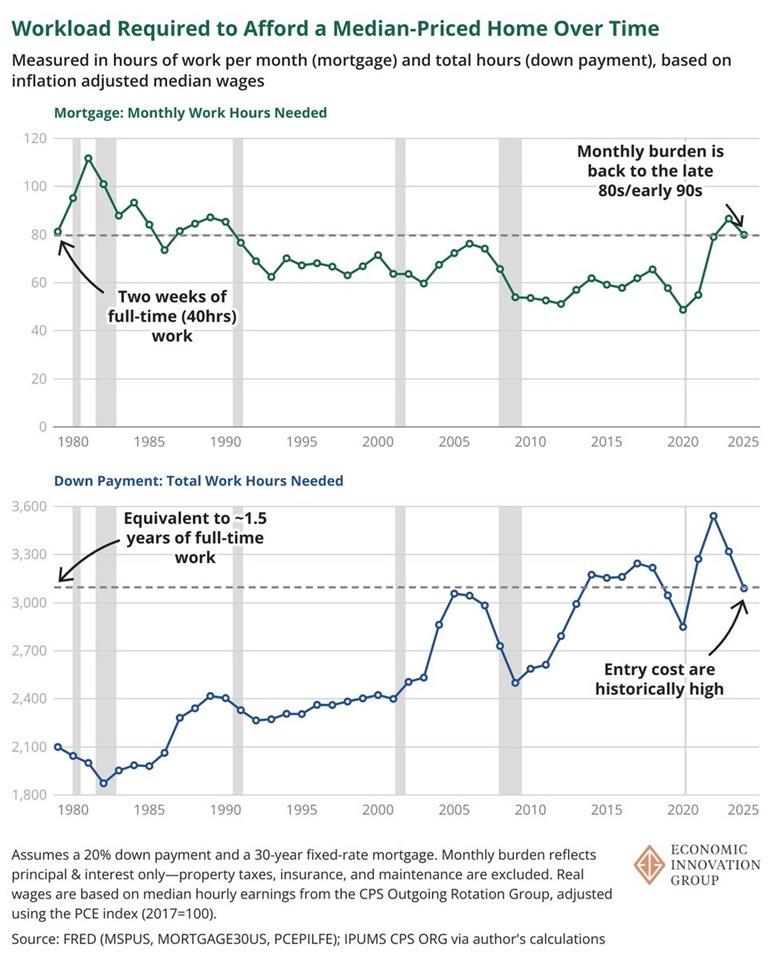
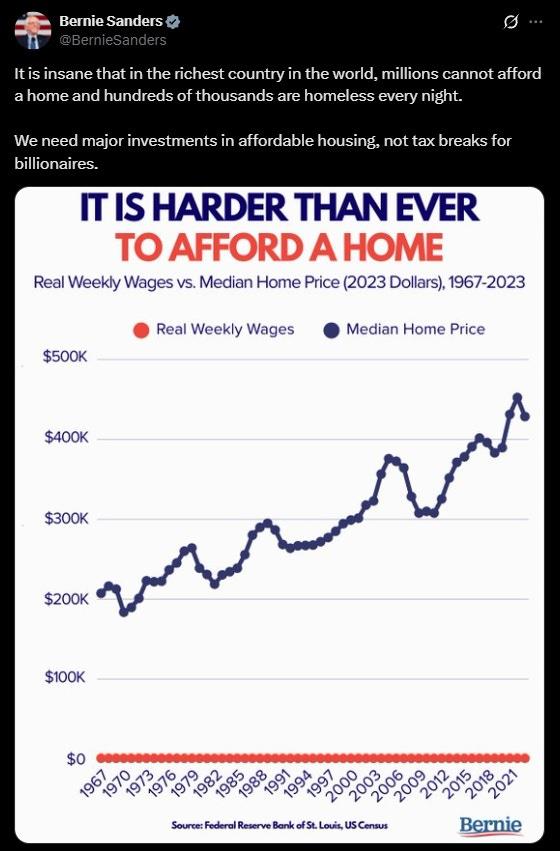
Their absolute faith in this narrative often leads them to interpret economic statistics in dubious or even ridiculous ways. The latest example of this is when Bernie Sanders posted a chart of housing versus wages:
This is a pretty ridiculous chart. Why would you plot home prices on the same y-axis as weekly income? Does anyone think these two things should be even remotely close to the same size? Do we think people should be able to afford a house on a single week of income? That's ridiculous.
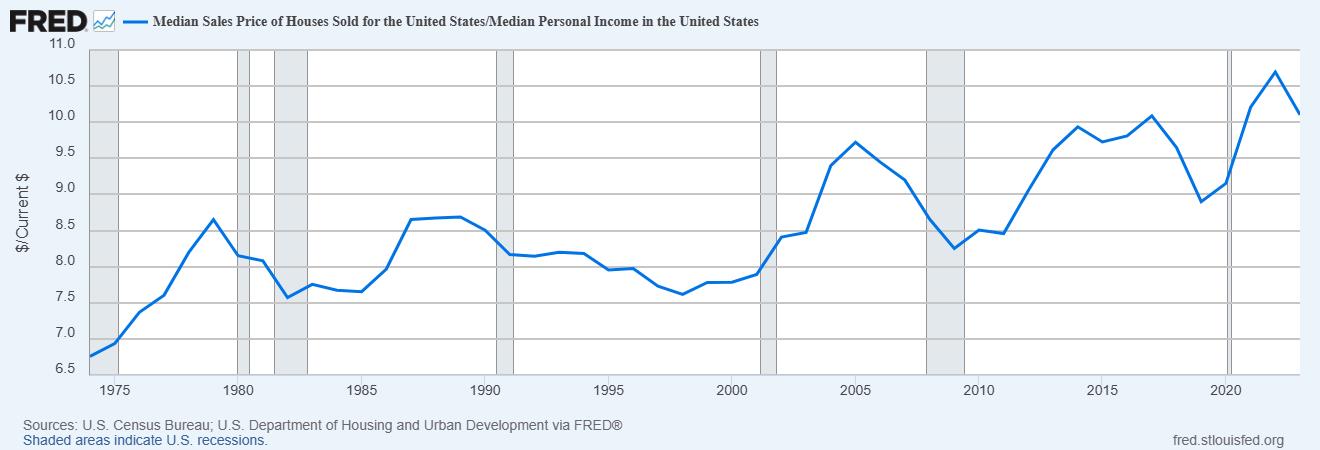
A non-ridiculous way to present this data would be to divide home prices by weekly earnings. That would show us how many weeks a typical worker would need to work in order to afford a home. But actually, the“median weekly earnings” number is for full-time workers only, so instead we should use median personal income, which counts everybody. Here's what that looks like:

Legal Disclaimer:
MENAFN provides the
information “as is” without warranty of any kind. We do not accept
any responsibility or liability for the accuracy, content, images,
videos, licenses, completeness, legality, or reliability of the information
contained in this article. If you have any complaints or copyright
issues related to this article, kindly contact the provider above.
Most popular stories
Market Research

More Story







Comments
No comment