




403
Sorry!!
Error! We're sorry, but the page you were looking for doesn't exist.
Midnight In The Morgue: Part Two
(MENAFN- The Post)
Last week, in my review of the 2024 Caine Prize collection of short stories, I focused on three of the stories that were short-listed for the Prize.
Of the remaining two,“Breastmilk” by Pam Aguda is a finely nuanced piece about the days following childbirth.
And then there is“The Dishwashing Women” by Tryphena Yeboah (Ghana), a story on women's friendship and solidarity-friends, workmates, mothers and daughters-set in the wretched staff quarters of a diplomat's mansion.
The story's driving force: what poverty and lack of opportunity can cause one to do, and how the subsequent disruption breaks up solidarity
The bulk of the collection is taken up by the ten stories that were produced at the 2024 Caine prize workshop.
I shall focus on two of these, including that by Lesotho author, the late Morabo Morojele.
Before that, I want to mention a story titled“What Happened to Aboy”, as here's an insight into how fiction can grip the imagination.
A few months ago I read a novel in which the author unaccountably drops one of the major characters, named Aboy-he simply disappears from the plot and isn't mentioned again.
When I came across the short story, I asked myself can its author (like the novelist, a Nigerian) have picked up the loose thread from his compatriot's novel? It's not the case-this is an entirely fresh work-but I still want to know what happened to Aboy Number One.
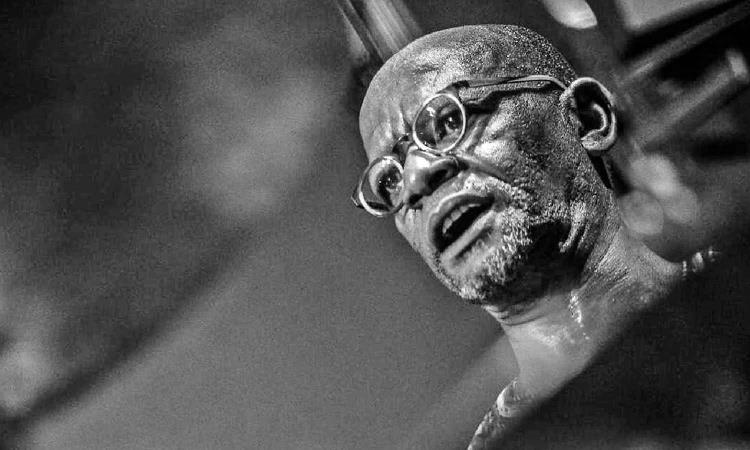
The story by Morabo Morojele is titled“To Breathe Again.” This is a highly audacious, ground-breaking piece that explores the process of dying. But it's still suffused with Morajele's trademark, slightly wild, sense of humour.
For example: he tells us the main character's sister“wasn't surprised when he said the world wasn't turning fast enough, whatever that meant. Neither was she surprised when he shouted 'Wine, or whiskey, please, if you would' at the two nurses sitting behind the reception desk at the hospital.” After days of delirium the patient is transferred to the hospital's last-stage-of-life room. I shan't, of course, commit a spoiler by telling you how the story ends.
Given that story's subject-matter, it's a poignant irony that (as far as I know)“To Breathe Again” was to be Morojele's last published work before his death in Queen 'Mamahato Hospital on May 20th.
It would be so good if the Lesotho government could organise some kind of memorial (a statue, a bust, a plaque) to honour one of the country's finest creative artists. Or maybe better, a Morojele Day, an annual festival of music and readings or dramatisations from his work.
Chris Dunton

Legal Disclaimer:
MENAFN provides the
information “as is” without warranty of any kind. We do not accept
any responsibility or liability for the accuracy, content, images,
videos, licenses, completeness, legality, or reliability of the information
contained in this article. If you have any complaints or copyright
issues related to this article, kindly contact the provider above.
Most popular stories
Market Research

More Story



Comments
No comment